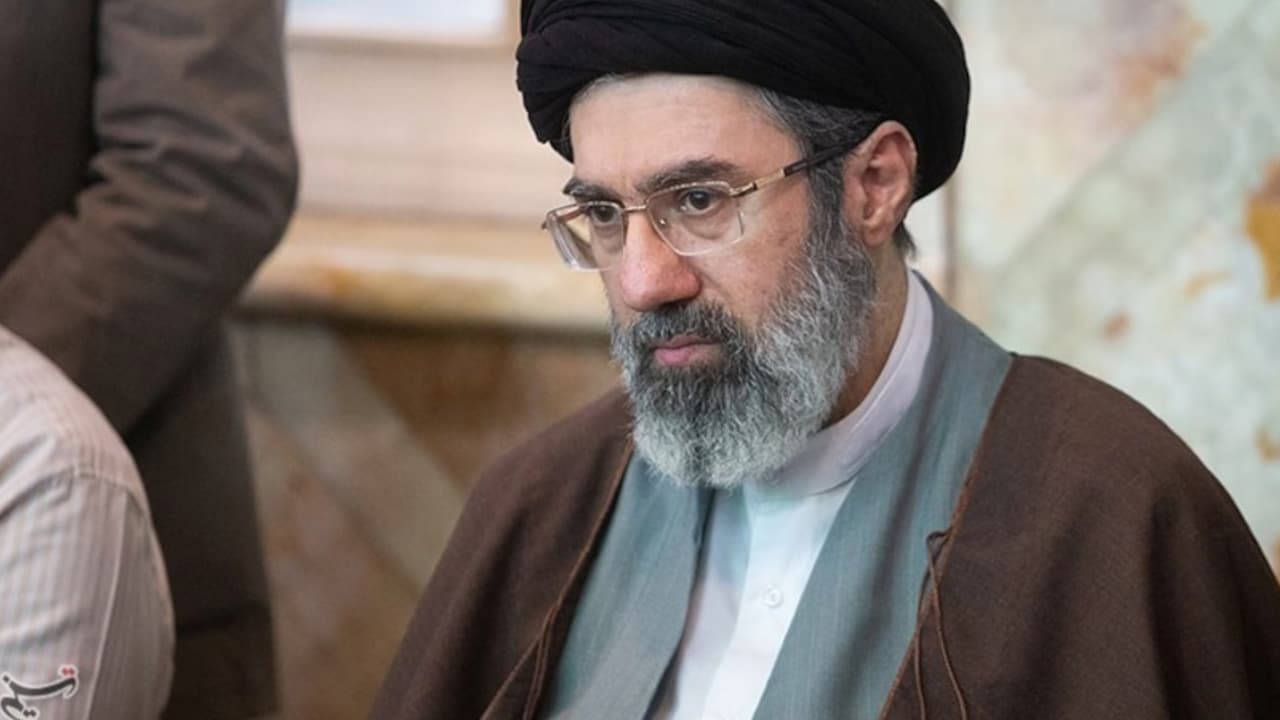
Every time a document drops from the inner circle of the Iranian clerical establishment, international desk pundits lose their minds. They treat a routine piece of ideological correspondence like a dead-sea scroll holding the hidden blueprint for global geopolitics. The recent missive attributed to Mojtaba Khamenei calling on Muslim nations to recognize the real enemy is being parsed by analysts who should know better. They read it as a masterstroke of strategic signaling or a sign of impending regional realignment.
They are missing the plot entirely.
Public statements from Tehran directed outward to the broader Islamic world are not policy papers. They are domestic insulation wrapped in theological boilerplate. When an individual widely whispered to be the next supreme leader issues a call to arms or a ideological warning, foreign observers look for external targets. They look at Washington, Jerusalem, or Riyadh. They look at oil shipping lanes and proxy networks. They fail to understand that the primary audience for these letters sits in Tehran, Qom, and Mashhad.
I have spent decades watching foreign policy wonks project Western rationality onto closed autocracies. It is a fatal analytical error. You cannot map a standard diplomatic calculus onto a survivalist regime whose entire legitimacy depends on perpetual external friction. Mojtaba Khamenei does not need regional capitals to nod along with his rhetoric. He needs the hardline factions at home to believe he possesses the ideological purity required to maintain the apparatus when his father leaves the scene.
Let us dismantle the lazy consensus piece by piece.
The Myth of the Regional Awakening
The core argument driving the coverage of this letter is that regional states are somehow on the verge of abandoning pragmatic economic integration to join a unified ideological resistance front. This is pure fantasy. The Gulf Cooperation Council is not pausing multi-billion-dollar infrastructure projects, artificial intelligence investments, and diversification pacts because a cleric in Tehran invoked anti-imperialist solidarity.
Money talks louder than clerical rhetoric. Riyadh, Abu Dhabi, and Doha are engaged in a brutal, high-stakes race against time to transition their economies away from fossil fuels before global demand craters. That requires stability, foreign direct investment, and access to Western capital markets. It does not require signing onto a perpetual geopolitical crusade against the West that would instantly trigger crippling secondary sanctions and capital flight.
When a letter urges Muslim nations to wake up to the real threat, analysts love to debate whether the target is the United States or local normalization deals. The answer is neither. The target is domestic compliance. By framing state survival as a pan-Islamic existential struggle, the regime provides ideological cover for internal repression and economic mismanagement. If the enemy is everywhere, then every domestic restriction, every economic hardship, and every suppression of dissent becomes a necessary sacrifice on the altar of resistance.
Succession Realities and Practical Power
To understand why these letters matter so little in substance while dominating headlines, you have to look at how power actually transfers in the Islamic Republic. Western media loves to obsess over titles and succession lineages, treating the clerical hierarchy like a European monarchy.
It is not. It is a complex, paranoid cartel of security bosses, economic conglomerates, and religious foundations. Mojtaba Khamenei's influence does not stem from his penmanship or his theological credentials. It stems from his deep operational control over the financial networks of the Office of the Supreme Leader and his quiet, long-standing ties to the Islamic Revolutionary Guard Corps command structure.
A strongly worded letter does not grant power in this system; power grants the ability to issue a strongly worded letter that everyone feels obligated to notice. If the generals holding the guns and the purse strings decide Mojtaba is their man, the transition will happen whether he writes a single word or stays entirely silent. If they decide otherwise, a library full of published letters will not save him from marginalization.
The obsession with parsing every line of text is a substitute for hard security analysis. It is much easier to read translated PDFs and write think-pieces about ideological shifts than it is to map the opaque, mafia-style economic cartels that actually run the country.
The Trap of Reactivity
Western foreign ministries fall into the same trap every single time. They react. They issue statements condemning the rhetoric, they brief journalists on the rising threat profile of the next generation of hardliners, and they reinforce deterrence postures.
This is precisely what the regime wants. External hostility is the oxygen of revolutionary governance. When foreign capitals treat a domestic succession maneuver as an international crisis, they hand the hardliners a propaganda victory. They validate the narrative that the Islamic Republic stands alone as the sole defender of Islam against global hegemony.
Imagine a scenario where Western capitals and regional partners simply ignored these missives entirely. No breathless cable news segments. No urgent diplomatic demarches. No analytical deep dives into the hidden meanings of clerical prose. The rhetorical firepower would instantly deflate because it relies entirely on the friction of resistance to generate domestic momentum.
Instead, the cycle repeats. A letter drops. Pundits hyperventilate. Markets briefly twitch. Nothing changes on the ground.
The Unspoken Economic Reality
Look past the grand language of resistance and martyrdom. The most pressing enemy facing Tehran right now does not wear a uniform, carry a flag, or sit in a Western parliament.
It is inflation. It is a collapsing currency. It is water scarcity, crumbling infrastructure, and a youth demographic that looks at the ideological purity tests of the past with sheer exhaustion. No amount of anti-imperialist rhetoric can print currency, stabilize the rial, or generate enough legitimate employment to satisfy millions of educated, cynical citizens who want a normal life rather than a perpetual state of siege.
When leaders issue manifestos about external enemies, they are trying to distract you from the spreadsheet on their desk. They are hoping you will look outward at the horizon of geopolitical conflict so you fail to notice the structural rot eating away at the foundation from within.
If you are reading Mojtaba Khamenei’s letter for signs of regional war, you are looking at the smoke while the building burns from the basement. The real struggle in Iran is not about who controls the narrative in neighboring capitals. It is about whether an aging, rigid system can survive its own economic gravity.
Stop treating political theater as strategic prophecy. The letter changed nothing. The real battle was never on the page.