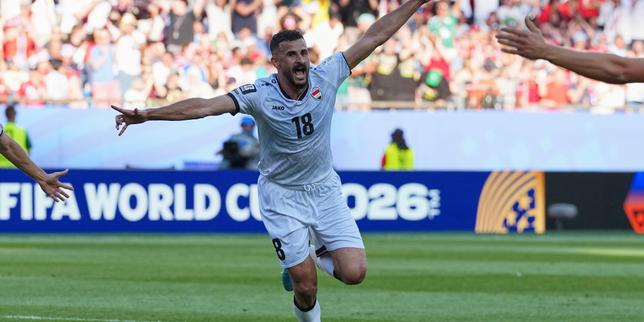
Egypt secured its first-ever World Cup victory with a dominant performance against New Zealand, driven by a historic display from Mohamed Salah. While the scoreline suggests a flawless triumph, the reality on the pitch exposed deep structural vulnerabilities that could derail the Pharaohs against elite opposition. This victory was less about tactical evolution and more about a world-class talent single-handedly masking systemic flaws.
The match was widely billed as a straightforward clash between African flair and Oceania's physical resilience. Egypt walked away with the points, but relying on a generational talent to paper over cracks in midfield transition is a dangerous strategy.
The Tactical Illusion Of Comfort
A glance at the final statistics shows absolute dominance. Egypt controlled possession, dictated the tempo for long stretches, and finished their chances with lethal precision. Beneath that surface, a different pattern emerged. New Zealand, structurally organized but lacking individual quality, repeatedly pierced the Egyptian press during the opening thirty minutes.
The Egyptian midfield often found itself disconnected from the defensive block. Against a more clinical opponent, this spatial gap would have resulted in early goals. Instead, the Kiwis lacked the final pass, turning over possession in areas that allowed Egypt to counter-attack at speed.
It was during these chaotic transitions that Mohamed Salah operated with devastating efficiency. He did not merely participate; he dictated where the spaces opened by dragging two, sometimes three defenders out of position. His movement created passing lanes that his teammates could exploit, transforming a sluggish buildup into a rapid assault.
Breaking The Low Block
When New Zealand retreated into a compact defensive shape, Egypt’s lack of a creative playmaker in the central corridor became glaringly obvious. The ball moved laterally, a predictable carousel that failed to stretch the opposition.
- Over-reliance on the flanks: Wingers were forced to drop deep to pick up the ball.
- Static central positioning: Striker movements were easily tracked by New Zealand's center-backs.
- Predictable crossing angles: Long balls into the box were easily cleared by a taller defensive line.
Salah resolved this bottleneck by abandoning his traditional right-wing starting position. By dropping into the half-spaces and operating as an unorthodox playmaker, he forced the central defenders to step up, creating the exact vertical gaps Egypt had struggled to find on their own.
The Physical Toll Of Carrying A Nation
Salah’s performance will be remembered for the records broken, but the physical demands placed upon him raise serious questions about tournament longevity. He covered more ground than any other forward on the pitch, frequently tracking back to help a struggling right-back who was repeatedly exposed by New Zealand’s overlapping wing-backs.
This work rate is unsustainable. Tournament football requires energy conservation. If Egypt must burn their brightest spark just to secure group-stage points against a lower-ranked side, the tank will be empty by the knockout rounds.
The domestic league system back home fails to produce players prepared for this intensity. The gap in physical conditioning between Salah, who has spent a decade in European sports science systems, and the domestic-based core of the squad is vast. It shows in the final twenty minutes of matches, when the pressing intensity drops and Egypt retreats into a low block out of sheer exhaustion.
Structural Fault Lines In The Egyptian Football Hierarchy
The Egyptian Football Association has long coasted on individual brilliance rather than structural development. Winning matches obscures the lack of modern academy infrastructure, poor coaching education, and a domestic league plagued by scheduling chaos.
When you look at nations that consistently reach the later stages of international tournaments, they rely on a system. France, Spain, and Germany can lose their star players and maintain their tactical identity because the machine is built to produce specific player profiles. Egypt does not have a machine. It has a lottery, and they happened to win the jackpot with Salah.
National Team Infrastructure Comparison
-----------------------------------------------------------------
Metric                 Elite Standards       Egyptian Framework
-----------------------------------------------------------------
Academy Integration    Unified Curriculum    Fragmented / Club-Led
Sports Science Tech    Centralized Data      Limited to Top Clubs
Coaching Pathways      Pro License Required  Inconsistent Reform
-----------------------------------------------------------------
This victory must not be used by administrators as a shield against criticism. The national team’s success happens in spite of the system, not because of it. Relying on an individual to constantly bail out tactical inefficiencies is a recipe for an abrupt exit when the opposition possesses the tactical discipline to neutralize a single threat.
The Defensive Vulnerabilities Nobody Wants To Discuss
New Zealand hit the woodwork twice. On both occasions, the danger arose from set-pieces where the Egyptian zonal marking system completely broke down. Players looked at each other rather than tracking runners, exhibiting a lack of communication that elite European or South American sides will punish without mercy.
The central defensive partnership lacks recovery speed. When the midfield press failed, the backline dropped deep too quickly, leaving a massive vacancy in front of the penalty box. New Zealand did not have the midfield orchestrator to exploit that zone, but future opponents will.
To progress, the coaching staff must fix the spacing between the defensive and midfield lines. The current setup leaves the center-backs completely exposed to runners from deep, a flaw that cannot be hidden by attacking fireworks on the other end of the pitch.
Looking Beyond The Scoreline
Celebrating a historic win is natural, but analytical honesty is required for progress. Egypt proved they have the firepower to destroy teams that allow the game to become stretched. They have not yet proven they can control a match through tactical superiority alone.
The reliance on Salah’s brilliance is both Egypt's greatest asset and their most profound weakness. Opponents now have the blueprint. Shut down the passing lanes to the right flank, isolate the central midfield, and wait for the physical drop-off in the second half.
Fixing these deficiencies requires immediate tactical adjustments, starting with a more compact midfield block and a defined plan for possession when their star forward is marked out of the game. The celebration ends tonight; the hard work of building a functional team remains.