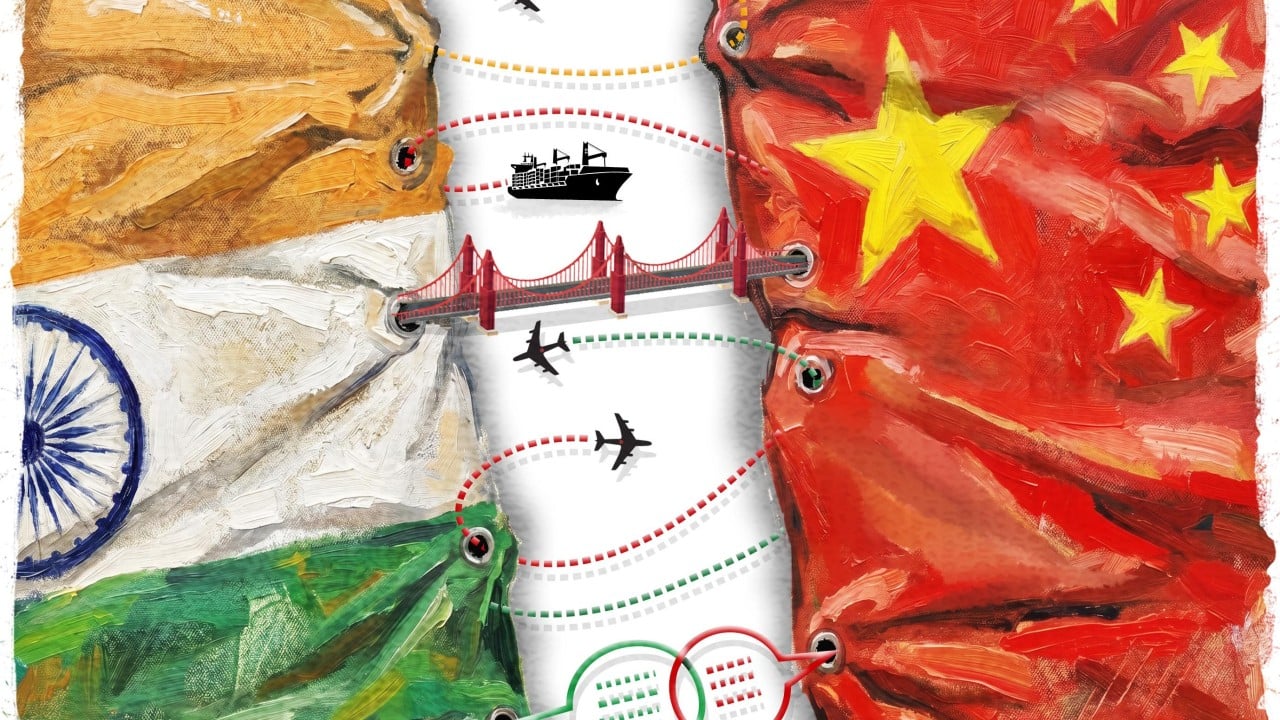
The conventional punditry loves a summit. Give them two heavyweights shaking hands across a polished oak table, and they write thousand-word essays about historic thaws and personal chemistry. The lazy consensus surrounding the India-China relationship rests entirely on this theatrical premise. Analysts look at Narendra Modi and Xi Jinping and argue that because these two leaders have not brokered a grand, headline-grabbing diplomatic breakthrough, the entire bilateral architecture is broken beyond repair.
They are wrong. They are looking at the theater while the actual machinery of statecraft operates completely out of sight. Recently making news in this space: State Clearance Operations and Border Management Mechanics in Ceuta.
Expecting personal diplomacy to solve a territorial and geopolitical friction point as massive as the Himalayan frontier is a fundamental misunderstanding of how nuclear-armed neighbors manage competition. Summits do not solve structural mistrust. In fact, waiting for a grand bargain between Beijing and New Delhi is a trap that blinds observers to the quiet, transactional stabilization happening on the ground every single day.
The Myth of the Summit Solution
Every few months, an op-ed appears lamenting the cold relations between the world’s two most populous nations. The argument always follows the same tired script. It claims that without direct, warm rapport between the prime minister and the president, border patrols will clash, supply chains will decouple, and diplomatic channels will freeze. More information regarding the matter are covered by USA Today.
This view assumes foreign policy is run like a high school clique.
I have spent years watching policy analysts project Hollywood psychology onto sovereign states. They treat geopolitical friction as a lack of emotional intelligence between leaders. But sovereign superpowers do not need to share tea or exchange pleasantries to avoid catastrophic escalation. They need mutually understood boundaries, credible deterrence, and commercial pragmatism.
Look at what actually happens when leaders stop trying to force historic compromises. The military commanders on the Line of Actual Control do not wait for a summit to negotiate troop disengagement protocols. Working-level diplomats and military brass hold corps-commander talks because the operational reality on the high-altitude desert requires functional management, not poetic declarations.
When you strip away the media circus of international summits, you find a cold, hard equilibrium. That equilibrium is far more durable than any staged handshake on a red carpet.
Trade Realism Versus Emotional Punditry
Let us address the economic elephant in the room, because this is where the conventional wisdom collapses under its own weight. Pundits love to claim that India and China are undergoing a total economic decoupling. They point to restricted app stores and tightened foreign direct investment scrutiny as proof that the two economies are severing ties.
The data tells a violently different story.
Bilateral trade between New Delhi and Beijing continues to shatter records, even amid heightened political rhetoric. India’s manufacturing sector remains deeply dependent on Chinese active pharmaceutical ingredients, heavy machinery components, and electronics inputs. You cannot manufacture green transition hardware or scale domestic electronics assembly without intermediate goods from across the northern border.
Pretending that India can simply flick a switch and decouple from the second-largest economy on earth is economic illiteracy.
Pragmatic business leaders know this. They quietly navigate the red tape while ideologues scream on television. The government in New Delhi implements selective restrictions not out of pure emotional hostility, but as a calculated effort to build domestic manufacturing muscle while keeping input costs manageable for Indian industry. It is a balancing act of industrial policy, not a declaration of total economic war.
Beijing understands this dynamic just as well. China has a massive overcapacity problem in manufacturing. It needs export markets that can absorb industrial output, and India's booming domestic demand is too lucrative to ignore. Commercial gravity always wins over political posturing.
The Real Friction Points Are Structural, Not Personal
The real reason Modi and Xi cannot bridge the divide isn't a lack of trying or personal animosity. The divide is structural. It is baked into geography and rising power dynamics.
Imagine a scenario where two ambitious, nuclear-armed titans share a disputed mountainous frontier while both strive for continental and maritime dominance in Asia. Tension is not a bug in this system; it is a feature.
China views its periphery through the lens of absolute security, seeking to project power into the Indian Ocean through ports, maritime routes, and strategic partnerships. India views the northern border not merely as a line on a map, but as an existential testing ground for its own aspirations of strategic autonomy and regional primacy.
No amount of personal rapport between two leaders can wish away structural security competition. If Modi and Xi signed a piece of paper tomorrow declaring eternal friendship, the underlying geopolitical vectors would remain entirely unchanged. The Chinese navy would still expand its presence in the Indian Ocean. India would still build mountain strike corps and deepen its alignment with Indo-Pacific security architectures like the Quad.
Expecting a summit to erase geopolitical reality is like expecting a weather forecast to stop a hurricane.
Managing Competition Without Collapsing
If the grand bargain is a fantasy, what replaces it? The answer is a messy, unglamorous concept called competitive coexistence.
Neither nation wants an all-out war. A hot conflict between India and China would shatter their respective economic trajectories and hand strategic dominance to outside powers. Because the costs of escalation are catastrophic, both capitals have developed sophisticated methods of containing friction below the threshold of war.
They posture fiercely for domestic audiences, maintain strict forward deployments, and engage in relentless diplomatic and economic jockeying. At the same time, they maintain open communication backchannels to ensure that tactical misunderstandings do not spiral into strategic disasters.
This is not failure. This is great power management.
Stop waiting for Modi and Xi to solve a divide that is centuries in the making and structural to the core. Stop looking for theatrical handshakes to validate the state of Asian geopolitics. The real story is happening in the unglamorous trenches of military disengagement talks and corporate supply chain adjustments, where both nations manage a fierce rivalry without destroying each other in the process.