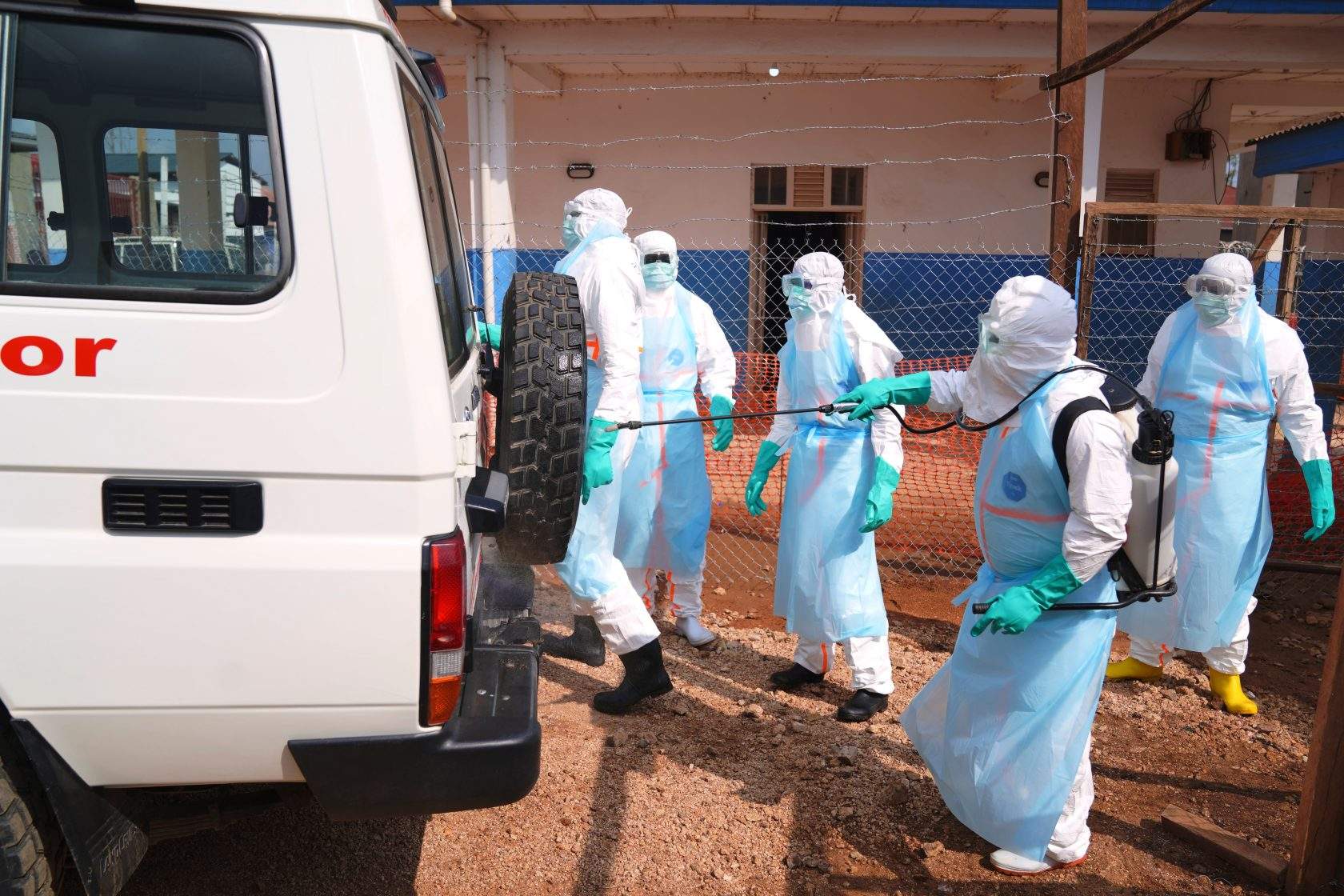
The headlines write themselves. Health Canada greenlights a clinical trial for Moderna's mRNA Ebola vaccine, and the commentariat swoons. Another triumph for platform technology. Another victory for lipid nanoparticles sprinting to save humanity from the next pathogen at the gates.
It sounds wonderful. It also betrays a profound misunderstanding of how epidemics actually work, why previous outbreaks burned out, and where the real bottlenecks in global health spending lie. For another perspective, check out: this related article.
I have watched venture capital and public grants pour billions into platform versatility while basic supply chain infrastructure rots in the developing world. The lazy consensus says that if you can code an mRNA sequence for a new target in forty-eight hours, you have solved the outbreak equation.
You haven't. You've just written a very fast script for a play nobody can stage. Related analysis regarding this has been published by Everyday Health.
The Flawed Premise of Speed
Let us look at the core argument driving this approval: speed of manufacture. The narrative goes that traditional viral vector or recombinant protein vaccines take too long to scale, whereas mRNA platforms allow scientists to pivot manufacturing on the fly.
This argument collapses the moment it encounters the realities of distribution. Ebola is not an airborne respiratory virus that sweeps through an office park in Düsseldorf over a long weekend. It is a zoonotic pathogen localized primarily in remote regions of Central and West Africa, characterized by rapid onset, intense symptom visibility, and short transmission chains heavily tied to traditional burial practices and direct contact with bodily fluids.
When an Ebola outbreak strikes, the primary constraint has never been the design speed of the antigen. The primary constraint is the cold chain.
Moderna's current formulations require ultra-low temperature storage. Shipping sub-zero vials across rural expanses where electricity is intermittent, paved roads are seasonal, and local clinics run on diesel generators that run out of fuel by Tuesday afternoon is a logistical nightmare. Designing a vaccine that takes three days to whip up in a laboratory in Cambridge, Massachusetts, is an academic triumph. Deploying a product that requires a mobile cryogenic freezer to a village outside Kikwit is an administrative fantasy.
The Economics of Preparedness Theatre
We need to talk about capital allocation. Global health funding is a finite pool. Every dollar diverted into speculative, platform-driven phase-one trials for a disease with a stable, highly effective, pre-existing licensed vaccine is a dollar stolen from pragmatic interventions that actually stop people from dying.
Let us be precise about the competitive landscape. Merck’s Ervebo (rVSVΔG-ZEBOV-GP) already exists. It is a live-attenuated recombinant vaccine that proved remarkably effective during the late-stage outbreaks in the Democratic Republic of Congo and Guinea. It works. It has field data. It has regulatory endorsements.
Why are we reinventing the wheel with an mRNA candidate that requires extreme refrigeration?
The answer has less to do with public health necessity and more to do with corporate amortization. Large biotech operations require continuous pipeline expansion to justify valuations to public markets. If you build an mRNA manufacturing jugno- behemoth during a global pandemic boom, you cannot simply let those bioreactors sit idle once endemic demand normalizes. You must find targets. You must spin up trials. You must feed the beast.
Calling this an urgent humanitarian mission is good public relations. It is poor epidemiology.
The Cold Chain Fallacy
Imagine a scenario where an outbreak hits a remote logging camp. You have ten thousand doses of an ultra-cold mRNA vaccine sitting in a central warehouse three hundred miles away. By the time you procure dry ice, charter a four-wheel-drive vehicle, navigate washed-out bridges, and locate the population at risk, the local transmission chain has either burned out through aggressive contact tracing and isolation, or it has devastated the community while your shipments sat melting in the back of a pickup truck.
The industry loves to talk about platform agility while ignoring delivery fragility.
Merck’s vaccine, despite its own logistical hurdles, has a massive head start in real-world deployment data and stability profiles suited for field conditions. Trying to unseat an incumbent product that already solved the clinical efficacy puzzle—not just in mice, but in actual outbreak zones—simply because your new tool uses a trendier scientific alphabet is a vanity project.
Unconventional Advice for Global Health Allocators
If you actually want to prepare for the next filovirus threat, stop funding vanity platform expansions and start funding the boring stuff.
- Invest in thermostable formulations: If mRNA cannot survive outside a deep freeze for more than a few hours, it is a rich-world luxury good, not an outbreak weapon. Put capital into room-temperature stable adjuvants and lyophilization techniques.
- Fund local manufacturing ecosystems: Shipping vials from North America to Africa during a crisis is a relic of colonial medical paternalism. True preparedness means regional fill-finish facilities owned and operated by the nations experiencing the outbreaks.
- Prioritize last-mile delivery infrastructure: Buy motorcycles, solar-powered clinic refrigerators, and train local community health workers. A mediocre vaccine delivered on day two beats a miraculous vaccine delivered on day twenty.
Health Canada approving a trial isn't a milestone for humanity. It's a marketing milestone for a platform looking for a war to fight.
Stop funding the technology looking for a home. Fund the homes that actually need protection.