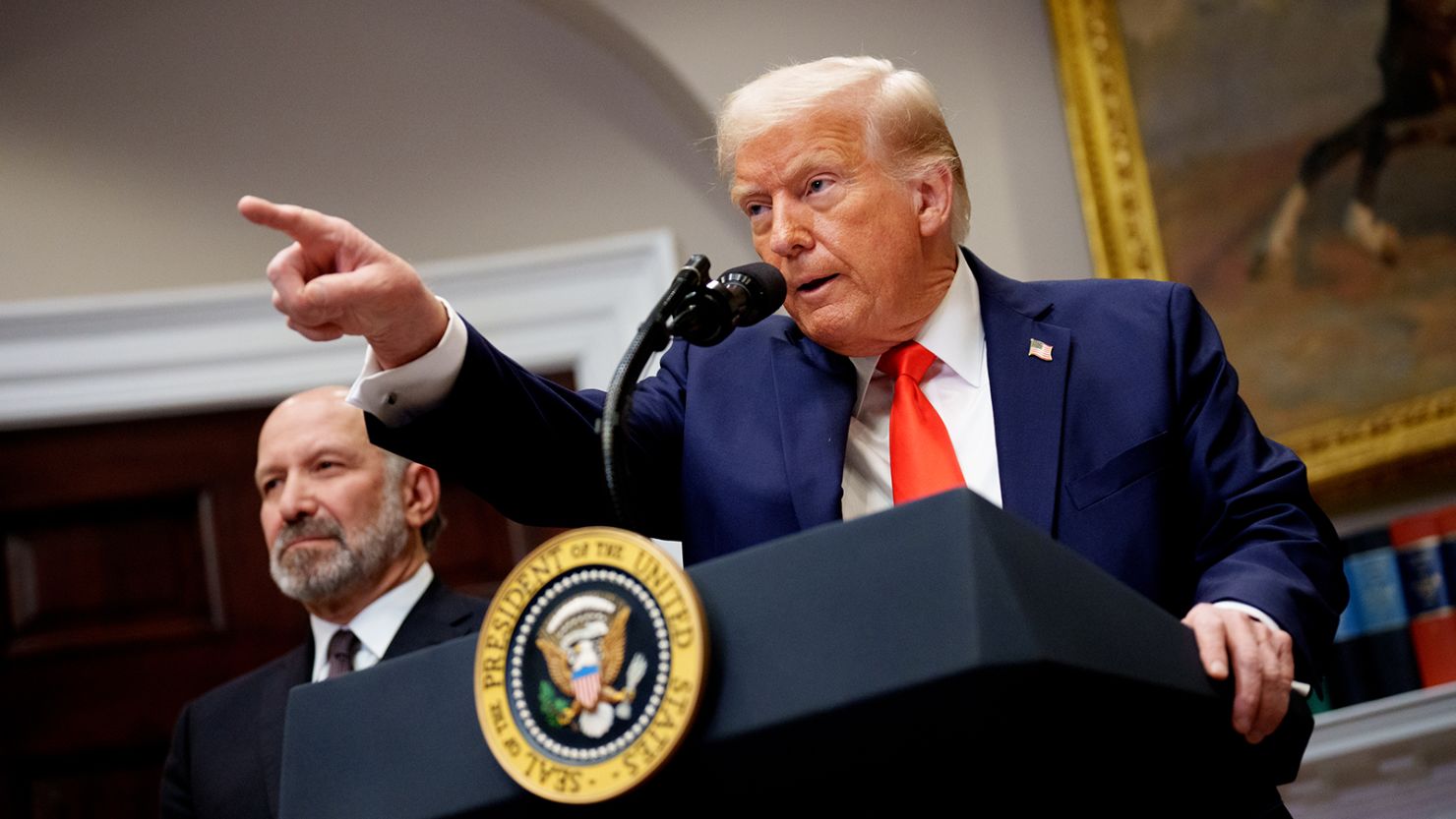
The headlines are panicking. They scream about "empty magazines" and "depleted stockpiles" following the regional flare-up with Iran. The consensus—that lazy, beltway-driven anxiety—is that the United States has traded its Pacific deterrent for a tactical win in the Middle East. They want you to believe that as Trump lands for a high-stakes summit, he is playing a hand with no cards.
They are dead wrong.
This isn't a story about a shortage. It’s a story about a long-overdue industrial purge. The narrative that China "wins" because the US burned through a few thousand interceptors is a fundamental misunderstanding of how modern attrition works and how the Pacific theater actually functions. We aren't getting weaker; we are finally clearing the shelf of legacy hardware to make room for the tech that actually scares Beijing.
The Interceptor Fallacy
Most analysts treat missiles like gold bars—as if having more of them in a vault automatically equals power. They look at the expenditure of Standard Missile-3 (SM-3) and SM-6 interceptors during the Iran engagement and calculate a "deficit" based on current production rates at Raytheon.
What they miss is the Asymmetric Cost Curve.
In the Middle East, the US used high-end interceptors to swat down low-cost drones and ballistic missiles. On paper, that’s a bad trade. But for the industrial base, this was the ultimate live-fire stress test. I’ve sat in rooms where "modelled reliability" was used to justify billions in spending. Models are lies. Combat data is the only truth. The US didn't just "lose" missiles; it gained a decade’s worth of telemetry on how its systems perform against real-world saturated threats.
China isn't looking at our "empty" silos. They are looking at the fact that our kill-chain is now combat-hardened, while theirs remains a series of glossy PowerPoint slides and untested simulations.
The Logistics of a Paper Tiger
The "missile gap" fear-mongers assume that a conflict with China would be a mirror image of the Red Sea or Ukraine. It won't. If the US and China square off, the number of interceptors in a warehouse in Arizona won't be the deciding factor. The bottleneck is—and always has been—VLS (Vertical Launch System) cell density and at-sea reloading.
You can have a million missiles, but if your ships have to sail back to Guam or Hawaii to crane them into the deck, you are out of the fight for weeks. The real "hand" Trump holds isn't a count of physical missiles; it's the pivot toward distributed lethality and the rapid deployment of "Atritable" systems.
The competitor articles love to cite the 1,000-missile deficit. They never mention the Replicator Initiative. While the legacy defense primes are struggling to hand-build $2 million interceptors, the shift is moving toward mass-produced, low-cost loitering munitions. China’s strategy relies on "Salami Slicing"—taking small chunks of territory while the US is distracted. You don't stop a salami slicer with a billion-dollar Aegis destroyer. You stop it with ten thousand $50,000 drones.
The Trap of Sunk Cost
The "shortage" is actually a golden opportunity to kill the "Exquisite Platform" obsession.
For decades, the US military-industrial complex has been addicted to "exquisite" tech—platforms so expensive and complex we are afraid to lose them. China’s entire military modernization program was built specifically to counter this American weakness. They built "carrier killers" because we only have 11 carriers.
By burning through the old inventory against Iran, the US is forced to accelerate the transition to the "Small, Smart, and Cheap" paradigm. This is China's nightmare. They spent thirty years building a defense against a sniper rifle, only to realize the US is now showing up with a cloud of bees.
If Trump wants to "strengthen his hand," he shouldn't be asking for more of the same missiles we just used. He should be signaling a total abandonment of the legacy procurement cycles. The "shortage" is the perfect political cover to defund underperforming programs and shift those billions into high-rate manufacturing of autonomous systems that don't require a decade-long lead time.
The Myth of Chinese Production Superiority
We hear it constantly: "China’s shipyards are 200 times more productive than ours." "China can out-produce the US in a week."
This is a classic case of quantity vs. functional integration. Building a hull is easy. Building the radar-to-effector logic that allows a missile to hit a hypersonic target is incredibly hard. China’s "hand" is weakened by the fact that their entire industrial base is a black box of unproven components.
When the US uses missiles in a conflict, we are performing a global marketing campaign and a QA test simultaneously. Every SM-3 that hit an Iranian target sent a message to the People's Liberation Army (PLA): Our stuff works. Does yours?
Confidence is the currency of deterrence. Right now, the US has high-octane confidence based on recent results. China has nothing but "projected" capabilities.
The Presidential Leverage
The argument that Trump is arriving "weakened" assumes he plays by the rules of traditional diplomacy. He doesn't. A missile shortage isn't a liability for a negotiator like Trump; it’s a demand signal.
He can go to Beijing and say, "We’ve cleared out the old junk. My industrial base is now pivoting to a war footing to build the next generation of weaponry specifically designed for you. Either we talk trade and territory now, or I unleash the full capacity of American tech-sector manufacturing."
It turns a tactical deficit into a strategic threat. It’s the "Madman Theory" backed by industrial reality.
The Hidden Advantage of Attrition
War is a process of learning. The US is currently in a state of continuous learning. Our sensors are seeing real threats. Our crews are loading real rounds under pressure. Our logistics officers are feeling the real pain of supply chain gaps.
China is watching from the sidelines, taking notes on a game they haven't played since 1979.
The "shortage" has exposed the fragility of the JIT (Just-In-Time) defense model. This is the "battle scar" that will actually save the US in a Pacific conflict. Because we are running low now, we are fixing the supply chains now. We are qualifying new solid rocket motor suppliers now. We are multi-sourcing microelectronics now.
If the "shortage" hadn't happened until the first week of a war over Taiwan, the US would lose. Because it's happening during a "minor" conflict in the Middle East, the US is being forced to mobilize its industrial base in peacetime.
Stop Counting, Start Assessing
The question isn't "How many missiles do we have left?"
The question is "How many of China's assumptions did we just invalidate?"
By showing the world—and China—that US missile defense is not just a theory but a functional shield, the US has actually increased its deterrence. A thief doesn't care if a homeowner has ten bullets or five; he cares that the homeowner is a crack shot who just proved he’ll pull the trigger.
The "missile gap" is a ghost. The depletion is a pivot. The hand hasn't been weakened; it’s been forced to stop bluffing and start building.
China isn't watching a declining power. They are watching a giant finally realize it needs a better hammer.
The most dangerous opponent isn't the one with the biggest pile of old ammunition. It’s the one who just realized they need a newer, faster way to kill you—and has the bank account and the existential motivation to build it tomorrow.
Trump isn't walking into a trap. He's walking in to tell China that the "old" US military is out of stock, and they aren't going to like what's replacing it.