Gravity doesn't care about your rank, your training, or how many successful jumps you have under your belt. When you leap out of a military transport plane, you're placing your life entirely in the hands of physics, your equipment, and the people jumping alongside you.
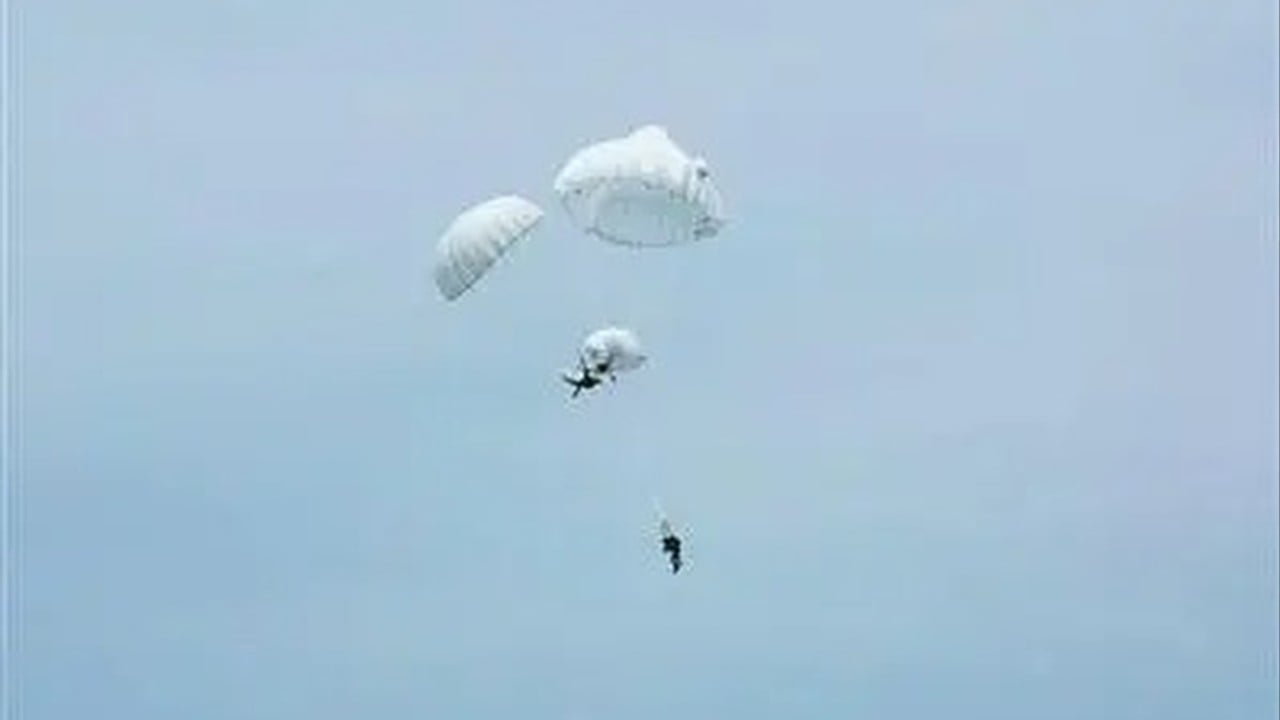
A recent parachute refresher training exercise in China drove this reality home in the most dramatic way possible. What should've been a routine tactical drill quickly transformed into a terrifying mid-air survival scenario when a People's Liberation Army (PLA) paratrooper knocked unconscious during freefall had his life saved by the split-second instincts of a comrade.
It's the kind of nightmare scenario that airborne forces worldwide train for but hope they never actually face.
The Reality of Mid Air Collisions
Parachuting in a military context isn't a leisurely weekend skydive. You're jumping with heavy gear, often in tight formations, and moving at extreme speeds. The margin for error is basically zero.
During the recent refresher training session, a Chinese paratrooper lost consciousness shortly after exiting the aircraft. While specific details on the cause remain tightly guarded by military officials, such incidents usually stem from two primary culprits: a violent mid-air collision with another jumper in the chaotic slipstream or a sudden medical emergency like hypoxia or g-force induced blackouts.
When a jumper goes limp in the sky, they become a falling rock. They can't check their altitude. They can't pull their rip cord. They're entirely helpless.
A Life Saved in Freefall
Thankfully, another paratrooper in the formation noticed something was terribly wrong. Spotting his comrade descending listlessly and failing to deploy his canopy, the soldier made a split-second decision to intercept.
In the world of military jumps, trying to track down and grab a limp body while plummeting toward the earth at terminal velocity is incredibly dangerous. You risk colliding, tangling lines, or losing track of your own altitude, which means both jumpers die.
The rescuing paratrooper maneuvered his body through the air, closed the gap, and managed to manually deploy his unconscious comrade's emergency reserve chute before deploying his own. Both soldiers made it to the ground alive. When later questioned about the harrowing mid-air rescue, the soldier simply stated he would make the same choice again without hesitation. That's not bravado; it's the exact mindset drilled into elite airborne units.
The Margin Between Life and Death
This isn't an isolated stroke of luck. It's a testament to the brutal, repetitive training military jumpers undergo. Whether you're looking at the PLA, the US Army's 82nd Airborne, or British paratroopers, the core protocols for handling a compromised jumper rely on absolute situational awareness.
Jumpers are taught to constantly scan the airspace around them. If a teammate is spinning out of control or floating unresponsive, someone has to act before the automatic activation devices (AAD)—which deploy a chute at a preset altitude—face a mechanical failure.
If you ever find yourself interested in the mechanics of high-stakes military operations or the technical gear that keeps these soldiers alive, looking up public training manuals or watching official jumpmaster breakdowns can offer a massive appreciation for what these men and women risk every time they step to the door. Keep your eyes on the skies and never take safety protocols for granted.
Jumpmaster breaks down airborne safety
This video features an experienced jumpmaster explaining the exact split-second safety decisions and line checks required to prevent catastrophic failures during military airborne operations.