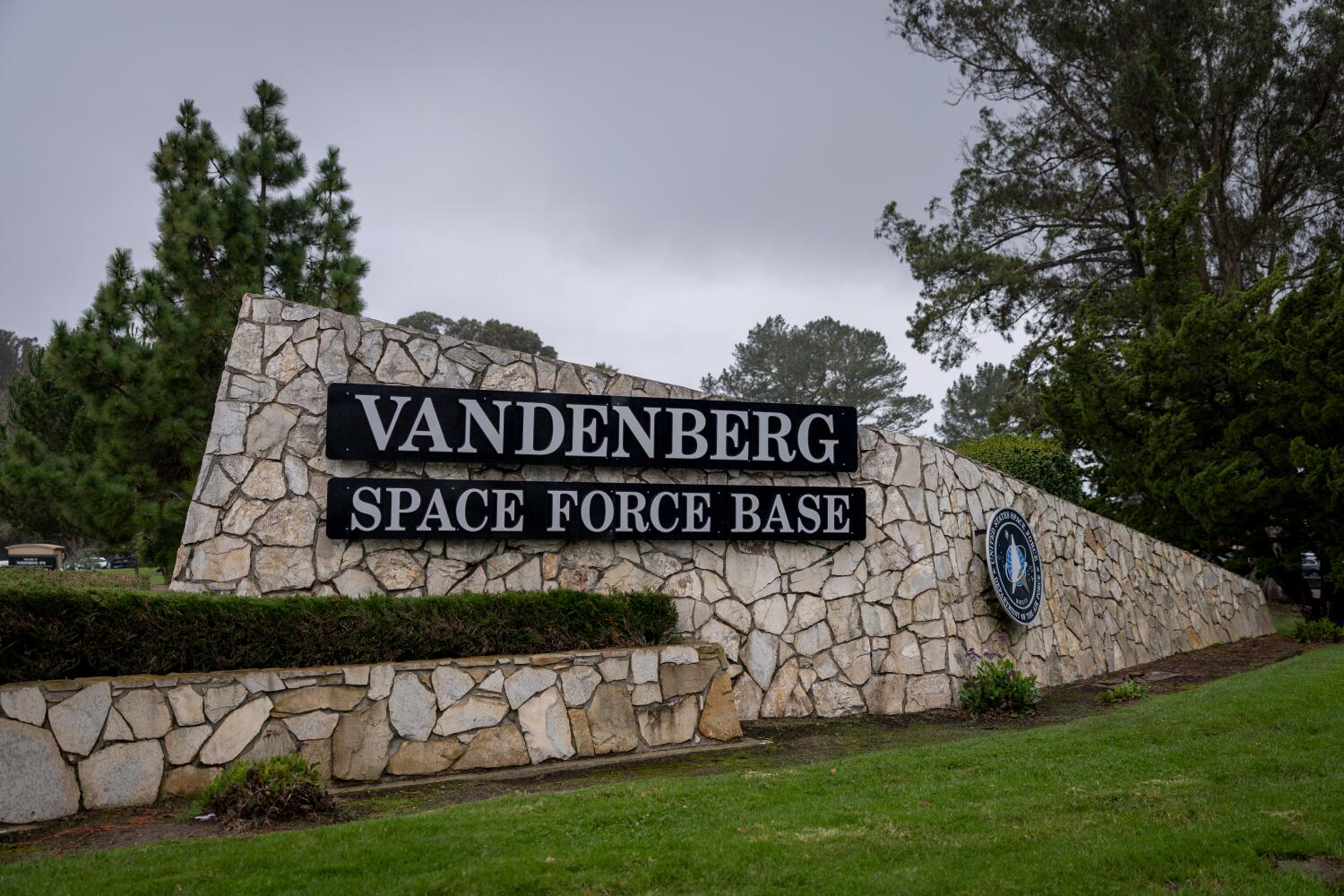
The tragic death of an Airman in a heavy machinery incident at Vandenberg Space Force Base follows a script the defense sector knows by heart. The press release drops. Words like "deeply saddened" and "under investigation" are deployed like countermeasures. The public nods, assuming a freak mechanical failure or a momentary lapse in judgment occurred.
They are wrong.
The lazy consensus surrounding military industrial accidents always points to individual negligence or the inherent danger of "the job." Media outlets regurgitate the official boilerplate, waiting for a safety board report that will inevitably recommend more training slideshows and longer pre-op checklists.
This response is not just inadequate; it is lethal.
Bureaucracy loves checklists because they shift liability downward. When a multi-ton piece of equipment crushes an operator, the system immediately looks to see which box wasn't ticked. But after managing complex logistics systems and auditing high-risk industrial environments for over a decade, I can tell you the brutal truth: the checklist itself is often the root cause of the fatality. We are burying personnel because we value compliance over cognitive engagement.
The Tyranny of the Checklist
High-reliability organizations—think nuclear aircraft carriers, spaceports, and chemical plants—suffer from a structural disease called compliance creep.
When an accident occurs, the institutional reflex is to add another layer of bureaucracy. If a five-step inspection failed to prevent a mishap, the logic goes, we clearly need a fifteen-step inspection.
This is a dangerous delusion.
Imagine a scenario where a heavy equipment operator spends forty-five minutes filling out a Technical Order compliance form before even starting an engine. By the time they actually engage the machinery, their mental energy is depleted. They have achieved "paper safety." Their brain signals that the danger has been managed because the form is green.
This psychological phenomenon is known as risk compensation, and the military is addicted to it.
[Excessive Bureaucracy] ➔ [Cognitive Fatigue] ➔ [False Sense of Security] ➔ [Catastrophic Failure]
When you standardize every single movement, you eliminate the operator's need to think. You turn highly trained personnel into mindless executioners of steps. The moment the environment shifts—a grade changes, the load shifts, the ground softens—the checklist becomes useless. If the operator has been trained to rely on the paper rather than their own spatial awareness, the system fails. And in the space launch business, system failure means a flag-draped coffin.
The Flaw of "Zero Harm" Rhetoric
Defense contractors and military commands love to plaster "Target Zero" and "Zero Harm" banners across maintenance bays. It looks great on a quarterly review.
It is also an absolute lie that breeds toxic reporting cultures.
When leadership demands a metric of zero incidents, they do not actually eliminate hazards. They eliminate the reporting of hazards. Junior personnel quickly learn that flagging a near-miss or a malfunctioning hydraulic line results in a mountain of paperwork, operational delays, and intense scrutiny from command. So, they keep their mouths shut. They "make it work." They patch the leak, bypass the faulty sensor, and keep moving.
The aviation safety pioneer James Reason detailed the "Swiss Cheese Model" of accident causation, where multiple latent defects must align for a catastrophe to occur. In military environments, those holes align because the reporting culture is broken by design. The pressure to maintain operational readiness rates creates an environment where cutting corners is implicitly rewarded right up until the second it results in a fatality.
Let's look at how this manifests across different operational environments:
| Metric / Attribute | The Compliance Illusion | The Resilient Reality |
|---|---|---|
| Primary Goal | Flawless paperwork audit | Real-time hazard mitigation |
| Operator Status | Passive checklist follower | Active risk manager |
| Response to Near-Miss | Investigation and punishment | System-wide engineering fix |
| Leadership Focus | Metric preservation (Zero Harm) | Vulnerability identification |
If you are running an operation where your safety metrics look perfect month after month, you shouldn't be celebrating. You should be terrified. It means your people are hiding the reality of the floor from you.
Designing Out the Human Element
We need to stop pretending that better training will fix systemic design flaws.
Human beings are naturally variable. We get tired. We get distracted. We have fights with our spouses before a shift. Any system that relies on a human being remaining 100% focused for a twelve-hour shift in high-heat, high-stress environments is fundamentally broken.
The civilian sector learned this years ago through the Hierarchy of Controls, yet the defense apparatus remains stuck in the mid-20th century, heavily relying on the weakest forms of mitigation: Administrative Controls and Personal Protective Equipment (PPE). A high-visibility vest and a hard hat have never stopped a twenty-ton crawler from crushing a human body.
We must force a shift toward hard engineering controls and automation.
- Interlocking Systems: Heavy machinery operating in proximity to personnel must be equipped with physical interlocks that completely kill power if a proximity sensor is breached.
- Decoupled Workzones: If a mission requires heavy lifting or transport, human bodies must be physically barred from the zone. No exceptions for "expedient operations."
- Predictive Telemetry: We instrument rockets with thousands of sensors to detect micro-variations in pressure and temperature. Yet, the ground support equipment used to move them is often decades old, lacking basic load-sensing telemetry that could automatically halt a maneuver before a tip-over occurs.
Yes, upgrading infrastructure costs millions. Yes, implementing hard engineering controls slows down the immediate operational tempo. But continuing to run legacy hardware on a diet of human blood is a terrible business model.
The Price of Truth
If we want to stop killing Airmen and Guardians at places like Vandenberg, we have to accept the downside of a truly resilient system.
It means letting commanders fail readiness inspections because they refused to operate faulty gear. It means halting a high-visibility space launch because a ground crew operator felt a piece of machinery vibrating incorrectly, even if that delay costs the government half a million dollars an hour.
Right now, the system is not built to handle that level of honesty. We prefer the comfortable illusion that accidents are anomalies. They aren't. They are the logical, predictable output of a system that prioritizes the speed of the mission and the perfection of the paperwork over the realities of human biology and mechanical wear.
Stop rewriting the checklists. Burn the safety banners. Fix the hardware, or accept responsibility for the next tragedy before it happens.