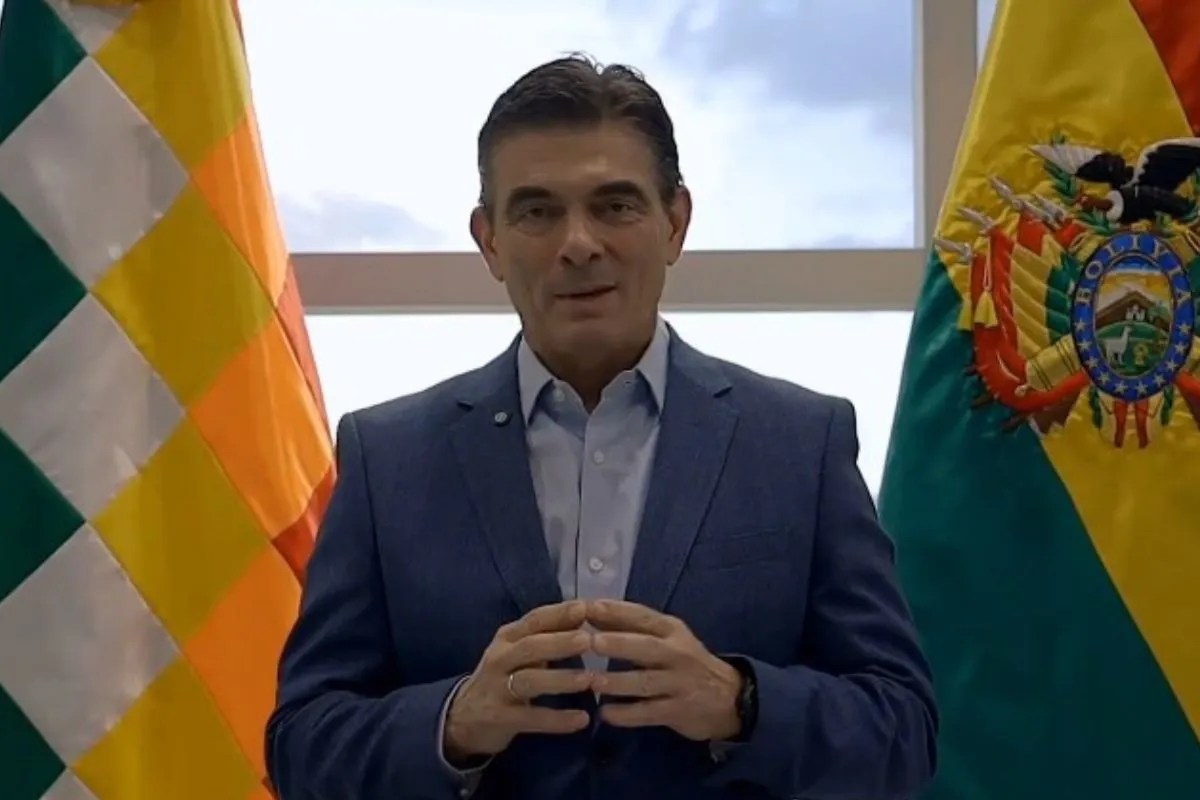
Bolivia has officially hit a breaking point. After 50 straight days of paralyzed highways, stranded cargo trucks, and empty grocery shelves, President Rodrigo Paz dropped the hammer on Saturday by declaring a nationwide state of emergency.
If you've been watching South American politics lately, you knew something had to give. The country has been slowly suffocating under an aggressive web of road blockades that cut off major cities like La Paz from food, fuel, and vital medical supplies. By triggering this state of exception, President Paz is doing what his center-right government desperately avoided for nearly two weeks—sending the military onto the asphalt to forcibly reopen the country's transport veins. If you found value in this post, you might want to look at: this related article.
But don't assume this is just a quick police action to clear traffic. This crisis runs way deeper than a few angry protests. It's the explosive collision of a dried-up state purse, a brutal US dollar shortage, and an ugly political blood feud that's tearing the country apart.
The Spark That Blew Up Bolivia's Subsidies
Let's look at how things got this bad. The madness kicked off in early May when President Paz, who only took office last November, tried to fix a massive fiscal deficit. His solution was to cut long-standing state subsidies on fuel. For another perspective on this story, refer to the latest coverage from The New York Times.
In Bolivia, cheap, state-subsidized fuel is practically a sacred right. Touching it is the ultimate political third rail. Paz felt his hands were tied because the country is flat-out running out of foreign currency reserves. Without US dollars, Bolivia can't easily import the gasoline and diesel it needs to keep the lights on. The government has been quietly talking with the International Monetary Fund (IMF) to secure a lifeline, and those kinds of talks always come with one condition: stop spending money you don't have.
When the fuel subsidies took a hit, the reaction was instant and fierce. What started as localized labor strikes quickly mutated into a massive, nationwide anti-government movement. The streets filled up with a volatile mix of transport workers, miners, schoolteachers, and rural indigenous groups.
Even though the Paz administration panicked a few weeks ago and rolled back some of the changes—even repealing a highly controversial agrarian land reform law—the genies were already out of the bottle. The demands shifted from "fix fuel prices" to "increase our wages, end the dollar crunch, and get out of office."
A Nation Held Hostage by Highway Blocks
To understand how a protest can bring an entire country to its knees, you have to look at Bolivia's geography. The country relies heavily on a few critical highways connecting the agricultural lowlands to the high-altitude cities. If you block a single junction in Cochabamba, you effectively slice the country in half.
That's exactly what happened. For nearly two weeks, thousands of trucks loaded with meat, vegetables, and medicines have been rotting under the sun on provincial roads. In supermarkets across La Paz, the price of basic goods has skyrocketed, leaving locals staring at empty meat cases and inflated price tags.
Paz actually managed to sign a peace deal on Friday night with the Bolivian Workers' Confederation (COB), the country's largest umbrella union. For a split second, it looked like the tension might break. But the celebrating didn't last past sunrise. It turns out the people holding the most strategic roadblocks aren't listening to the big city union bosses.
The Shadow of Evo Morales
The real muscle behind these blockades belongs to rural indigenous associations, including the militant highland movement known as the Ponchos Rojos. These groups are fiercely loyal to former leftist President Evo Morales.
The political math here isn't complicated. Morales and his allies see a massive opportunity to break the current administration. While President Paz claims these blockades are an organized attempt to destabilize Bolivian democracy, Morales counters that the protests are a natural reaction to raw economic suffering and political persecution.
Because the pro-Morales rural factions were left out of Friday's union negotiations, they simply refused to pack up their tents. They stayed on the asphalt in Cochabamba, forcing the president's hand.
What Happens Under the State of Emergency
By declaring this emergency, Paz is taking a massive gamble. The decree gives the executive branch broad constitutional powers to deploy the armed forces domestically to clear roads and maintain public order.
"This is not a state of emergency to restrict people's lives," Paz argued in his televised live address on Saturday. "It is a state of emergency to give freedom back to the people."
But the clock is ticking on the legality of this move. Under Bolivian law, the president has exactly 24 hours from issuing the decree to notify Congress. From there, the legislature has 72 hours to either approve or reject the state of emergency. Given the fractured nature of Bolivia's parliament, getting that stamp of approval is going to be a brutal political knife fight.
The Structural Rot Under the Surface
If you want to know why Bolivia is so fragile right now, you have to look past the political theater and focus on the math. For over a decade, Bolivia's economy was fueled by state-led natural gas exports. That model is dead.
The country's four mega gas fields are practically exhausted. At the same time, major buyers like Brazil and Argentina have discovered their own domestic energy alternatives, drastically reducing how much cash flows back into the Bolivian treasury. The government hoped that massive lithium reserves in the salt flats would save the day, but that industry has stalled out due to bureaucratic red tape and technical delays.
With no gas money coming in and no lithium money ready to go, the state has been burning through its cash reserves just to keep things stable. Now, the bills are due.
If you are an investor, an expat, or someone trying to do business in the region, the immediate steps forward are purely defensive. You need to prepare for sudden supply chain reroutes away from the central corridors of Cochabamba and Santa Cruz. Cash management needs to shift entirely away from the local Bolivian Boliviano, which is facing immense downward pressure, and into hard currencies or regional hubs like Peru or Chile until the congressional vote on the emergency order clarifies who actually controls the state. Expect major flight disruptions and airport fuel shortages to continue over the next 48 to 72 hours as the military attempts to secure key infrastructure.