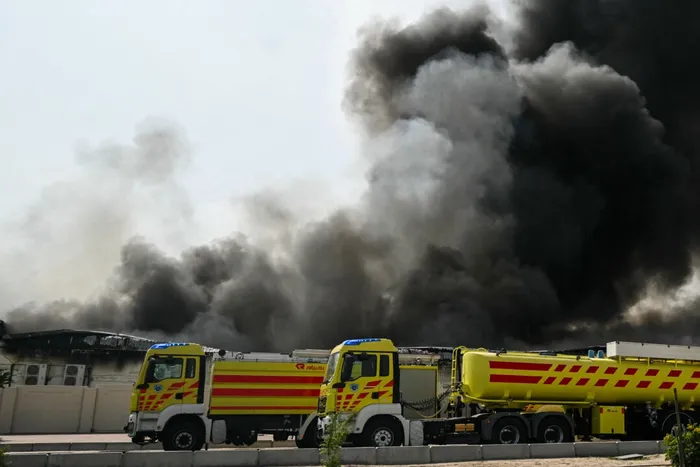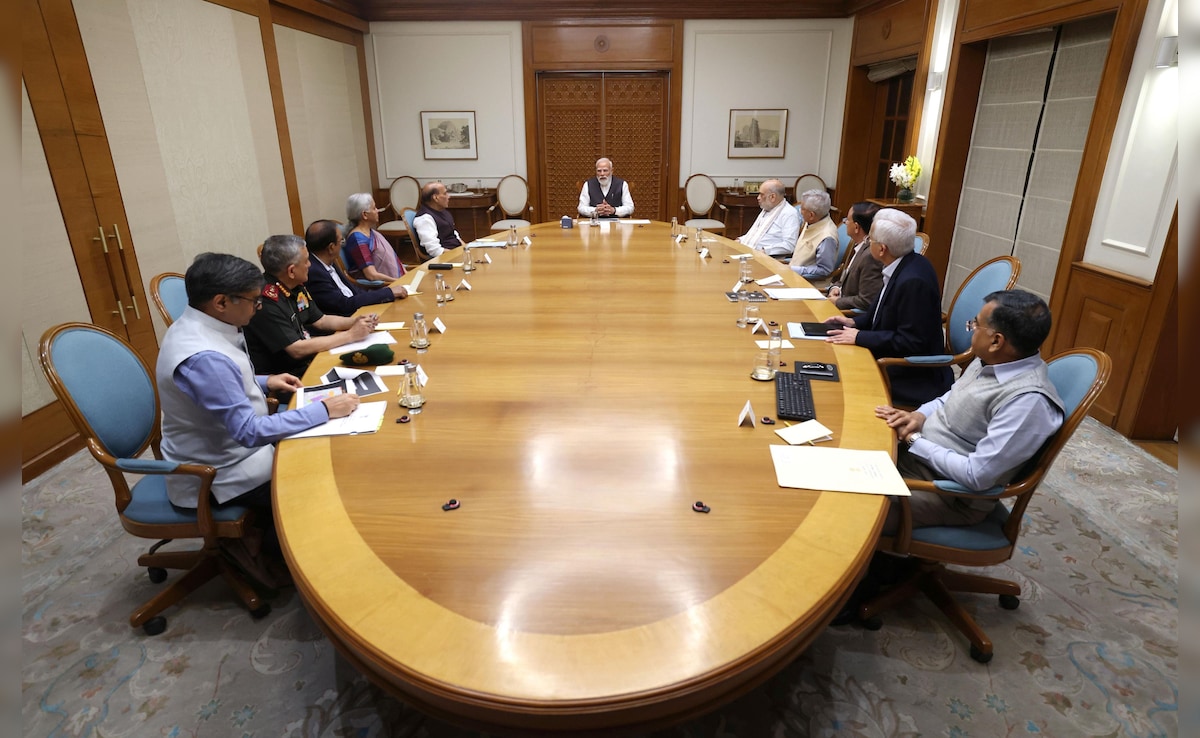
The security of 9 million Indian nationals in the Middle East is no longer a matter of routine diplomatic oversight. It has become a high-stakes survival exercise for the Indian economy. As regional tensions escalate, the Cabinet Committee on Security finds itself staring at a logistical and fiscal nightmare that could derail decades of growth. This is not just about bringing people home. It is about the potential collapse of a financial lifeline that keeps the Indian rupee from a freefall.
The sheer scale of the Indian presence in the Gulf defies easy categorization. From the high-rise boardrooms of Dubai to the sweltering construction sites of Qatar, Indian labor and intellect are the invisible scaffolding of the Arab world. Should a full-scale regional conflict break out, the challenge is twofold: the physical evacuation of a population the size of a small nation and the sudden evaporation of over $50 billion in annual remittances.
The Remittance Trap and the Rupee
India is the global leader in receiving remittances, and a massive chunk of that capital flows directly from the Persian Gulf. When we talk about the stability of the Indian rupee, we are implicitly talking about the sweat of blue-collar workers in Saudi Arabia and the UAE. These funds do not just support families; they bridge India's trade deficit.
If the oil-rich monarchies are dragged into a sustained kinetic conflict, that tap shuts off instantly. The economic shock would be felt not in Riyadh, but in the villages of Kerala, Uttar Pradesh, and Bihar. We are looking at a scenario where millions of families lose their primary income source simultaneously, while the Indian state is forced to foot the bill for the largest maritime and aerial sealift in human history.
Historical precedents like the 1990 Kuwait airlift, which saw 170,000 Indians evacuated, are often cited as proof of India's capability. That is a dangerous miscalculation. Moving 170,000 people is a logistical feat; moving 9 million in the age of drone swarms and precision missile strikes is a mathematical impossibility. The math simply does not hold up.
The Infrastructure of a Mass Exit
The Indian government has been quietly mapping out "safe zones" and transit corridors, but the reality on the ground is far more chaotic. Modern warfare in the Middle East is no longer confined to traditional battlefields. It affects desalination plants, power grids, and digital infrastructure.
- Airspace Closure: In a hot war, commercial corridors are the first to go. India’s reliance on Air India and private carriers for evacuations assumes that the skies remain open.
- Maritime Chokepoints: The Strait of Hormuz is the jugular vein of global energy and the primary exit route for shipping. A blockade there doesn't just stop oil; it traps people.
- The Documentation Gap: A significant percentage of the 9 million are undocumented or have surrendered their passports to "kafeel" sponsors. In a crisis, these individuals become ghosts in the system, unable to cross borders or board government vessels.
The Cabinet's current deliberations aren't just about ships and planes. They are about the legal hurdles of "Kafala" systems that might prevent workers from leaving during an emergency. New Delhi is reportedly leaning on its "strategic partnerships" with Gulf monarchs to ensure that Indian lives are prioritized, but in a survival scenario, every nation looks inward first.
The Myth of the Skill Set Transition
There is a common fallacy in domestic policy circles that a mass return of migrants could be converted into a "brain gain" for India's manufacturing sector. This is a gross misunderstanding of the migrant demographic.
The vast majority of Indians in the Middle East are employed in sectors that do not have immediate parallels in the Indian economy. A construction worker trained in the specific climate and regulatory environment of Riyadh cannot simply be dropped into a semiconductor fab in Gujarat. The sudden influx of millions of unemployed, potentially traumatized returnees would crash local labor markets and put an unbearable strain on social safety nets that are already stretched thin.
Furthermore, the "reverse migration" would trigger a real estate collapse in states like Kerala. Entire local economies there are built on the "Gulf House"—villas built with foreign earnings that remain empty for half the year. If the flow of Dirhams and Riyals stops, the secondary and tertiary industries—retail, education, healthcare—in these states will follow suit.
Geopolitical Neutrality as a Shield
India’s refusal to take a hard side in Middle Eastern disputes is often criticized by Western analysts as "strategic ambiguity." In reality, it is a survival mechanism. By maintaining open lines with Tehran, Tel Aviv, and Riyadh, India ensures that its diaspora isn't viewed as a hostile entity.
However, neutrality has a shelf life. As the regional divide deepens, "not taking a side" becomes its own kind of provocation. The Indian government is currently walking a tightrope, trying to secure energy supplies while ensuring that its citizens are not caught in the crossfire of a proxy war.
The intelligence community is particularly concerned about the radicalization of the diaspora or their use as leverage. In any high-intensity conflict, the 9 million Indians could inadvertently become human shields or bargaining chips in a larger geopolitical game. This is the nightmare scenario the Cabinet Body is truly discussing behind closed doors, far away from the sanitized press releases about "monitoring the situation."
Beyond the Evacuation Plan
The current strategy is reactive. We wait for the fire to start before looking for the exit. A veteran analyst knows that the real work should have happened a decade ago—diversifying the migrant destination pool and reducing the economy's dependence on Gulf remittances.
We are currently seeing a push to send Indian workers to Israel, Greece, and Italy. While this diversifies the risk, it does nothing to address the immediate vulnerability of the 9 million already in the line of fire. The government’s e-Migrate system is a step toward better tracking, but it remains a digital solution to a physical problem. When the power goes out in a besieged city, a database in Delhi is useless.
The focus must shift from "how do we get them out" to "how do we sustain them where they are" during the initial phases of a conflict. This requires localized stockpiling of essentials and a decentralized communication network that doesn't rely on the host country's grace.
The Fiscal Reality Check
No government budget can account for the sudden return of 9 million citizens. The cost of the 1990 airlift was astronomical at the time; adjusted for today’s inflation and the current population size, a total evacuation would bankrupt the civil aviation sector.
The Indian government needs to be honest with its citizens. It cannot rescue everyone. There will be a hierarchy of evacuation—likely starting with those in immediate combat zones, followed by the elderly and families. The millions of able-bodied men in the labor camps will likely be the last to leave, if they get out at all.
This isn't a failure of will; it is a failure of physics. You cannot fit a mountain through a keyhole.
The Silent Crisis of Savings
We also need to consider the billions of dollars held in NRE (Non-Resident External) accounts in Indian banks. In a panic, these funds will be withdrawn or transferred to safer havens in the West. This capital flight would happen exactly when India needs liquidity most.
The Cabinet Body isn't just looking at maps of the Persian Gulf; they are looking at the balance sheets of the State Bank of India and ICICI. A regional war in the Middle East is an existential threat to the Indian banking system's stability.
The government must consider emergency measures, such as a temporary freeze on large-scale repatriation of funds or special credit lines for returning migrants. These are unpopular, "draconian" measures that no politician wants to discuss publicly, but they are the only tools left when the alternative is a national financial meltdown.
A New Doctrine of Protection
The "Focus on 90 Lakh Indians" cannot be a one-time headline. It requires a permanent, well-funded department within the Ministry of External Affairs dedicated solely to "Diaspora Contingency." This department needs its own dedicated maritime assets and a pre-negotiated legal framework with Gulf nations for emergency exits.
Waiting for the Cabinet Committee on Security to meet after the first missiles fly is a recipe for disaster. The infrastructure for a mass exit must be built in peacetime, through bilateral treaties that allow Indian naval vessels to dock and evacuate without the usual bureaucratic red tape that defines the region.
The Middle East is changing. The old rules of "managed instability" are being replaced by unpredictable, high-velocity warfare. India has 9 million reasons to be the most proactive diplomatic force in the region, yet we remain in a defensive crouch.
Stop viewing the diaspora as a mere source of foreign exchange and start viewing them as a massive, vulnerable extension of the Indian state. If the Gulf burns, the fire will not stay on that side of the ocean. It will arrive at India’s doorstep in the form of millions of empty hands and a broken currency.
Demand a clear, publicly vetted protocol for migrant safety that moves beyond the "wait and see" approach of the past century.