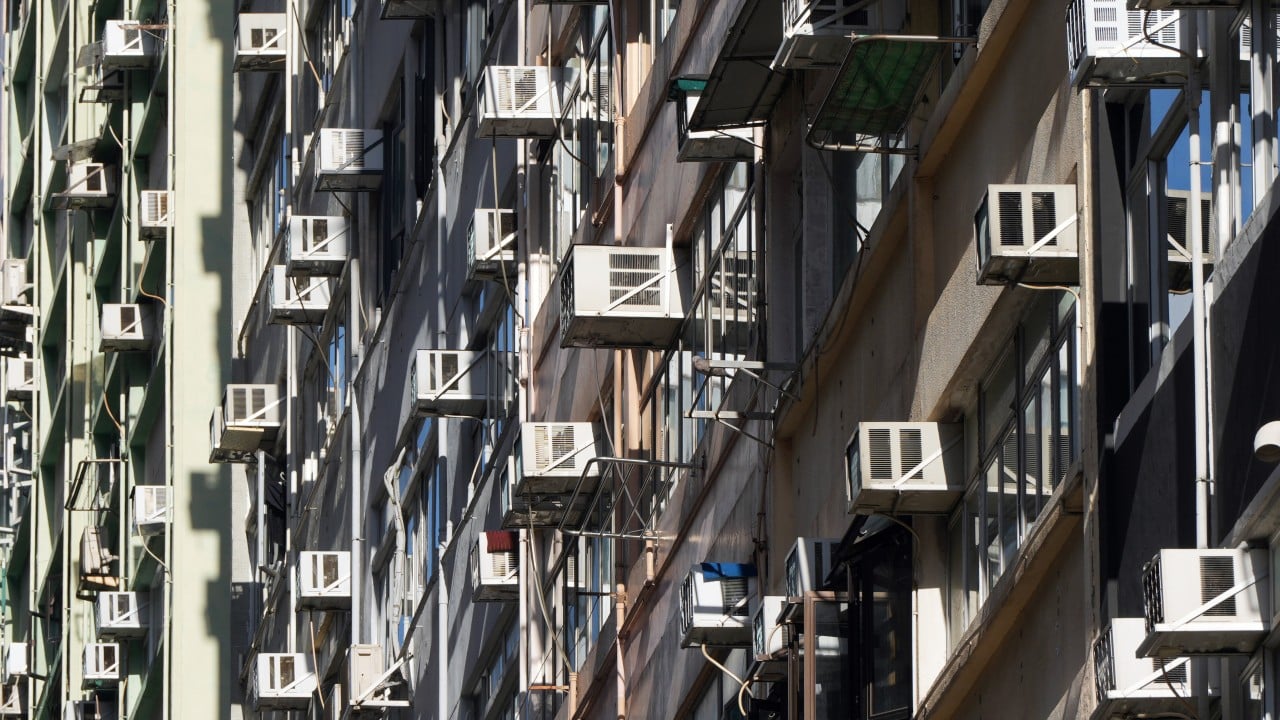
The domestic labor market in Hong Kong functions under a legal and structural architecture that shifts operational risks entirely onto the employee. This dynamic becomes visibly apparent during extreme weather events, where ambient temperatures exceeding 33.7°C expose the structural friction between an employer’s variable overhead cost and a worker's physiological preservation. When an employer regulates or outright restricts access to air conditioning for live-in foreign domestic helpers, the dispute is rarely about a minor expenditure on utility bills. Instead, it is a manifestation of an asymmetric contract executed within a highly captive labor market.
To evaluate this dynamic requires moving beyond the emotional rhetoric of viral social media backlashes. It demands a rigorous examination of three reinforcing structural mechanisms: the live-in mandate as a spatial monopoly, the mispricing of utility overhead relative to labor productivity, and the regulatory barriers that prevent market clearing. Don't miss our previous article on this related article.
1. The Live-In Mandate as a Spatial Monopoly
The primary driver of labor exploitation in Hong Kong's domestic service sector is the statutory live-in requirement. This mandate legally obligates the worker to reside within the employer’s private real estate asset as a condition of their employment visa. By eliminating the worker's ability to choose alternative housing, the regulation establishes an absolute spatial monopoly for the employer.
The Breakdown of Household Space Allocation
Within the highly constrained real estate market of Hong Kong, square footage is severely compressed. The allocation of this resource within a household follows a strict hierarchy of utility: To read more about the history here, The Motley Fool provides an excellent breakdown.
- Primary Zones: Living spaces and master bedrooms receive maximized climate control to preserve the comfort and productivity of the primary income earners.
- Secondary Zones: Kitchens and designated helper quarters (often sub-divided spaces, modified utility rooms, or top-bunks in communal areas) receive minimal structural insulation and are frequently isolated from central air circulation.
When an employer implements a restricted schedule for climate control—such as permitting air conditioning use exclusively between 10:00 PM and 6:00 AM—they create a localized thermal trap. During a heatwave, structural thermal mass ensures that uncooled concrete structures retain heat long into the evening. By restricting cooling mechanisms during the transitional hours (e.g., 8:00 PM to 10:00 PM), the micro-climate of the worker's quarters reaches temperatures significantly higher than the ambient outdoor environment.
The employer leverages their property rights to enforce these rules under the guise of household discipline or "mutual respect." In reality, the live-in mandate strips the worker of any outside options, transforming a standard employment contract into an arrangement where the employer exercises total authority over the physical environment of the employee.
2. The Mispricing of Utility Overhead and Marginal Labor Productivity
The common defense for restricting climate control rests on capital preservation—specifically, minimizing the variable cost of electricity. This rationale fails basic marginal utility analysis. The marginal cost of operating a standard split-system air conditioner for an additional hour is trivial compared to the corresponding loss in labor productivity caused by heat stress and sleep deprivation.
The Cost Function of Household Thermal Regulation
Let the total daily cost of household operation ($C_{total}$) be defined by fixed labor costs ($L$), variable maintenance costs ($M$), and utility overhead ($U$). The utility overhead is directly tied to the hours of climate control usage ($h$):
$$C_{total} = L + M + U(h)$$
A typical 1-horsepower air conditioning unit consumes approximately 0.75 kWh to 1.0 kWh of electricity per hour of continuous operation. At standard Hong Kong residential tariff rates (including fuel clause adjustments), the marginal financial cost of running this unit for one hour ranges between HKD 1.20 and HKD 1.80.
Conversely, the economic penalty of heat-induced sleep degradation directly degrades the worker's asset value to the household. Sleep deprivation impacts cognitive and physical performance through several clear channels:
- Decreased Kinetic Efficiency: Slower execution of manual tasks, lengthening the time required to complete basic household operations.
- Elevated Operational Risk: A higher probability of errors in high-consequence tasks, such as child care, elderly medical management, or the handling of industrial kitchen appliances.
- Long-Term Health Depreciation: Prolonged exposure to high nocturnal temperatures increases systemic inflammation and cardiovascular stress, leading to acute medical liabilities that the employer is legally obligated to cover under Hong Kong's Employees' Compensation Ordinance.
The decision to enforce an "air-con ban" to save a marginal HKD 1.50 represents a profound miscalculation of capital efficiency. The employer risks a double-digit percentage decline in daily labor output to capture a fractional savings in variable utility expenditure.
3. Structural Barriers to Market Clearing and Contract Renegotiation
In a friction-free labor market, an employee subjected to suboptimal or hazardous working conditions would demand a compensating wage differential or terminate the contract to seek employment with an entity offering better total compensation (including thermal comfort). In Hong Kong, this market-clearing mechanism is artificially blocked by state-enforced legal frameworks.
The Two-Week Rule as an Exit Barrier
The primary friction is the immigration policy known as the "Two-Week Rule." Upon the termination or expiration of a domestic worker's contract, the individual is legally required to find new employment and secure visa approval within 14 days, or face immediate deportation.
This short window creates an intense asymmetry in bargaining power:
[Employer Action: Enforces Restrictions/Air-Con Ban]
                     │
                     ▼
[Helper Dilemma: Suffer Heat Stress OR Terminate Contract]
                     │
          ┌──────────┴──────────┐
          ▼                     ▼
  [Option A: Resign]    [Option B: Endure]
          │                     │
          ▼                     ▼
[14-Day Visa Clock Starts]  [Immediate Physical &]
          │                 [Psychological Costs]
          ▼                     │
[Risk of Deportation &]         │
[Recruitment Debt Default]      │
          │                     │
          └──────────┬──────────┘
                     ▼
       [Result: Chronic Compliance]
The financial stakes are exacerbated by the recruitment debt model. Most domestic helpers incur substantial upstream fees from employment agencies in their home countries (the Philippines or Indonesia) and matching agencies in Hong Kong. Because these loans are serviced through monthly deductions from their cash salary, remaining continuously employed is a matter of basic financial survival.
The two-week rule effectively blocks the worker from walking away from an abusive or physically unsafe environment. Consequently, employers can lower the non-monetary compensation of the job—such as safe ambient temperatures—well below acceptable human standards without risking the loss of their labor supply.
4. The Rhetoric of "Thermal Adaptation" vs. Climatic Reality
To justify structural deprivation, defensive employer coalitions frequently deploy arguments rooted in biological essentialism. A common assertion is that because foreign domestic helpers originate from tropical regions, they possess a higher baseline tolerance for elevated temperatures and humidity, rendering mechanical cooling unnecessary.
This argument ignores the basic physics of urban environments. The urban heat island effect in Hong Kong, characterized by dense concrete topography, minimal wind vectors, and massive heat rejection from commercial HVAC installations, creates an entirely different thermal profile than rural or suburban equatorial regions.
Furthermore, human acclimatization has strict physiological limits. When ambient indoor temperatures remain consistently above 32°C alongside relative humidity levels exceeding 80%, the human body’s primary mechanism for heat dissipation—the evaporation of sweat—becomes highly inefficient. This restriction applies uniformly across all human populations, regardless of geographic origin.
Frame the problem through a fundamental safety lens: if an environment prevents core body temperature stabilization during periods of rest, it ceases to be a mere comfort dispute. It becomes a site of occupational hazard.
Operational Strategies for Institutional and Household Risk Management
Relying on public criticism or social media shaming to fix systemic market failures is a highly inefficient strategy. Resolving the friction caused by extreme heat requires structured operational adjustments implemented at both the state level and within individual households.
Regulatory Interventions for Institutional Stability
To correct the market failures created by the live-in mandate, the Hong Kong Special Administrative Region government must update its regulatory framework to address climate realities:
- Quantify "Suitable Accommodation": The standard employment contract currently mandates that employers provide "suitable accommodation with reasonable privacy." This definition must be updated to include objective habitability metrics, specifying that indoor temperatures in designated sleeping quarters must not exceed a maximum threshold (e.g., 28°C) during periods covered by official Very Hot Weather Warnings.
- Reform the Two-Week Window: Extending the post-termination visa window from 14 days to 45 days would reduce the immediate threat of deportation. This change would restore a degree of bargaining equilibrium, allowing workers to leave households that refuse to provide safe physical working conditions.
Household Resource Optimization
For employers seeking to balance utility budgets with asset protection and labor optimization, the problem can be resolved through technical upgrades rather than coercive rules:
- Transition to Inverter-Based HVAC Units: Replacing older, inefficient fixed-speed air conditioners with modern inverter models reduces energy consumption by up to 40% under continuous load. This structural change significantly lowers the marginal cost of cooling, removing the financial pressure that drives restrictive household rules.
- Formalize Operational Worksheets: Households should eliminate arbitrary, real-time rules in favor of explicit, contractually clear operational guidelines. These rules should tie climate control usage to objective data from the Hong Kong Observatory rather than the personal preferences or mood of the employer. For example, a policy could state: When the ambient outdoor temperature is recorded at or above 30°C at 8:00 PM, climate control systems in all sleeping quarters are authorized for unrestricted operation.
Shifting household management from emotional control to structured operational logic protects the physical health of the worker, secures the stability of the domestic labor supply, and maximizes the long-term returns on the employer's labor investment.