Geographic proximity establishes a structural asymmetry in power projection that no amount of diplomatic rhetoric can erase. When the physical distance between a primary mainland power and a disputed territory is 59 miles, while the distance to the external guarantor is 9,500 miles, logistics dictate the boundaries of deterrence. This stark geographic reality defines the current reassessment of American foreign policy toward Taiwan. Viewing national security through a transactional and logistically constrained framework forces a confrontation with a fundamental calculation: the cost-benefit analysis of defending a distant semiconductor hub against a contiguous superpower.
To evaluate whether the United States can or should maintain its security guarantees to Taipei, analysts must look beyond standard political talking points. A clinical breakdown reveals that the issue is not merely a matter of political will, but a complex equation balancing supply chain vulnerability, power projection curves, and the mechanics of modern military deterrence. Meanwhile, you can find related events here: Why the New US Deportation Deal with Sierra Leone Sparks Deep Concern.
The Tyranny of Distance: Quantifying the Power Projection Curve
The fundamental challenge of a potential conflict in the Taiwan Strait is governed by military logistics. In defense planning, this is often analyzed through the lens of force concentration over time. A nation operating 59 miles from its domestic logistics hubs possesses an compounding advantage in sustained supply lines, rapid reinforcement, and anti-access/area-denial (A2/AD) saturation.
The Logistic Decay Function
For an expeditionary force operating 9,500 miles from home ports, every unit of combat power delivered requires an exponential increase in logistical support. The United States military relies on a global network of bases, maritime pre-positioning ships, and aerial refueling tankers to bridge this gap. However, this creates distinct operational bottlenecks: To see the full picture, check out the detailed analysis by BBC News.
- Transit Delays: Surface fleets traveling from the continental United States require weeks to deploy to the Western Pacific, whereas local forces can mobilize within hours.
- Supply Chain Interdiction: A 9,500-mile supply line presents a massive surface area for interdiction by long-range ballistic missiles, submarines, and cyber warfare.
- The Sunk-Cost Ratio: The financial and material cost to project a single carrier strike group into the Taiwan Strait exceeds the defensive expenditure required by a localized adversary to deploy land-based anti-ship cruise missiles.
This geographical reality changes the calculus of strategic ambiguity. When the physical barriers to intervention are this high, deterrence cannot rest entirely on the promise of external rescue. Instead, it must rely on making the immediate cost of a cross-strait operation prohibitively expensive for the mainland through local defensive hardening.
The Semiconductor Trap: Industrial Theft vs. Capital Accumulation
The economic dimensions of this security dilemma are frequently mischaracterized as a simple trade dispute. The assertion that Taiwan "stole" the American microchip industry overlooks the economic principles of comparative advantage and capital efficiency that shaped global technology supply chains over the past four decades.
Global Semiconductor Value Chain Allocation:
[US / Europe: Core IP & Electronic Design Automation (EDA)]
       │
       ▼
[Taiwan (TSMC): Advanced Pure-Play Foundry Fabrication]
       │
       ▼
[Southeast Asia / China: Assembly, Packaging, and Testing (ATP)]
The Evolution of Pure-Play Foundries
The migration of advanced semiconductor fabrication to the Western Pacific was not an illicit transfer of intellectual property, but a deliberate business model innovation. Prior to the rise of Taiwan Semiconductor Manufacturing Company (TSMC), chip designers also operated their own fabrication facilities (fabs). TSMC introduced the pure-play foundry model, focusing exclusively on manufacturing chips designed by external firms.
This specialization created a highly concentrated ecosystem. Silicon fabrication requires immense capital expenditure, specialized labor pools, and complex supply ecosystems containing ultra-pure chemicals and advanced lithography tools. By aggregating production volume for global design firms, fabrication facilities achieved economies of scale that domestic American manufacturers failed to match.
This specialization yielded an extraordinary concentration of advanced manufacturing capability. Over 90% of the world's sub-10-nanometer logic chips are produced within range of mainland artillery. The United States did not lose its industry through intellectual piracy; rather, American capital markets prioritized high-margin fabless design models (e.g., Apple, Nvidia, AMD) while offshoring the capital-intensive, lower-margin manufacturing phase.
The Leverage of Armed Exports
The current suspension and review of multi-billion-dollar arms packages to Taipei—including authorized $11 billion and $14 billion tranches—highlights a shift toward transactional diplomacy. Rather than viewing arms transfers as an absolute security obligation, current strategy treats these defense assets as bilateral negotiating chips. This framework views security not as an ideological commitment, but as a reciprocal trade agreement where defensive hardware is balanced against trade concessions, technology transfers, or domestic manufacturing investments inside the United States.
Deconstructing Strategic Ambiguity: Pacing and Nuclear Parity
For half a century, the United States has maintained a policy of strategic ambiguity regarding Taiwan—deliberately refusing to confirm or deny whether it would deploy military forces to counter an invasion. This policy was designed to achieve a dual deterrence: discouraging the mainland from utilizing force while simultaneously discouraging Taipei from declaring formal political independence.
The Limits of a Dual-Deterrence Framework
The viability of strategic ambiguity decays when the regional balance of power shifts. In an era where a regional competitor possesses a conventional military surplus in its home waters alongside a rapidly expanding nuclear arsenal, the credibility of an external deterrent faces structural challenges. Pentagon estimates indicating that the Chinese nuclear stockpile exceeds 600 warheads—with projections scaling past 1,000 by 2030—fundamentally alter the risk matrix.
Traditional Deterrence Balance vs. Emergent Multipolar Matrix

Traditional Bilateral Model:
[US Strategic Arsenal] <──────────────────────────> [Peer Nuclear State]

Emergent Three-Way Matrix:
       [United States Strategic Fleet]
               ╱               ╲
              ╱                 ╲
             ▼                   ▼
[Russian Federation] <─────────> [People's Republic of China]
                                 (Projected 1,000+ Warheads)
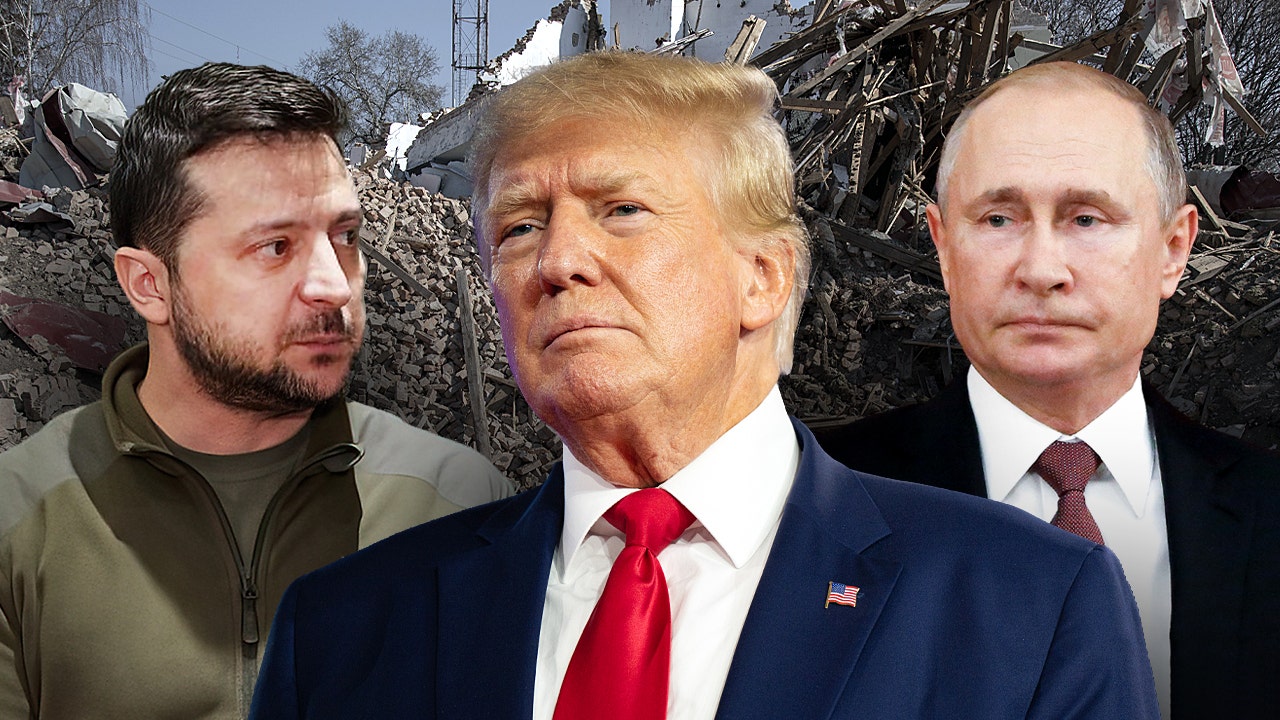
A trilateral nuclear framework involving the United States, Russia, and China introduces a complex three-body problem into strategic stability. In a bilateral system, deterrence is a direct function of Mutually Assured Destruction. In a trilateral system, any expansion or contraction of one nation's arsenal shifts the balance between the other two. A conflict over a localized island territory risks escalating across the nuclear threshold, transforming a regional dispute into a global catastrophic event. This high escalation risk explains the growing reluctance to commit to an expeditionary war 9,500 miles away for an issue that does not directly threaten the physical integrity of the American homeland.
The Strategic Play: Transitioning to Financed Self-Reliance
The operational reality of the Western Pacific requires a structural pivot in how security architecture is designed. The traditional model of relying on an American military umbrella is functionally obsolete due to logistics constraints and shifting nuclear balances. The optimal strategic play requires a transition toward a model of financed self-reliance.
Taiwan must shift its defense posture entirely to an asymmetric denial strategy, often called the "porcupine strategy." This approach abandons the acquisition of expensive, prestige military assets like conventional fighter jets and large surface warships, which are vulnerable to early-stage missile strikes. Instead, local defense investments must be channeled exclusively into large quantities of mobile, distributed, low-cost defensive systems:
- Land-based anti-ship cruise missiles
- Mobile short-range air defense systems
- Smart sea mines
- Unmanned aerial and undersea loitering munitions
The role of the United States should pivot from a direct military guarantor to an industrial and logistical supplier. By treating arms packages as commercial transactions contingent on Taipei hitting specific domestic defense spending benchmarks—ideally scaling to 3% to 5% of its GDP—the United States minimizes its direct risk of involvement in a major conflict. Concurrently, the domestic deployment of the CHIPS and Science Act must be accelerated to build independent fabrication capabilities within the United States. This dual track ensures that while the physical defense of the island relies on localized capabilities, the global economic system systematically insulates itself from the geographic vulnerabilities of the Taiwan Strait.
This video breakdown provides an expert geopolitical and logistical analysis of why geography dictates military reality in the Western Pacific, expanding on the concepts of power projection and strategic asymmetry detailed above.