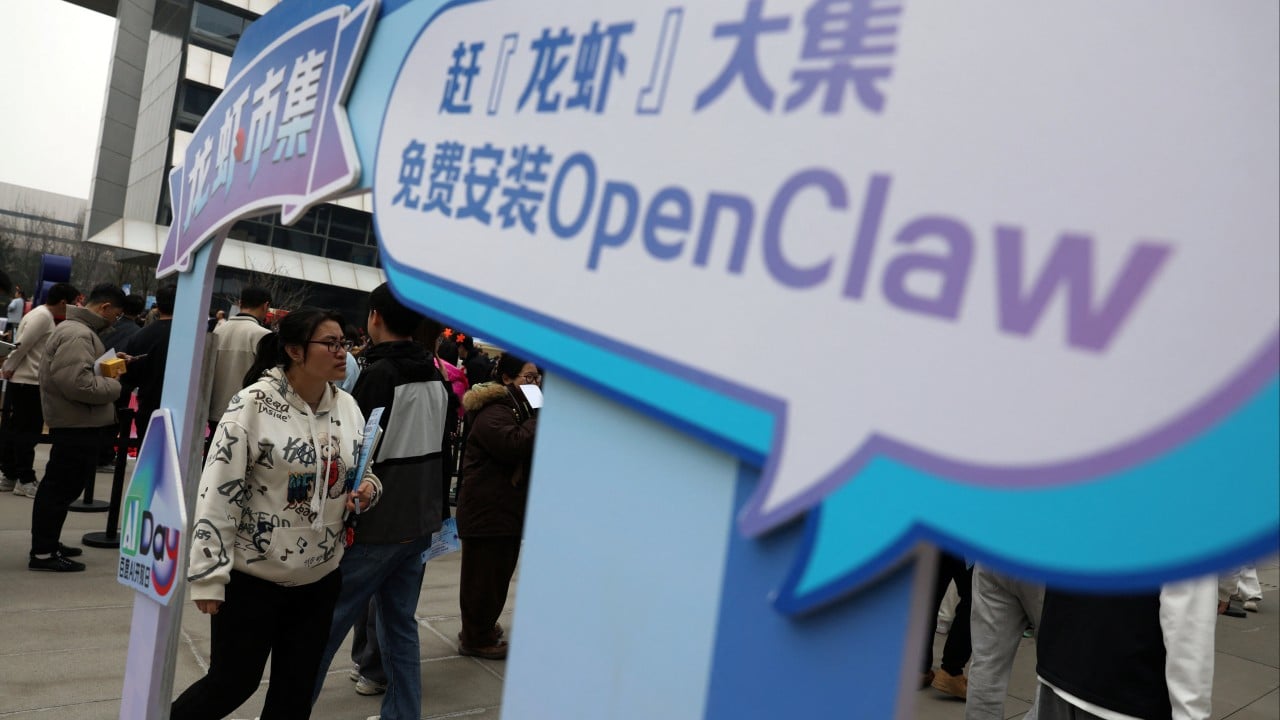
The traditional Chinese corporate hierarchy is facing a structural decomposition driven by a collapse in the marginal cost of coordination. While Western narratives often frame the "1-person company" as a byproduct of economic stagnation or a pursuit of "digital nomadism," the Chinese reality is a calculated transition toward a high-efficiency, decentralized production model. This shift is predicated on the convergence of OpenClaw’s specialized agentic workflows and a specific regulatory infrastructure designed to absorb surplus high-skill labor.
The transition from the firm to the individual is not a stylistic choice; it is a mathematical necessity when the overhead of a traditional SME (Small to Medium Enterprise) exceeds the cost of an automated stack. In similar updates, take a look at: The Hollow Classroom and the Cost of a Digital Savior.
The Unit Economics of the Solo Entity
The emergence of the one-person company in China follows a rigorous cost-reduction logic. Historically, a 10-person service firm in Shenzhen or Hangzhou faced significant drag from "The Coordination Tax"—the time and capital spent on internal communication, project management, and regulatory compliance.
The Automated Overhead Collapse
The deployment of OpenClaw and similar agentic frameworks allows a single operator to bypass the traditional hiring curve. In this model, the "Solo Entity" replaces three specific human functions with algorithmic substitutes: The Verge has also covered this fascinating issue in extensive detail.
- Syntactic Labor: Drafting, coding, and basic visual design. Previously requiring 2–3 junior staff, these are now handled by high-token-window LLMs integrated via OpenClaw’s task-routing architecture.
- Managerial Routing: The process of deciding "what happens next" in a workflow. OpenClaw’s logic gates act as a middle-manager, ensuring that output from one process (e.g., data scraping) correctly feeds into the next (e.g., report generation).
- Market Interfacing: Automated lead generation and customer service bots that operate 24/7 without the social security or office space costs associated with human employees.
The formula for this displacement can be expressed through the Efficiency Ratio ($E$):
$$E = \frac{O_{trad} - C_{agent}}{V_{output}}$$
Where $O_{trad}$ represents traditional operational overhead, $C_{agent}$ is the cost of the AI compute/API stack, and $V_{output}$ is the total value produced. As $C_{agent}$ continues to plummet while API capabilities expand, the $E$ ratio for solo operators significantly outstrips that of traditional mid-sized competitors.
The OpenClaw Variable: Why Generic AI Failed where Agentic Frameworks Succeeded
Generic AI tools (standard chatbots) did not create the solo-entrepreneur surge because they required constant human "babysitting," which capped the individual's throughput. The pivot occurred with the adoption of OpenClaw, an open-source framework specifically optimized for the Chinese hardware and software ecosystem.
Task Autonomy vs. Task Assistance
Unlike standalone LLMs, OpenClaw operates on a Directed Acyclic Graph (DAG) logic. It breaks a complex business objective—such as "launch an e-commerce brand on Douyin"—into discrete, autonomous sub-tasks.
- Tool Use: OpenClaw can call external APIs for inventory management or payment processing without human intervention.
- Self-Correction: It utilizes a "reflexion" loop where one agent critiques the output of another, reducing the error rate that previously made solo-led scaling impossible.
This autonomy transforms the human from a "worker" into a "System Architect." The constraint is no longer the hours the human can work, but the sophistication of the prompts and the logic flows they design.
Government Support as a Market De-Risking Mechanism
The Chinese state’s role in this transition is not merely passive. The "rise" of the one-person company is being facilitated through a series of tactical regulatory adjustments intended to maintain social stability and economic output amidst a cooling traditional job market.
The Virtual Residency and Tax Incentives
Specific provinces have streamlined the Individual Industrial and Commercial Household (个体工商户) registration process. This allows high-skill soloists to access corporate-grade tax benefits and legal protections without the necessity of physical office space or high registered capital.
- Digital Infrastructure Subsidies: In hubs like the Suzhou Industrial Park, "computation vouchers" are being distributed. These act as a direct subsidy for the GPU hours required to run localized instances of frameworks like OpenClaw, effectively socializing the R&D costs of solo entrepreneurs.
- IP Protection for Micro-Entities: Accelerated patent and trademark filings for individual developers ensure that the "lone wolf" can defend their output against larger conglomerates—a historic bottleneck for Chinese innovation.
Structural Bottlenecks and Failure Points
The model is not without friction. While the "1-person masterclass" sounds invincible, it faces three distinct structural limitations that define the ceiling of this movement.
The API Dependency Trap
Solo entities built on OpenClaw are fundamentally dependent on the underlying model providers. Should a provider increase pricing or revoke access to certain libraries, the solo entity faces a total "production blackout." Unlike a traditional company with human knowledge redundancy, the solo operator has a Single Point of Failure (SPOF): the tech stack.
The Quality Convergence Problem
As more individuals adopt identical agentic workflows, the market faces a "commodity wall." If everyone uses the same OpenClaw scripts to generate marketing content or code, the marginal value of that output trends toward zero. Differentiation must then come from proprietary data inputs or niche domain expertise that the AI cannot synthesize.
The Talent Asymmetry
The current wave of solo success is dominated by "high-alpha" individuals—former tech leads or senior managers from Alibaba, Tencent, and Baidu who possess the system-thinking skills to architect these AI workflows. The barrier to entry is not "AI access," but the "Architectural Literacy" required to chain these tools together effectively. The mass-market "gig worker" is unlikely to replicate this success without significant upskilling.
The Strategic Realignment of the Labor Force
The long-term implication is a bifurcated economy. On one side, massive, state-backed infrastructure and manufacturing firms; on the other, a fluid cloud of millions of high-efficiency solo entities.
This is not a "gig economy" in the sense of delivery drivers or manual labor. It is a Precision Economy. The solo entity operates as a high-margin boutique, utilizing OpenClaw to handle the mundane, allowing the human to focus exclusively on high-value strategy and relationship management.
The successful solo operator must now prioritize "Prompt Engineering" less and "Logic Flow Architecture" more. The value lies in the sequence of the agents, not the individual output of one.
Companies looking to compete with this rising class of soloists must either decentralize their internal teams into "internal solo units" or face being undercut by the leanest cost-structures in modern economic history. The immediate requirement is an audit of all internal communication paths: if a task can be routed via an OpenClaw agent for less than the cost of a 15-minute meeting, that human role is already structurally redundant.
To capitalize on this shift, an operator must identify a high-value niche with high "syntactic density"—areas like specialized legal research, cross-border e-commerce optimization, or niche software-as-a-service—and build a proprietary agentic chain that cannot be easily replicated by generic prompt-users.