Panic is a policy failure. When the headlines scream about 34 cases of meningitis, the machinery of public anxiety grinds into gear. The numbers are real, but the narrative is a curated hallucination. Media outlets and health departments track these "outbreaks" with the breathless intensity of a sports ticker, yet they consistently ignore the fundamental mechanics of bacterial transmission and the actual risk profiles of the population.
Thirty-four cases is a tragedy for thirty-four families. It is not, however, a systemic collapse. By focusing on the raw tally, we ignore the structural flaws in how we manage infectious disease in high-density environments. We are treating a recurring biological reality as if it were a freak lightning strike.
The Carriage Conundrum
Most people believe meningitis is a predator that strikes from the shadows. The reality is more mundane and far more uncomfortable: it is already inside the room.
Neisseria meningitidis, the bacterium responsible for the most feared form of the disease, lives in the nasopharynx of roughly 10% to 20% of the healthy population at any given time. These people are "carriers." They have no symptoms. They aren't "sick." Yet, they are the reservoir.
The lazy consensus suggests that we can stop an outbreak by simply tracking the infected. That is like trying to stop a flood by counting the buckets of water that have already spilled over the levee. If you aren't looking at the asymptomatic carriage rate in the specific community where these 34 cases appeared, you aren't practicing epidemiology; you’re practicing PR.
The shift from carriage to invasive disease—where the bacteria crosses the blood-brain barrier—is a rare, catastrophic event triggered by specific environmental stressors:
- Viral Co-infection: A simple flu can compromise the mucosal lining, giving the bacteria a VIP pass to the bloodstream.
- Crowding Dynamics: It isn't just about being near people; it's about the "dose" of exposure in poorly ventilated spaces.
- Immune Naivety: Our obsession with sterile environments has, in some cohorts, created a lack of baseline cross-reactive immunity.
Stop Counting Cases and Start Measuring Vulnerability
Public health officials love the "34" figure because it's actionable. It justifies a press release. It suggests a clear beginning and end.
But why these 34? Why now?
The "People Also Ask" sections of the internet are filled with terrified parents asking, "Is meningitis airborne?" or "How do I avoid it?" The honest, brutal answer is that you don't "avoid" a bacterium that a tenth of the people in the grocery store are breathing out. You survive it through a combination of vaccination and a functional immune system.
The failure of the current reporting "landscape"—to use a term the bureaucrats love—is that it fails to distinguish between exposure and susceptibility. We treat every citizen as if they have the same 1-in-X chance of contracting the disease. They don't.
I have spent years looking at clinical data where the "outbreak" was merely a statistical cluster of people with identical risk factors—late nights, high stress, and shared respiratory droplets in stagnant air. If we wanted to actually "disrupt" the cycle, we would stop the 24-hour case-count watch and start mandating air quality standards in dorms and barracks that actually kill aerosolized pathogens.
The Vaccine Gap Nobody Mentions
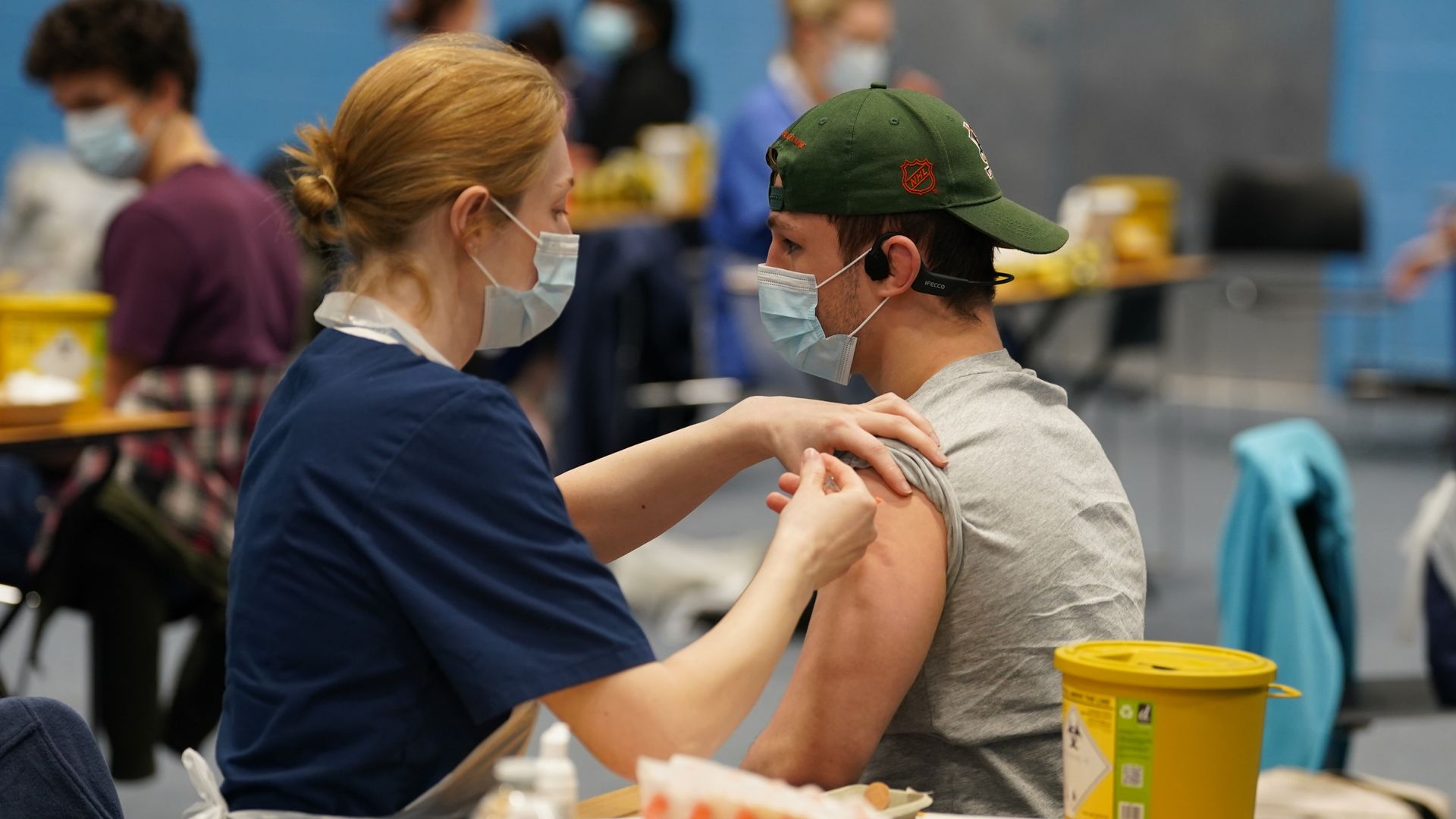
We have the tools. The MenACWY and MenB vaccines are marvels of modern immunology. But here is the contrarian truth: our current vaccination strategy is reactive and fragmented.
We vaccinate kids at 11 and give them a booster at 16. Then we send them into the highest-risk environments of their lives—college dorms and military housing—where the efficacy of that booster might already be waning or where the specific strain of the "outbreak" (like the increasingly common serogroup Y or W) isn't being prioritized in the local conversation.
When we see 34 cases, the question shouldn't be "Where did it spread?" It should be: "Which specific vaccine failure occurred?"
- Was it a failure of coverage (the person wasn't vaxxed)?
- Was it a failure of type (the vaccine didn't cover the strain)?
- Was it a failure of duration (the immunity wore off)?
By lumping all 34 cases into a single "outbreak" bucket, we mask the incompetence of the delivery system. We allow the "lazy consensus" to blame "the virus" or "the bacteria" instead of blaming the logistical gaps in our preventative net.
The Cost of the "Abundance of Caution"
Whenever an outbreak hits a dozen cases, the "abundance of caution" brigade arrives. They close schools. They bleach hallways.
Most of this is "hygiene theater."
Neisseria meningitidis is a fragile organism. It dies almost instantly outside the human body. It doesn't live on doorknobs. It doesn't survive on cafeteria tables. It lives in the throat. Scrubbing the floors to stop meningitis is like wearing a raincoat to stop a headache. It makes you feel like you're doing something while the actual threat—close-contact respiratory exchange—continues unabated in the local coffee shop or the student union.
The downside to this theater is profound. It breeds a false sense of security while distracting from the only thing that works: Chemoprophylaxis and Vaccination. If you were in close contact with one of those 34 cases, you don't need a mask; you need a dose of rifampin or ciprofloxacin immediately to clear your carriage. If you weren't in close contact, your risk hasn't statistically changed, despite what the "breaking news" banner says.
The Nuance of the "Outbreak" Label
We need to stop using the word "outbreak" as a synonym for "panic."
Mathematically, an outbreak is simply an increase in cases above the expected baseline for a specific area. If the baseline is zero, two cases is an outbreak. Using "34" to trigger a regional alarm is often a move to cover for underfunded local health surveillance. They didn't see the first five cases because they weren't looking; now they're over-correcting to avoid being fired.
I've seen local governments spend millions on emergency response for a cluster of 20 cases while ignoring the fact that their routine vaccination rates for the same population had dropped by 15% over the previous three years. It is cheaper to manage a crisis than it is to maintain a system.
A Radical Shift in Response
If we wanted to actually solve the meningitis problem, we would stop the case-counting and do the following:
- Real-time Strain Sequencing: Stop telling us "there are 34 cases." Tell us the exact genetic fingerprint of the strain within 4 hours. If it's a match to the current vaccine, the headline shouldn't be "Meningitis Rising," it should be "Vaccination Rates Falling."
- Carriage Screening: In a cluster, we shouldn't just test the sick. We should sample 1,000 random people in the vicinity. If the carriage rate of the virulent strain is high, you don't close the school—you mass-administer antibiotics to the carriers.
- Indoor Air Revolution: The common denominator in almost every major "outbreak" is stale, indoor air. High-MERV filtration and Far-UVC light arrays in high-density housing would do more to stop meningitis than every "Wash Your Hands" poster ever printed.
The Hard Truth About Risk
Life is a series of calculated biological gambles. You are more likely to die in a car accident on the way to get a meningitis test than you are to die from the "outbreak" of 34 cases currently dominating your feed.
The tragedy of public health reporting is that it makes us fear the rare and ignore the inevitable. We fixate on the 34 because they are a discrete, terrifying data point. We ignore the thousands of preventable deaths from common respiratory failures because they don't have a "scary" name.
Stop looking at the case count. It’s a distraction. Check your immunization record, demand better air in your kid’s school, and ignore the sirens.
The bacteria isn't coming for you; it's already here, waiting for you to get tired, get stressed, and stop paying attention to the only defenses that actually matter.
Go get your booster and stop reading the news.