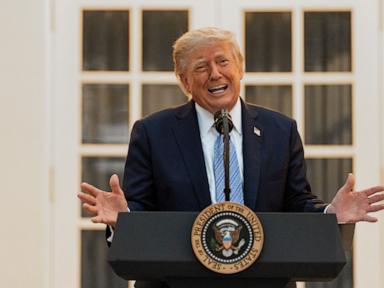
Every major health policy outlet recently rushed to celebrate the Trump administration's announcement that all fifty states are jumping on board its headline-grabbing Medicaid drug pricing initiative. The narrative sounds miraculous on the surface: Washington forces pharmaceutical giants to bend the knee, uniform state compliance locks in, and billions in taxpayer savings materialize out of thin air.
It is a clean, comforting story. It is also entirely detached from how pharmaceutical economics actually operate. Don't miss our previous post on this related article.
Scratch the glossy surface of this fifty-state alignment, and you find a masterclass in bureaucratic sleight of hand. The lazy consensus among mainstream analysts is that forcing standardized pricing models across state-level Medicaid programs inherently curtails drug company margins and protects public coffers. This misses the fundamental structural reality of American healthcare. Big Pharma does not absorb price caps; they simply redraw the map of where their revenue comes from.
When you squeeze a balloon in one spot, the air goes somewhere else. To read more about the background of this, CDC offers an excellent summary.
The Illusion of Uniform Compliance
The core flaw in praising universal state participation is the assumption that checking a participation box translates directly to immediate, predictable savings. State Medicaid programs are not monolithic entities marching in lockstep. They operate via complex, fragmented managed care organizations (MCOs) with localized pharmacy benefit managers (PBMs) steering the ship behind closed doors.
When federal models mandate lower price ceilings without reforming the underlying supply chain middlemen, the savings rarely reach the bedside. Instead, manufacturers adjust their baseline launch prices upward for commercial insurers, private markets, and employer-sponsored plans to claw back the revenue lost through mandatory public program discounts.
I have watched corporate health plans absorb these hidden cost-shifts for years. Executives celebrate a minor win on a public ledger while their private healthcare premiums quietly spike by double digits to subsidize the difference.
The Real Game is Rebate Arbitrage
To understand why a fifty-state rollout is less revolutionary than advertised, you have to look at how drug pricing is actually negotiated. The entire system runs on a opaque network of manufacturer rebates, wholesale acquisition cost (WAC) benchmarks, and confidential net-price concessions.
When officials announce that dozens of drugmakers have agreed to participate in a new federal pricing framework, notice what is missing: the actual terms. The exact content of these deals remains heavily guarded behind proprietary seals.
Imagine a scenario where a manufacturer agrees to a lower baseline price for a high-cost specialty drug under the new Medicaid model, only to quietly restructure the administrative fee structures paid to the PBMs managing the state contracts. The list price drops, but the administrative leakage swallows the margin. The state checks a box showing compliance with a federal cost-control mechanism, while the actual net expenditure per patient remains stubbornly flat.
Dismantling the Patient Access Fallacy
Another favorite talking point of the political establishment is that lowering prices through top-down mandates automatically expands access for vulnerable populations. History suggests the opposite.
When price controls are imposed on complex therapeutics—particularly advanced biologics and specialty oncology treatments—manufacturers frequently restrict distribution channels or delay formulary inclusion while they litigate or renegotiate terms. State Medicaid directors are left playing an endless game of catch-up, managing prior authorization bottlenecks that lock patients out of innovative therapies precisely while regulators boast about lower theoretical costs.
The populist thrill of taking on pharmaceutical companies makes for incredible political theater. It dominates news cycles and delivers neat soundbites for the Oval Office. But governing healthcare via executive press release ignores the iron laws of market adaptation.
If you want real drug price reform, you do not need another acronym-heavy federal model that requires all fifty states to sign a compliance pledge. You need radical transparency in PBM spread pricing, the elimination of anti-competitive rebate traps, and a complete overhaul of how drugs are valued from the clinical trial bench to the pharmacy counter.
Until policymakers summon the courage to dismantle the middleman economy sitting between manufacturers and patients, celebrating a unified state rollout is like rearranging deck chairs on a sinking ship. The applause fades. The bill always comes due.
Stop pretending administrative compliance equals economic cure.
This video provides an authentic look at the political announcements surrounding the nationwide implementation of drug pricing models and the official rhetoric driving these policy rollouts.



