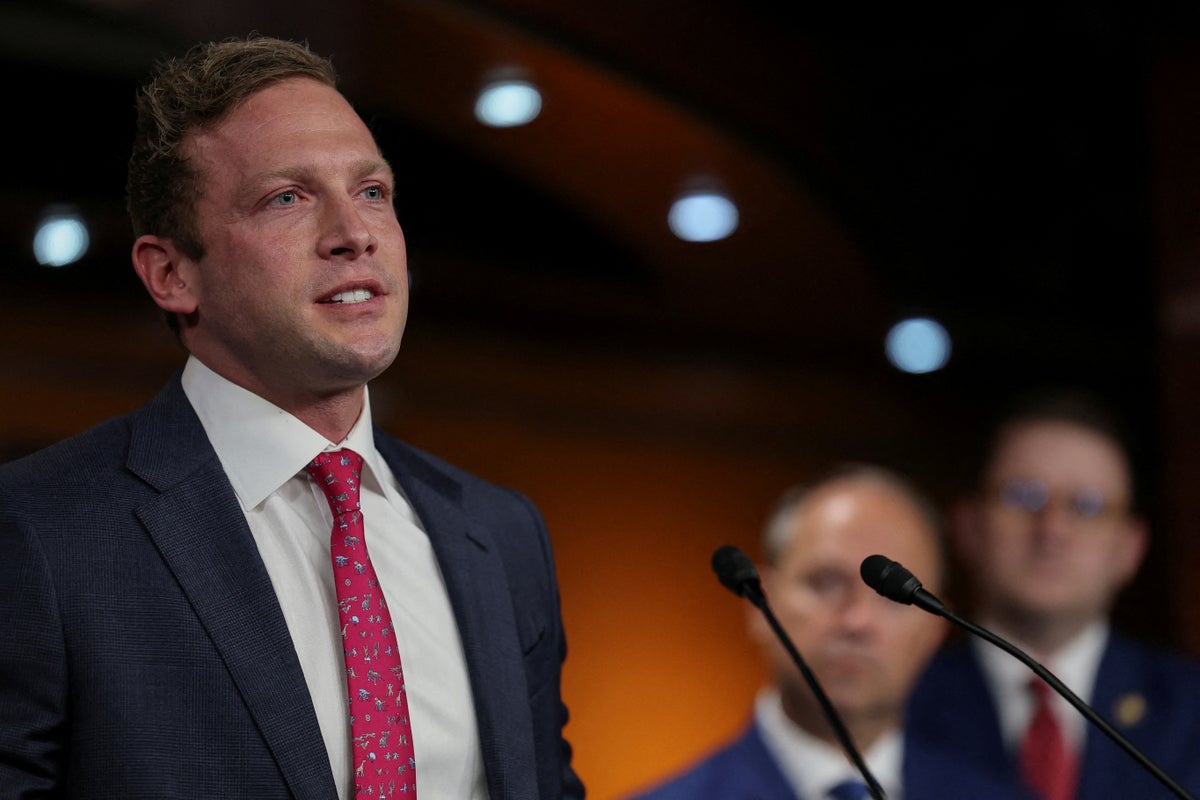
Crisis response in the public sector operates under compressed timelines where strategic errors compound geometrically. When a political figure attempts to neutralize reputational damage through open-source document dissemination, the margin for operational error approaches zero. The recent federal civil rights lawsuit filed against United States Representative Max Miller and his legal counsel illustrates a systemic failure in document sanitation protocols during a high-stakes public relations defense.
The underlying mechanics of the incident trace back to a defensive communication strategy executed on social media platforms. Facing severe domestic abuse allegations during an active reelection campaign and custody dispute, the subject utilized a live video broadcast to refute claims made by his ex-wife, Emily Moreno. To substantiate his narrative, his legal team compiled a digital repository via a cloud-based storage service, containing over forty pages of records related to an injury investigation concerning their two-year-old child.
The Vector of Exposure
The structural flaw in the dissemination vector was twofold: permission configuration errors and redaction omissions. Legal counsel Aaron Minc acknowledged that the final pages of the document tranche contained unredacted visual material depicting the minor child. Rather than maintaining a restricted, audit-trailed document exchange environment, the defense team utilized an open folder architecture with public-facing permissions.
When the primary link was broadcast to an audience exceeding fifty thousand followers, the material entered an uncontrolled distribution network. The exposure mechanics operated through three distinct phases:
- Initial Transmission: The deployment of raw, unvetted source files directly into a public access channel without secondary verification.
- Viral Amplification: Widespread indexing and downloading across multiple external nodes, accumulating hundreds of thousands of views within a twenty-three-hour window.
- Systemic Persistence: The temporary restoration and republication of the repository after initial user deletions, which reintroduced the sensitive assets into active circulation.
Statutory Liabilities and Economic Damages
The legal framework governing this exposure relies heavily on federal and state statutes regarding the unauthorized distribution of intimate visual depictions. Under 15 U.S.C. Section 6851, the unauthorized transfer, publication, or distribution of intimate visual representations without affirmative consent carries severe statutory penalties. The statute establishes liquidated damages of one hundred fifty thousand dollars for each distinct disclosure, transfer, or download event.
In enterprise and political risk management, liability calculations are a function of exposure frequency multiplied by distribution reach. With total views surpassing four hundred thousand, the economic exposure scales exponentially based on how many individual nodes accessed or downloaded the unredacted files. Because the defense team restricted access to internal audit logs and declined to provide granular server download metrics to plaintiff counsel, the true financial liability remains a variable bounded only by the total traffic volume captured during the active window.
Operational Protocols for Crisis Document Release
The incident highlights the operational hazards inherent in ad-hoc digital evidence publishing. Institutional crisis management requires strict adherence to chain-of-custody and document hygiene standards that political campaigns are rarely equipped to handle independently.
- Independent Redaction Verification: Legal teams must implement a multi-tier review process where visual assets undergo automated privacy scanning and manual inspection by personnel independent of the primary litigation strategy.
- Controlled Distribution Channels: Publicly accessible cloud storage links must be replaced by authenticated, view-only portals that track individual access tokens, prevent unauthorized downloading, and log every interaction.
- Decoupling Defense from Personal Brand: Public relations campaigns executed under high emotional duress and compressed timelines systematically degrade risk mitigation oversight, turning defensive transparency into an acute legal vulnerability.
Strategic recovery from a catastrophic document leak requires immediate containment, verifiable data destruction protocols, and transparent cooperation with auditing entities. When operational execution fails at the intersection of digital media and legal defense, the resulting liability outlasts the political cycle.
Rep. Max Miller's ex-wife sues after sensitive image of child was publicly shared
This video provides an overview of the federal lawsuit filed against Representative Max Miller and his attorney regarding the unredacted digital files shared online.