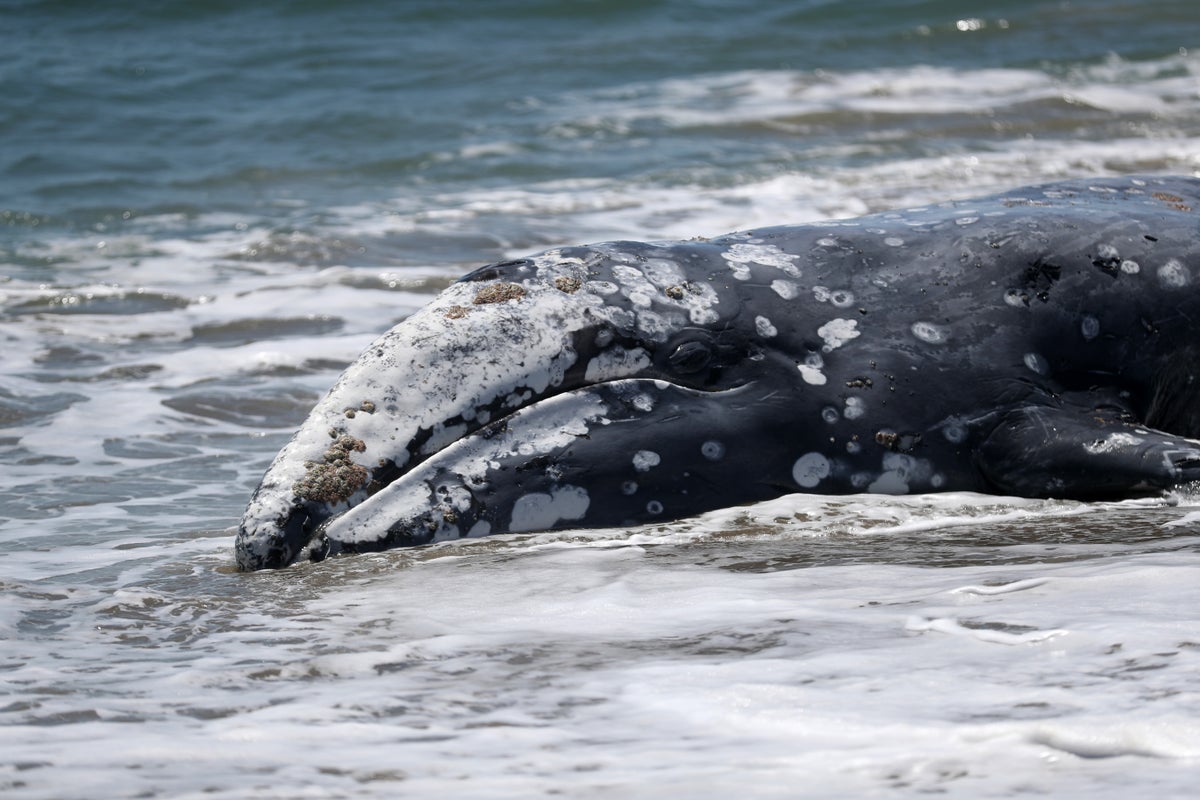
The spike in gray whale (Eschrichtius robustus) strandings along the Pacific Northwest coastline represents a measurable disruption in marine energetic dynamics rather than a series of isolated ecological misfortunes. When nearly two dozen apex predators beach themselves within a condensed geographic corridor inside a single season, the phenomenon demands a diagnostic framework that moves beyond baseline sentimentality. Understanding this mortality rate requires mapping the intersection of three distinct systemic pressures: metabolic depletion, geographic migratory bottlenecks, and shifting carrying capacities within northern feeding grounds.
The core vulnerability of the gray whale population lies in its hyper-rigid energetic budget. These mammals operate on a strict binary life cycle, alternating between high-latitude foraging and low-latitude reproduction. Any disruption to the duration, quality, or accessibility of their Arctic feeding window creates an immediate metabolic deficit that compounds during their 10,000-mile round-trip migration.
The Tri-Particle Framework of Unusual Mortality Events
To evaluate the root causes of these strandings without relying on speculative correlation, the crisis must be segmented into three distinct causal pillars.
[Benthic Biomass Volatility] ──> [Metabolic Depletion] ──> [Migratory Stranding Bottleneck]
1. Benthic Biomass Volatility and carrying capacity limits
Gray whales are unique among baleen whales for their reliance on benthic suction feeding. They filter amphipods and isopods from the seafloor mud, primarily in the Chukchi, Beaufort, and Bering seas. The carrying capacity of these basins is governed by sea ice dynamics.
Early ice retreat and warming bottom waters alter the composition of the benthic community. High-energy amphipods are increasingly replaced by lower-calorie sub-Arctic species. This shifts the nutritional return on investment (ROI) for foraging whales. They expend identical metabolic energy filtering the sediment but receive a fraction of the caloric payload.
2. The Metabolic Cost Function of Migration
A pregnant or lactating female requires a baseline energetic surplus to survive the southward migration to Baja California and the subsequent northward return. The cost function of this journey is fixed by distance and hydrodynamics. When whales leave their northern feeding grounds under-fueled, they enter a state of progressive catabolism.
Once subcutaneous blubber layers deplete past a critical threshold, the animals lose structural buoyancy and thermal insulation. This forces higher muscular expenditure to maintain swimming speeds and core body temperatures, accelerating the decline toward systemic organ failure.
3. Geographic Bottlenecks and Foraging Detours
As migrating whales encounter acute nutritional stress, their behavioral patterns shift from linear transit to opportunistic foraging. The Pacific Northwest coastline—specifically the inland waters of the Salish Sea and the shallow coastal bays of Oregon and Washington—serves as a primary geographic detour.
Whales deviate into these zones seeking alternative food sources like ghost shrimp. However, these shallow, high-traffic waterways present severe structural hazards, including complex tidal flats, navigational disorientation, and increased proximity to commercial shipping lanes.
Diagnostic Indicators Tracking Nutritional Depletion
Evaluating the health of a stranded population requires objective metrics. Marine biologists and stranding response networks utilize a standardized Body Condition Scoring (BCS) system, which categorizes whales on a scale from 1 (emaciated) to 3 (robust).
- The Post-Cranial Depression (The "Peanut Head" Effect): A primary diagnostic indicator of severe malnutrition is the loss of fat deposits immediately behind the blowhole. In healthy specimens, this area is flat or convex. In emaciated individuals, the loss of subdermal fat creates a distinct concavity resembling a peanut shell, signaling that the animal has consumed its structural fat reserves.
- Scapular Prominence: As muscle wasting accompanies lipid depletion, the scapulae (shoulder blades) become visibly defined through the skin. This indicates the whale has transitioned from burning blubber to metabolizing muscle tissue to maintain basic physiological functions.
- Lateral Flank Tapering: Healthy gray whales maintain a cylindrical profile to optimize hydrodynamics. Malnourished individuals exhibit an aggressive inward taper along the flanks, significantly increasing hydrodynamic drag and further compounding the energetic cost of movement.
Environmental Catalyst Interactions
The current mortality trajectory cannot be viewed independently of large-scale oceanographic shifts. Marine heatwaves alter the timing of primary production cycles.
When the spring phytoplankton bloom occurs before the ice retreats, the organic matter is consumed by pelagic species in the upper water column rather than sinking to feed the benthic amphipod populations. This mismatch disconnects primary production from the specific trophic pathway required by gray whales.
Furthermore, population dynamics play a regulatory role. Following recovery from historical whaling pressures, the Eastern North Pacific gray whale population peaked near ecological carrying capacity. When a population operating at the absolute ceiling of its environment encounters a climate-induced reduction in food availability, the system corrects via a sharp contraction in population density. This manifests as an Unusual Mortality Event (UME).
The Strategic Path for Coastal Resource Management
Addressing the logistical and ecological realities of elevated stranding rates requires a shift from reactive beach management to predictive coastal zoning.
Dynamic Shipping Lane Modification
During peak migration windows—specifically March through June—vessel speed reduction zones must be dynamically enforced within known geographic detours like the Strait of Juan de Fuca. Whales operating under metabolic stress exhibit slower reaction times and altered diving behaviors, making them exponentially more vulnerable to ship strikes. Reducing commercial vessel speeds to 10 knots in high-probability stranding corridors significantly mitigates acoustic interference and direct mortality risks.
Estuarine Habitat Preservation
Because under-fueled whales rely on shallow estuarine environments as emergency foraging stations, protecting benthic habitats in coastal bays is paramount. This requires strict regulation of dredging operations and industrial runoff in regions known to harbor high densities of intertidal invertebrates. Disrupting these secondary feeding grounds eliminates the final energetic safety net available to migrating cohorts.
Scale-Up of Real-Time Biopsies and Photogrammetry
State and federal wildlife agencies must transition funding toward non-invasive aerial photogrammetry via drones alongside remote biopsy sampling. By measuring the width-to-length ratios of live whales passing key migratory checkpoints, researchers can quantify the precise percentage of the population entering the Northwest corridor in a compromised state. This data provides a 30- to 60-day advance warning of potential stranding clusters, allowing regional response teams to allocate carcass disposal and necropsy resources efficiently.
The persistent mortality along the Pacific Northwest coast is a lagging indicator of systemic Arctic strain. Conservation frameworks must stop treating these beachings as localized incidents and instead manage them as the visible output of an compromised energetic pipeline stretching across the entire Pacific rim.