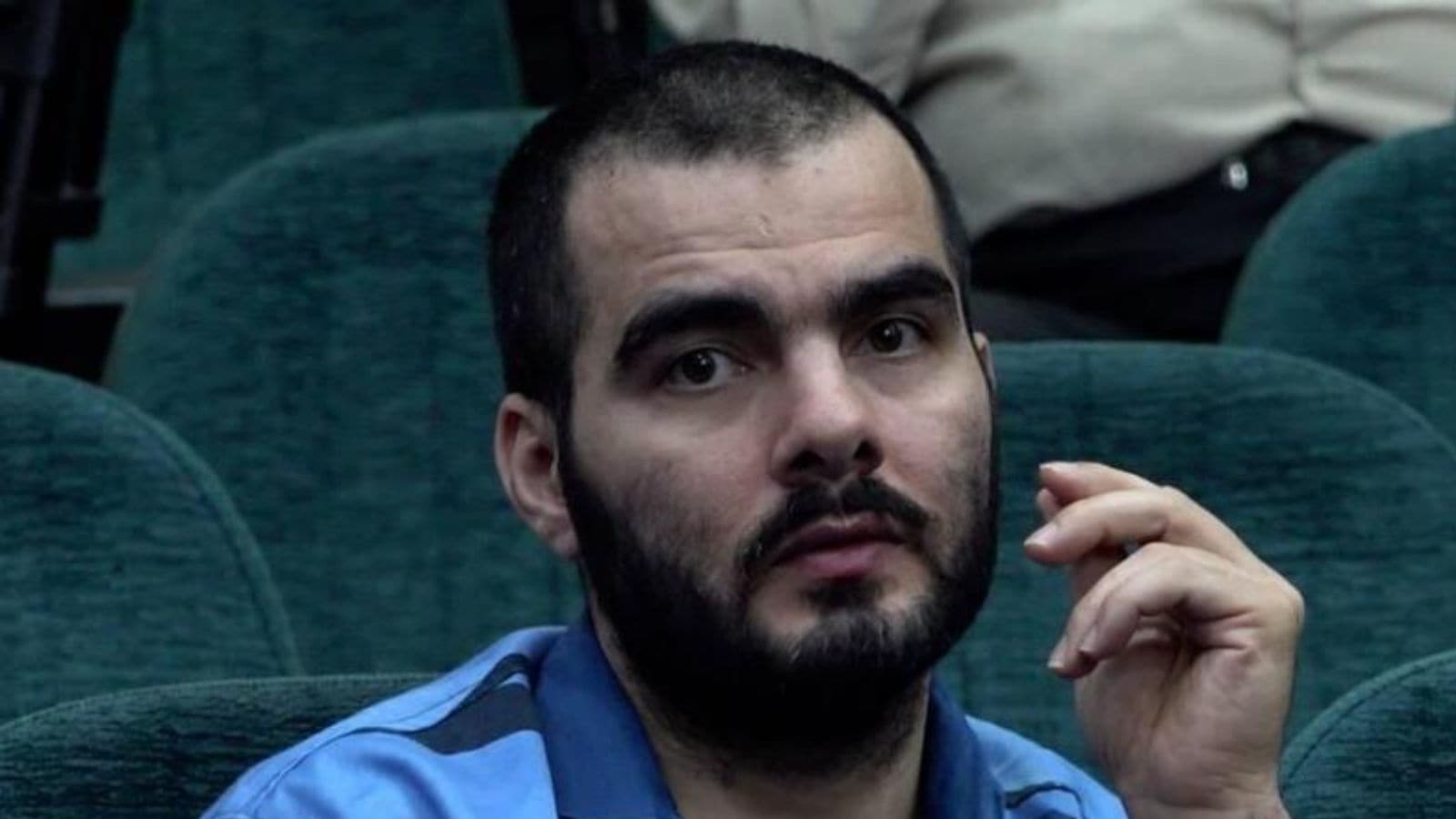
The execution of Kourosh Keyvani, an Iranian-Swedish dual national, represents a calculated application of judicial violence designed to achieve specific geopolitical and domestic outcomes. While standard reporting focuses on the emotional narrative of the victim, a structural analysis reveals that the Iranian judiciary operates not as a system of justice, but as a calibrated instrument of statecraft. This execution serves as a high-fidelity signal to three distinct audiences: the domestic opposition, the European diplomatic corps, and the Iranian diaspora. By deconstructing the procedural irregularities and the denial of burial rights, we can map the underlying logic of Tehran’s "Pressure-Response" framework.
The Tripartite Objectives of Capital Punishment in Dual-National Cases
The Iranian state utilizes the execution of dual nationals to manage specific systemic risks. The logic is not punitive in the traditional sense; it is a resource allocation problem where the "cost" of international condemnation is weighed against the "utility" of state survival.
- Deterrence of the Diaspora Information Loop: Keyvani, like other dual nationals, represents a bridge between domestic dissent and international visibility. By executing such figures, the state seeks to sever the information exchange between internal activists and the global media, raising the personal risk threshold for those living abroad who maintain ties to domestic movements.
- Diplomatic Arbitrage: Dual nationals are often leveraged as "human assets" in negotiations. When an execution proceeds, it indicates a failure in the diplomatic marketplace—either the Western partner (in this case, Sweden) refused to meet the "price" of a prisoner swap, or the Iranian hardline factions perceived greater value in a display of strength than in a negotiated release.
- Internal Consolidation via Ideological Purity: Executions demonstrate that the executive and judicial branches are immune to external pressure. This signals to the security apparatus (the IRGC and Basij) that the state will not "soften" its stance, thereby maintaining the morale of the enforcement class during periods of economic or social instability.
Architectural Violations of Procedural Justice
The case of Kourosh Keyvani is defined by the systematic removal of legal safeguards. Analyzing these removals reveals a deliberate strategy to ensure a specific verdict regardless of evidence.
The Evidentiary Black Box
In many national security cases within the Revolutionary Court system, the "evidence" is predicated on confessions obtained under conditions that bypass international standards. From a data perspective, these are not legal proceedings but "performative adjudications." The absence of transparency serves a functional purpose: it prevents the defense from identifying logical inconsistencies, thereby making the state’s narrative unfalsifiable.
The Defense Council Constraint
The state limits the pool of available lawyers to a pre-approved list under Article 48 of the Criminal Procedure Code. This creates a conflict of interest where the defense attorney’s primary loyalty is to the state’s security framework rather than the client’s acquittal. This bottleneck ensures that any legal challenge remains within the boundaries of state-sanctioned discourse.
The Post-Mortem Power Play: Denial of Burial Rights
The refusal to release Keyvani’s body to his family for traditional burial is an extension of the execution itself. This "extended punishment" serves to maximize the psychological cost to the survivors and prevents the creation of a physical site for collective mourning.
The Geography of Martyrdom
In Iranian political culture, gravesites frequently transform into nodes of resistance. By controlling the location and timing of the burial—or denying it entirely—the state prevents the funeral from becoming a catalyst for public protest. The burial site is treated as a strategic asset that must be neutralized to prevent "memorialization-based mobilization."
The Bureaucracy of Grief
The state uses the body as a final bargaining chip. Families are often forced to sign non-disclosure agreements or promise silence in exchange for the return of remains. This transforms a private religious rite into a state-managed transaction, further eroding the boundary between the individual and the sovereign.
Geopolitical Implications: The Sweden-Iran Friction Point
The execution of a Swedish-Iranian national creates a significant rupture in Nordic-Iranian relations. This must be viewed through the lens of the "Noury Precedent." The 2022 conviction of Hamid Noury in Sweden for war crimes committed in 1988 created a massive deficit in Iran’s diplomatic ledger.
- Retaliatory Symmetry: Tehran perceives its judicial actions as a direct response to Western legal interventions. If a Western court convicts an Iranian official, the Iranian system responds by accelerating the cases of dual nationals.
- The Breakdown of the "Soft Power" Buffer: Sweden has historically been a proponent of dialogue with Iran. The execution of Keyvani effectively burns this bridge, forcing Stockholm into a more hawkish position within the EU. This suggests that the "Hardline Faction" in Tehran currently holds a majority in the internal power-sharing agreement, prioritizing ideological defiance over economic relief or diplomatic normalization.
Quantifying the Risk for Dual Nationals
The risk function for dual nationals within the Iranian jurisdiction is non-linear and highly sensitive to external variables. The probability of detention ($P_d$) can be modeled as a function of:
- Origin State Friction ($S_f$): The current level of diplomatic tension between Iran and the individual’s second country.
- Domestic Unrest Index ($U_i$): The state’s perceived need to demonstrate control during internal protests.
- Individual Visibility ($V_i$): The person’s influence within the diaspora or their connection to sensitive sectors (tech, academia, journalism).
The execution of Keyvani indicates that $U_i$ is currently high, and the state is willing to accept a total collapse in $S_f$ to maintain the internal deterrence effect.
Strategic Realignment for International Actors
The Keyvani execution signals a shift from "Hostage Diplomacy" to "Punitive Execution." Previously, dual nationals were viewed as long-term bargaining chips. The transition to execution suggests that the Iranian state now views the act of killing as more valuable than the potential for trade.
For international organizations and foreign governments, the strategy must pivot. Continuing to rely on back-channel negotiations under the assumption that the state wants a "deal" is a miscalculation. The state is currently optimizing for Internal Sovereignty over Global Integration.
The immediate tactical move for European states involves:
- Degrading Diplomatic Reciprocity: Reducing the size of Iranian diplomatic missions to match the level of risk posed to their own citizens.
- Economic Sanctions Targeted at the Judicial Infrastructure: Moving beyond general economic pressure to target the specific individuals and entities within the "Judiciary-Security Complex" who profit from the seizure and execution of dual nationals.
- Legal Reciprocity: Utilizing universal jurisdiction more aggressively to indict Iranian judicial officials when they travel abroad, creating a counter-deterrent that mirrors the risks faced by dual nationals.
The execution of Kourosh Keyvani is not an isolated tragedy; it is a data point in a broader trend of aggressive isolationism. The state has calculated that it can survive the resulting sanctions and diplomatic isolation, provided it can maintain absolute control over the domestic narrative and the physical bodies of its citizens.