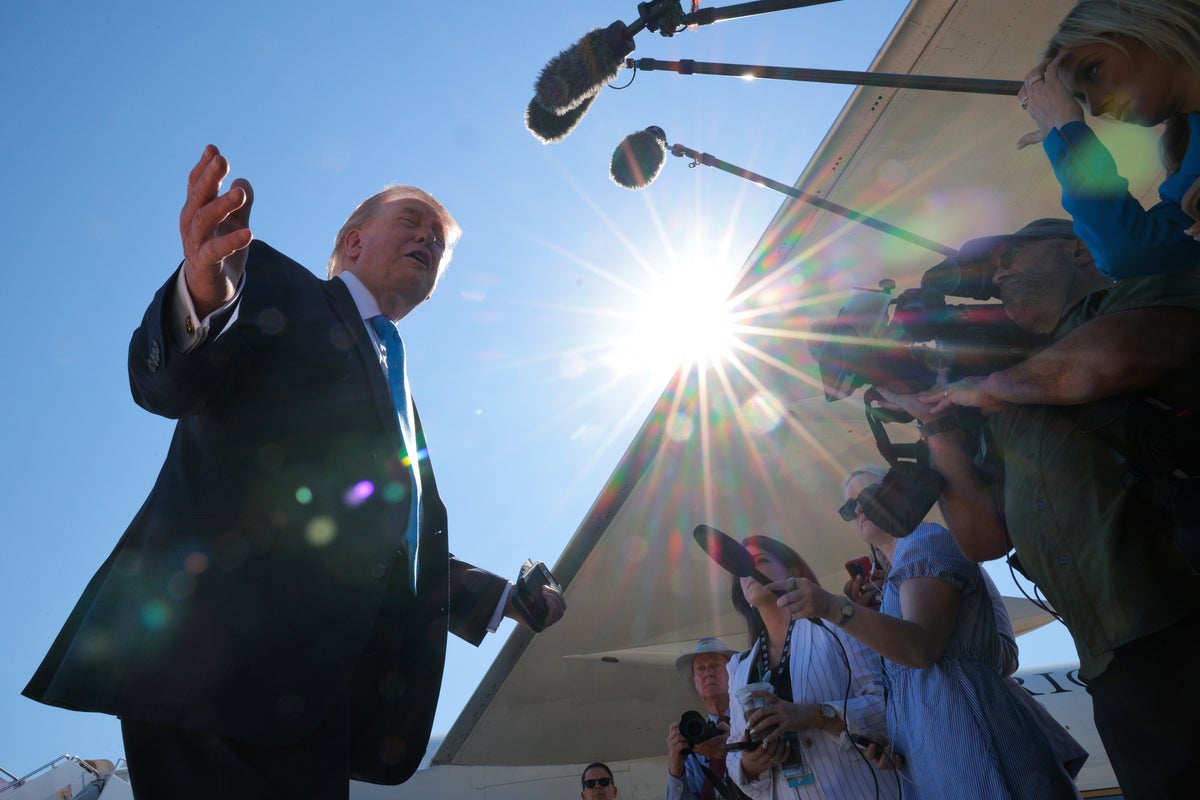
The consolidation of political power relies on a dual strategy of institutional compliance and psychological dominance. When a political leader issues a public, proxy-driven threat to an independent member of their own party, it is not merely a manifestation of personal friction; it is a calculated deployment of asymmetric leverage designed to maximize behavioral conformity while minimizing the expenditure of political capital. The recent exchange between Donald Trump and Fox News correspondent Jacqui Heinrich regarding her fiancé, Representative Brian Fitzpatrick (R-PA), serves as an instructive case study in the structural mechanics of intraparty coercion.
Traditional political reporting analyzes these interactions through the lens of interpersonal drama, focusing on the novelty of a threat delivered to a lawmaker via their partner during a press pool briefing. This approach misses the underlying strategic utility. By tracking the intersection of legislative defiance, media proximity, and electoral vulnerability, we can map the exact mechanisms of modern political enforcement. Meanwhile, you can find related developments here: The $14 Billion Stumbling Block Between Washington and Beijing.
The Legislative Matrix: Quantifying Defiance
To understand why a proxy threat is deployed, one must first isolate the precise legislative inflection points that trigger the enforcement mechanism. Intraparty discipline is directly tied to a legislator’s deviation from core executive priorities. In the case of Representative Fitzpatrick, the friction is generated by two distinct policy bottlenecks:
- The Capital Allocation Disconnect: Fitzpatrick’s public opposition to the executive funding request for a White House ballroom represents a direct challenge to symbolic and infrastructure expenditures.
- Structural Fiscal Resistance: Defiance regarding the 2025 tax and spending legislation disrupts the administration's broader fiscal strategy, creating a legislative logjam that threatens the passage of cornerstone economic policies.
This resistance occurs within a highly specific electoral context. Legislators from competitive districts face a distinct optimization problem: balancing localized general election viability with national party orthodoxy. When a legislator shifts too far toward independence, the party leadership must alter the legislator's internal cost function to force compliance. To understand the complete picture, check out the recent report by BBC News.
The Proxy Leverage Framework
The deployment of a threat through a journalist who is also the target’s partner is a highly efficient operational play. It utilizes a communication framework that transforms a standard press interaction into a multi-layered compliance mechanism.
[Executive Communication]
          │
          ├─► Primary Target (Independent Legislator) via Financial/Electoral Risk
          │
          └─► Secondary Vector (Media Partner) via Professional Confrontation
This strategy relies on three distinct structural layers.
1. The Weaponization of Proximity
By addressing the threat directly to a reporter covering the administration, the executive exploits a unique professional vulnerability. The reporter cannot easily avoid the interaction without compromising their professional duties, ensuring that the warning is delivered with zero transmission loss.
2. Information Environment Contamination
Introducing personal relationship dynamics into a formal press setting deliberately blurs the boundary between public governance and private vulnerability. This tactic destabilizes the target's immediate network, forcing the legislator to evaluate political decisions through a highly personal lens.
3. Public Dominance Signaling
The utility of the threat is multiplied because it occurs in full view of the media pool. The true audience is not merely the individual lawmaker, but the entire faction of independent or unaligned legislators within the party. The message is clear: compliance is non-negotiable, and no traditional boundary will prevent enforcement.
The Cost Function of Dissent
Political enforcement operates on a clear calculation of risk and reward. Following the primary defeats of other independent figures within the party, such as Senator Bill Cassidy and Representative Thomas Massie, the executive has demonstrated a consistent track record of executing electoral penalties. For an independent legislator, the cost-benefit equation of continuing to oppose executive priorities shifts dramatically following a public warning.
The primary mechanism of enforcement is the threat of an engineered primary challenge. By signaling that "voting against Trump... doesn't work out well," the executive threatens to cut off access to central campaign infrastructure, vital donor networks, and institutional endorsements. This forces the independent lawmaker to choose between maintaining legislative autonomy or risking their seat in a primary election dominated by the party's base.
This operational strategy carries distinct structural limitations. Repetitive over-reliance on proxy threats can yield diminishing returns, gradually desensitizing targets and driving independent factions to form defensive coalitions. Furthermore, in highly competitive districts, forcing a moderate or independent legislator out in a primary often results in a general election loss for the party, sacrificing raw legislative seat count for ideological purity.
The Counter-Slush Fund Strategy
The immediate legislative response to this coercion demonstrates how targets attempt to rebalance the power dynamic. Following the confrontation, independent lawmakers have moved to target the executive's financial instruments, specifically pledging to restrict or dismantle key discretionary capital allocations—such as the administration's $1.776 billion fund.
This counter-strategy aims to strip the executive of discretionary financial leverage, shifting the battleground from public rhetoric to structural appropriations. By targeting the funding mechanisms that the executive relies on to project power, independent legislators attempt to impose a real, material cost on the administration in retaliation for political threats.
The trajectory of this intraparty conflict will be determined by whether independent lawmakers can successfully leverage their collective voting power to block these crucial executive funds, or if the fear of primary elimination will ultimately force them to capitulate to the administration's legislative demands.