Geopolitical risk assessment in the Middle East frequently suffers from a fundamental analytical flaw: treating the rhetoric of the Islamic Revolutionary Guard Corps (IRGC) as mere ideological posturing rather than a structured doctrine of asymmetric deterrence. When the IRGC issues public warnings regarding a "crushing response" to potential United States military strikes, it is not speaking to a domestic audience alone. It is signaling a calibrated operational framework designed to alter the cost-benefit calculus of western decision-makers. To accurately quantify the risk of conflict escalation between Washington and Tehran, analysts must bypass superficial headlines and dissect the precise strategic pillars, operational mechanisms, and structural vulnerabilities that define Iran’s retaliatory calculus.
The Three Pillars of the IRGC Deterrence Framework
Iran’s military strategy operates under a severe conventional imbalance relative to the United States and its regional allies. To compensate, the IRGC has engineered a tripartite deterrence framework optimized to exploit the geographic and economic vulnerabilities of its adversaries. Understanding this framework requires shifting focus from conventional troop strengths to asymmetric force multipliers.
1. Strategic Depth via Proximate Proxy Networks
The first pillar relies on externalizing the theater of conflict. The IRGC’s Quds Force manages a decentralized network of state and sub-state actors spanning Iraq, Syria, Lebanon, and Yemen. This network functions as an extended defensive perimeter. By distributing precision-guided munitions, unmanned aerial vehicles (UAVs), and technological know-how to these groups, Tehran ensures that any direct kinetic strike on Iranian soil triggers a multi-front, multi-directional response. The operational objective is to force western military planners to divide their defensive assets—such as Aegis ballistic missile defense systems and Patriot batteries—across multiple disconnected geographic zones.
2. Anti-Access/Area-Denial (A2/AD) Chokepoint Dynamics
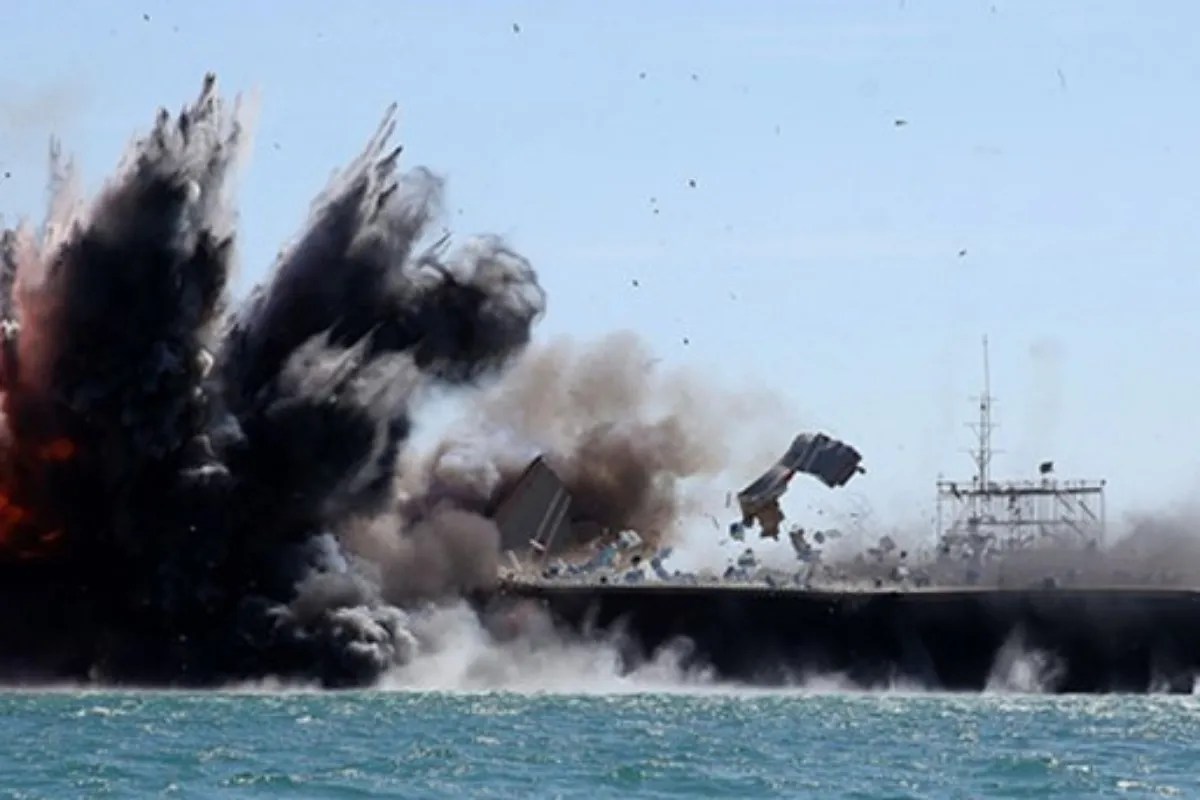
The Persian Gulf and the Strait of Hormuz represent a critical economic vulnerability for the global economy, through which roughly one-fifth of the world's petroleum passes. The IRGC Navy (NEDVSA) has structured its fleet around fast attack craft, naval mines, and shore-based anti-ship cruise missiles (ASCMs). The doctrine does not aim to defeat the US Navy in a conventional fleet engagement; instead, it aims to temporarily deny access to the strait. Even a short-term disruption in commercial shipping traffic creates immediate inflationary shocks in global energy markets, weaponizing market volatility as a core component of Iran’s defensive calculus.
3. Integrated Missile and Unmanned Aerial Vehicle Architecture
Iran possesses the largest and most diverse ballistic missile arsenal in the Middle East. Over the past decade, the IRGC Aerospace Force has transitioned from a doctrine based purely on mass and volume to one focused on precision accuracy and survivability. By utilizing solid-fuel propellants for rapid launch sequences and deploying highly maneuverable UAVs alongside ballistic and cruise missiles, the IRGC seeks to overwhelm integrated air defense systems through saturation attacks.
The Escalation Ladder: Quantifying the Cost Function of Retaliation
A critical error in standard reporting is the failure to map the specific cause-and-effect relationships that govern a kinetic exchange between the US and Iran. Retaliation is not a binary switch; it is a highly fluid, tiered escalation ladder. The IRGC's response to an American strike is determined by a strict cost function based on the target's location, the visibility of the strike, and the resulting degradation of command-and-control infrastructure.
[Tier 1: Threshold Probing] -> Deniable proxy rocket/UAV strikes on regional bases
       |
[Tier 2: Symmetric Escalation] -> Open, state-attributed precision missile salvos
       |
[Tier 3: Systemic Disruption] -> Chokepoint interdiction & regional energy infrastructure neutralization
Phase One: Threshold Probing and Deniable Attribution
If a US military operation targets IRGC assets outside of Iran's sovereign borders—such as supply lines in Syria or command nodes in Iraq—the immediate response occurs below the threshold of open state-on-state warfare. The IRGC activates localized proxy groups to execute low-cost, high-frequency attacks using one-way attack UAVs and unguided rockets against US forward operating bases. This tactical layer allows Tehran to inflict friction costs and political pressure on Washington while maintaining a degree of plausible deniability to avert a direct homeland escalation.
Phase Two: Symmetric State-Attributed Escalation
A direct, overt US strike on sovereign Iranian territory alters the strategic calculus entirely. In this scenario, the IRGC's internal legitimacy requires an open, state-attributed response. The mechanism for this tier is a concentrated, land-based missile salvo launched from western Iran targeting high-value US military installations or allied infrastructure in the region. The operational goal is to demonstrate technological parity and penetration capability against western air defense systems, thereby establishing a new baseline of mutual vulnerability.
Phase Three: Systemic Disruption
The highest tier of the escalation ladder involves the systemic disruption of regional security and energy infrastructure. If the IRGC perceives that the survival of the clerical regime is fundamentally threatened by sustained American kinetic operations, it moves to neutralize critical infrastructure across the energy sector. This includes targeting regional desalination plants, oil refineries, and oil transshipment terminals using swarm UAV tactics and cruise missiles, alongside active maritime interdiction in the Strait of Hormuz and the Bab al-Mandab.
Structural Bottlenecks and Strategic Limitations
While the IRGC's asymmetric doctrine presents significant challenges to traditional power projection, it is constrained by profound structural liabilities. An objective analysis must account for these vulnerabilities to avoid overestimating Iran’s operational capacity.
- Air Defense Vulnerabilities: Iran's domestic air defense network remains highly reliant on older, localized radar architectures and imported systems like the S-300. Against low-observable, fifth-generation western aircraft and electronic warfare suites, Iran's ability to defend its domestic industrial and military center points is severely limited.
- Economic Degradation and Logistics: Decades of comprehensive international sanctions have eroded Iran's industrial supply chains. While the IRGC has achieved impressive self-sufficiency in missile assembly, it faces persistent bottlenecks in acquiring high-grade semiconductors, advanced carbon fibers, and specialized machining equipment required to sustain long-term, high-intensity warfare.
- Proxy Agency Risk: The decentralized nature of the "Axis of Resistance" introduces inherent command-and-control vulnerabilities. Localized commanders or allied militia leaders frequently operate under their own provincial incentives. This reality creates a perpetual risk of unintended escalation, where an uncoordinated local strike could cross an American red line and trigger an overwhelming conventional response that Tehran did not explicitly authorize or desire.
Operational Blueprint for Managing Asymmetric Triggers
To successfully navigate this volatile environment without triggering a systemic regional conflict, western defense planners must move away from reactive posturing and adopt a highly structured, proactive containment model.
First, dynamic defense positioning must replace static force projection. Centralizing large concentrations of US personnel and high-value assets in fixed, well-known regional bases creates highly appealing targets for saturation attacks. Force posture must transition toward a distributed, agile footprint that relies on rapidly deployable, smaller units operating out of austere locations combined with expanded sea-based missile defense capabilities. This setup degrades the efficacy of the IRGC's pre-programmed ballistic missile targeting data.
Second, the United States must establish clear, non-negotiable operational red lines regarding critical infrastructure and shipping lanes, backed by a pre-delegated, automated response mechanism. Ambiguity in Western deterrence doctrines often invites miscalculation by the IRGC, as commanders test the boundaries of Western resolve. By explicitly defining the exact threshold for kinetic retaliation—specifically regarding maritime interdiction and energy infrastructure targeting—Washington can significantly reduce the probability of accidental systemic escalation while preserving a stable, predictable framework for regional deterrence.