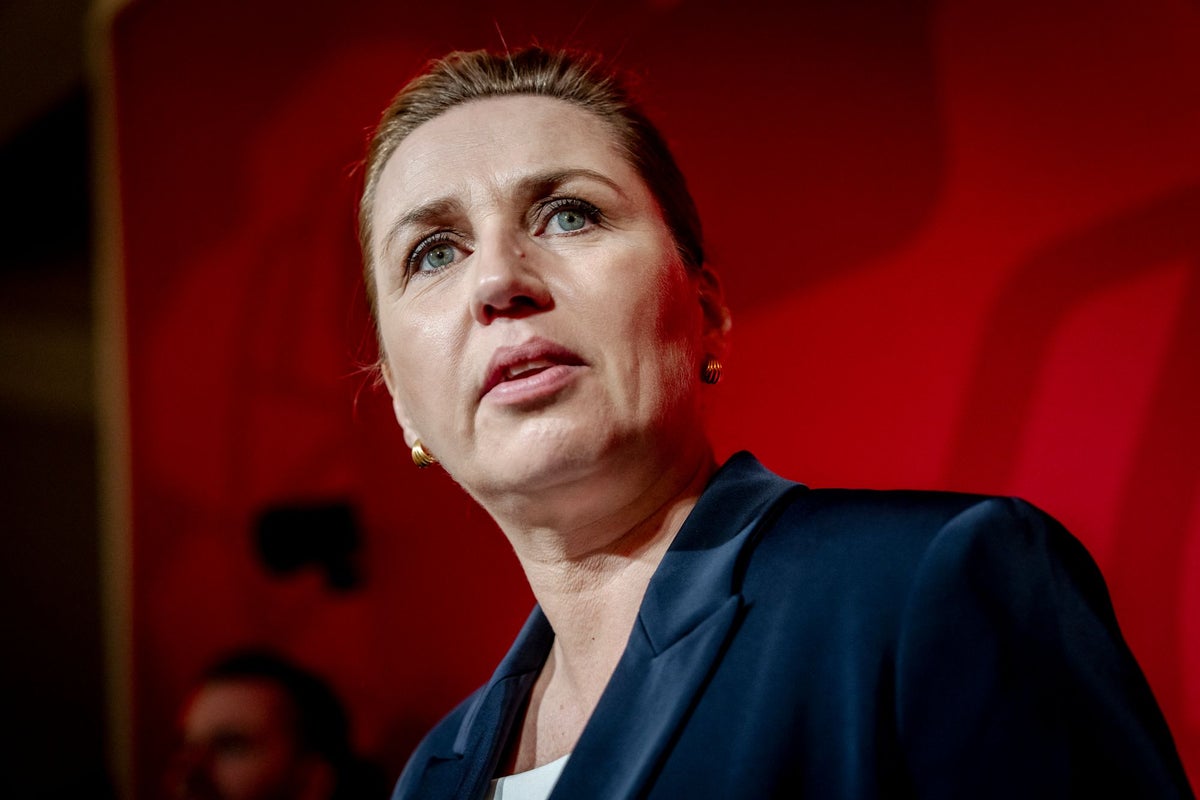
Denmark’s political stability currently rests on a mathematical paradox: the more the center expands to prevent polarization, the more it erodes the distinct ideological incentives that drive voter turnout and parliamentary discipline. The recent inconclusive election result is not a failure of a specific campaign but a systemic rejection of the "Grand Coalition" model. When a Prime Minister’s future is questioned despite maintaining a technical plurality, it indicates that the currency of Danish politics—trust and predictability—has been devalued by tactical pivots.
The current instability can be disaggregated into three structural pressures: the exhaustion of the "Broad Center" experiment, the emergence of personality-driven splinter parties, and the rigid constraints of the Danish "Negative Parliamentarism" system.
The Structural Failure of the Broad Center Model
The incumbent leadership attempted to solve the problem of fringe-party influence by forming a government across the traditional red-blue divide. While this appeared pragmatic, it created a "Representation Vacuum." In a multi-party system, the center functions as a bridge, not a destination. By occupying the center so aggressively, the Prime Minister effectively forced the traditional opposition into a state of reactive incoherence, while simultaneously alienating the base of their own party.
This creates a Cost of Governance that is now coming due. The logic of a centrist coalition assumes that voters value stability over ideological purity. However, data from recent polling shifts suggests that voters view this stability as stagnation. When the policy delta between the government and the opposition shrinks to near zero, the electorate shifts its focus to "Character and Conduct," where the Prime Minister is most vulnerable.
The Fragmentation of the Right-Wing Bloc
The primary reason for the inconclusive result is not a surge in left-wing radicalism, but the decomposition of the "Blue Bloc" (Venstre and the Conservatives). This decomposition occurred in two phases:
- The Tactical Migration: Voters did not move to the left; they moved to new, insurgent parties led by former cabinet members. These parties are built on the brand equity of individuals rather than established platforms.
- The Policy Convergence: Because the Prime Minister adopted several traditionally right-wing stances—particularly on immigration and fiscal restraint—the traditional right-wing parties lost their "Unique Selling Proposition."
This leaves the Prime Minister in a position where they must negotiate with parties that exist solely because they are dissatisfied with the Prime Minister's previous leadership. This is not a negotiation of policy; it is a negotiation of survival.
The Constraint of Negative Parliamentarism
To understand why the result is "inconclusive" despite a clear count of seats, one must apply the logic of Negative Parliamentarism. In the Danish system, a government does not need a majority to support it; it only needs to ensure that a majority does not actively oppose it.
This creates a specific strategic bottleneck. The Prime Minister is currently calculating the "Minimum Winning Coalition" ($MWC$), which is the smallest number of seats required to prevent a vote of no confidence. However, the $MWC$ in this cycle is mathematically fragile because it requires the cooperation of the "Kingmaker" parties—moderates who have built their entire platform on being the "adults in the room."
The bottleneck manifests in two ways:
- The Policy Veto: Every small party in a thin coalition holds a total veto over legislation. This leads to "Lowest Common Denominator" lawmaking, where significant reforms (Green transition, healthcare labor shortages) are diluted until they are ineffective.
- The Time-to-Collapse Variable: Historically, Danish governments built on such narrow margins have a high decay rate. The Prime Minister is not just fighting for a second term; they are fighting to avoid a snap election in 18 months when the first major budget disagreement occurs.
The Role of the North Atlantic Seats
The four seats representing Greenland and the Faroe Islands are often treated as an afterthought in international analysis, yet they currently represent the Prime Minister's only path to a technical majority. This creates a leverage imbalance. If the domestic Danish parties cannot reach an agreement, the sovereignty and subsidy demands of the North Atlantic territories become the fulcrum of Danish national policy. This is a high-risk strategy; using "Empire" votes to override domestic "Mainland" preferences is a recipe for long-term populist backlash.
The Credibility Deficit and the Mincemeat Effect
The Prime Minister’s "Future in Question" is a direct result of what political scientists call the "Audience Cost." By signaling a willingness to work with anyone to stay in power, the Prime Minister has signaled that their own platform is negotiable.
When a leader's survival depends on a series of contradictory promises, they undergo the "Mincemeat Effect"—chopped into so many small pieces to satisfy different coalition partners that the original substance of the leader disappears. The voters see a survivor, not a leader. This is the primary driver of the "Inconclusive" tag. The numbers might add up on a spreadsheet, but the moral authority to lead does not.
The Economic Risk of Political Limbo
Denmark’s economy is heavily reliant on a stable regulatory environment for its pharmaceutical and green energy exports. The current political vacuum creates a "Certainty Tax."
- Foreign Direct Investment (FDI): Investors dislike the prospect of a government that could collapse at any moment.
- Fiscal Planning: Without a clear majority, the 2030 climate targets and the necessary infrastructure investments remain unfunded or stuck in committee.
The Prime Minister’s inability to secure a decisive mandate is now a macroeconomic risk. If the negotiations drag on for weeks, the market will begin to price in the instability of the Danish Krone relative to the Euro, despite the peg.
Strategic Path: The Minority Government Pivot
The only logical move for the Prime Minister to regain control is to abandon the pursuit of a broad "Grand Coalition" and instead form a "Lean Minority Government."
- Acknowledge the Mandate Deficit: Instead of pretending to have a broad mandate, the Prime Minister should lead a government focused on three "Crisis Pillars": Energy Security, Healthcare Reform, and Defense Spending.
- Ad-Hoc Majority Formation: Rather than a formal coalition agreement, the government should negotiate on a bill-by-bill basis. This restores the power of the Parliament and forces the "Kingmaker" parties to take public responsibility for their votes rather than hiding behind a coalition contract.
- Set a Defined Horizon: Commit to a two-year legislative program followed by a pre-scheduled election. This removes the "Survival" narrative and replaces it with an "Execution" narrative.
The Prime Minister must stop trying to win the previous election and start managing the current reality. If they continue to seek a total-consensus government, they will remain a prisoner of the fringe. The path forward requires a shift from tactical accumulation of seats to the strategic exercise of limited power. Anything less confirms the competitor's narrative of a leader whose time has passed.
The Prime Minister should immediately cease negotiations for a majority coalition and pivot to a "Government of Necessity." By daring the opposition to trigger an election—which the data shows the opposition is currently unprepared to win—the Prime Minister flips the leverage. Stability in the Danish context is no longer about the number of seats held; it is about the willingness to govern without a safety net.
Would you like me to analyze the specific economic impact of the Danish Green Transition targets under a minority government framework?