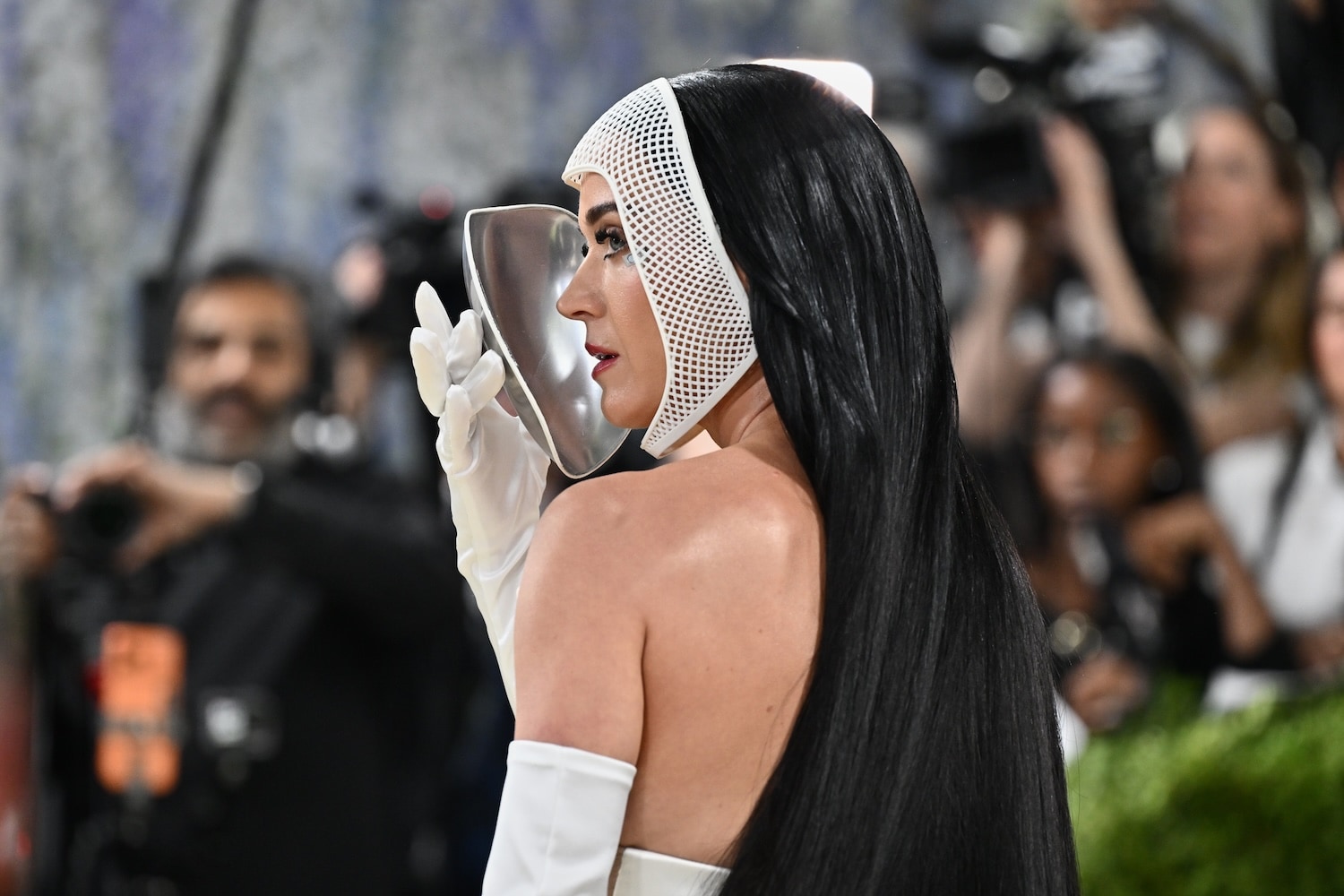
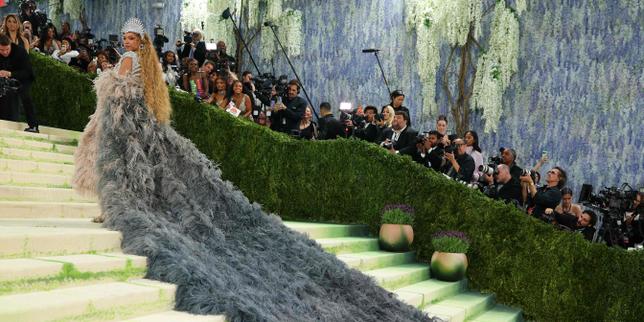
The Met Gala operates as a high-stakes marketplace of cultural capital where the "dress code" functions as a soft-regulatory framework rather than a binary set of rules. While casual observers view artistic liberties as mere rebellion or lack of preparation, a structural analysis reveals that these deviations are calculated strategic moves designed to maximize media impressions, brand differentiation, and archival longevity. Compliance with the theme creates a crowded competitive field; strategic non-compliance, or "thematic abstraction," allows a participant to capture a monopoly on attention by breaking the visual pattern established by the majority.
The Triad of Thematic Execution
To understand why a guest deviates from a stated theme—such as "The Garden of Time"—one must categorize their approach into one of three distinct execution models.
- Literalism: Direct translation of the theme's core imagery (e.g., florals, vintage archival pieces). This carries low risk but offers diminishing returns on media visibility due to high visual saturation.
- Conceptual Abstraction: Interpretation through philosophical or historical subtext (e.g., focusing on the entropy of time rather than the aesthetics of a garden). This requires a sophisticated "narrative sell" to the press to ensure the logic is communicated.
- Brand-First Dominance: Intentional disregard for the theme in favor of a specific house silhouette or a high-contrast aesthetic. Here, the brand identity supersedes the event’s regulatory framework, signaling that the designer’s vision is more influential than the Metropolitan Museum’s mandate.
The friction between these models creates the "artistic liberties" often cited in post-event coverage. When a guest ignores the dress code, they aren't necessarily failing; they are often executing a "Brand-First Dominance" strategy to ensure their look remains recognizable within the designer's broader portfolio, rather than being swallowed by a sea of thematic uniformity.
The Cost Function of Thematic Fidelity
Adhering strictly to a dress code imposes specific operational costs on fashion houses and celebrities. These costs are not merely financial but involve trade-offs in brand positioning and physical mobility.
- The Archive Constraint: If a theme demands historical accuracy, brands must either secure delicate archival pieces—which limits customization and creates massive insurance liability—or produce "new vintage," which risks looking like a derivative costume.
- The Silhouette Bottleneck: Many themes favor specific shapes (e.g., Victorian corsetry or structured avant-garde). If a celebrity’s personal brand is built on a "cool-girl" or "minimalist" aesthetic, forcing them into a thematic silhouette can dilute their market value.
- The Visibility Penalty: When 400 guests interpret "Garden" through floral prints, the marginal utility of the 401st floral dress is zero. To achieve a "viral" moment, the guest must move into a different visual frequency, often by stripping away the theme entirely.
This explains the prevalence of "Thematic Minimalism," where a guest wears a simple black gown but justifies it through a tenuous link to a minor detail in the prompt. It is a hedge: they satisfy the requirement of being "present" while maintaining the aesthetic integrity of their personal brand.
Decoding the Narrative Sell
Artistic liberty is rarely presented as a mistake; it is presented as a "reinterpretation." This is an essential PR mechanism. The success of a non-compliant look depends entirely on the strength of its supporting logic.
Consider the mechanism of Post-Facto Justification. When a garment clearly fails the visual test of the theme, the designer releases a statement linking the look to an obscure historical footnote or a metaphorical concept. This shifts the metric of success from "Does it look like the theme?" to "Is the idea behind it clever?" This intellectualization allows the guest to bypass the dress code while claiming the moral high ground of "artistic depth."
The Power Dynamics of the Invitation
The degree of liberty a guest can take is directly proportional to their status within the industry hierarchy.
- Tier 1: The Iconoclasts: High-profile figures (A-list actors, industry moguls) can ignore the theme entirely with zero social or professional repercussion. Their presence alone is the value-add for the museum.
- Tier 2: The Creative Partners: Models and muses walking with a designer must adhere to the designer’s vision. If the designer chooses to be rebellious, the guest follows.
- Tier 3: The New Entrants: Influencers and emerging stars typically show the highest level of thematic literalism. They cannot afford the "arrogance" of deviation and must prove they "belong" by following the rules to the letter.
The Economic Impact of "The Look"
The Met Gala is, at its core, a marketing engine for the Costume Institute and the sponsoring brands. The "artistic liberties" taken by guests serve as fuel for this engine. Standardized beauty is rarely a conversation starter. Contention—the debate over whether a look "fit the theme"—is what drives social media engagement metrics and increases the Earned Media Value (EMV) for the participating brands.
If every guest followed the dress code perfectly, the post-event discourse would collapse into a simple ranking of "who did it best." By introducing deviation, the discourse expands into "who understood the assignment," "who was too lazy to try," and "who is bigger than the rules." This complexity sustains the news cycle for days longer than a compliant event would.
Institutional Tolerance for Deviation
The Metropolitan Museum and Vogue (under Anna Wintour’s leadership) maintain a calculated level of tolerance for these liberties. Strict enforcement would lead to a "costume party" atmosphere, which would devalue the high-fashion status of the event. By allowing guests to interpret—and occasionally ignore—the prompt, the Gala maintains its status as a site of "art" rather than just a curated exhibition.
However, there is a threshold. When deviation becomes "boring" (e.g., a standard tuxedo at a camp-themed event), the institutional blowback is silent but effective: the guest simply isn't invited back. The liberty must be artistic, not just a lack of effort.
The Strategic Path Forward for Participants
For a designer or celebrity looking to navigate the tension between thematic compliance and brand identity, the optimal play is Subversive Literalism.
- Identify the Core Visual Metric: Determine the one element the public will use to judge the theme (e.g., flowers for a garden, gold for a Gilded Age).
- Execute the Metric via Subversion: Instead of fabric flowers, use 3D-printed metal "dead" flowers. Instead of gold fabric, use gold body paint or jewelry that forms a skeleton.
- Control the Narrative: Release the "logic" of the look 15 minutes before the red carpet appearance. This primes the press to look for the "deeper meaning" before they have a chance to label the look as off-theme.
- Maximize Physicality: If the look is off-theme, it must be massive in scale or technically impossible. A simple dress that ignores the theme is a failure; a 20-foot train that ignores the theme is a "statement."
The objective is to move the conversation from "Did they follow the rules?" to "Did they redefine the rules?" This is where the highest concentration of cultural capital is found.