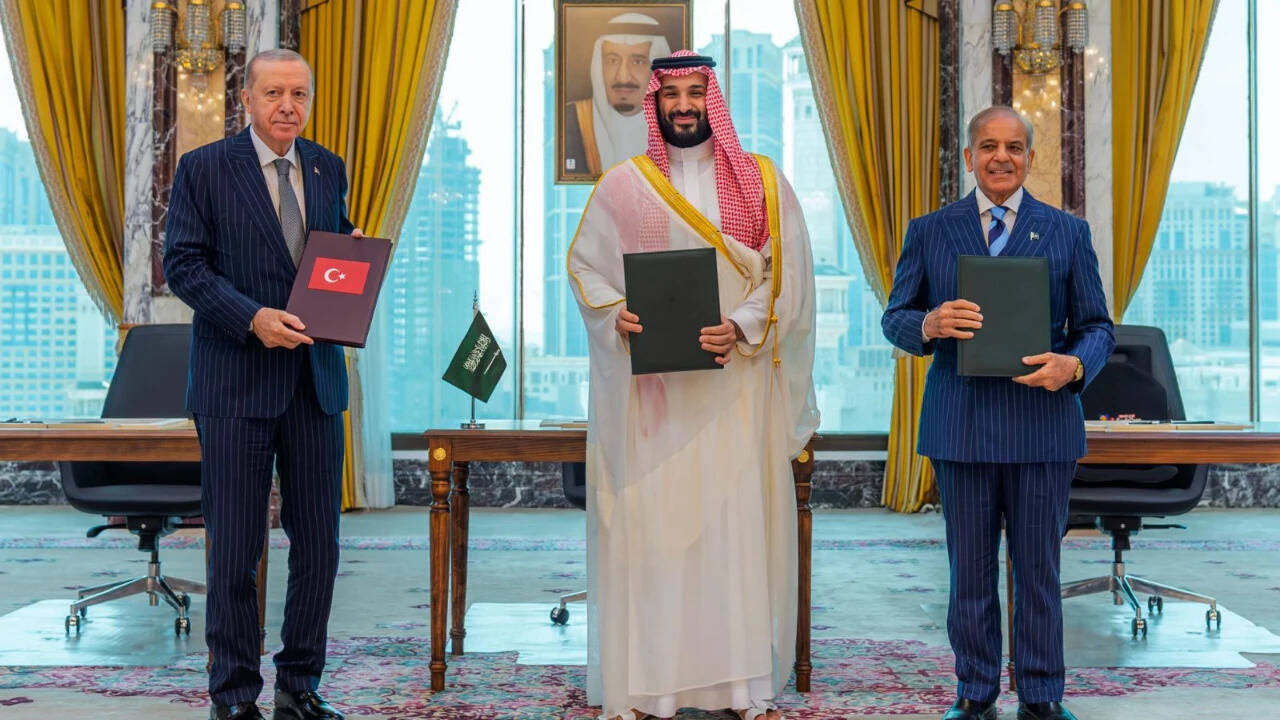
Geopolitical alignments in the Middle East and South Asia are shifting fast. Pakistan is stepping into a major mediation role. Deputy Prime Minister and Foreign Minister Ishaq Dar just announced that the top-level security committee of the Makkah Joint Defense Agreement—frequently called the Mecca pact—will convene in Islamabad.
If you've been trying to make sense of what this alliance means for the ongoing regional volatility, especially regarding the Houthis in Yemen, you aren't alone. Most coverage treats this defense pact as just another bureaucratic security arrangement. It is actually much more than that. Don't miss our earlier coverage on this related article.
Decoding the Islamabad Agenda
The core objective of the upcoming Islamabad summit isn't just about military posturing. It centers heavily on political strategy. Pakistan, Saudi Arabia, and Türkiye are actively evaluating how to handle the persistent security threats posed by Yemen's Houthi movement.
For months, the Iran-backed group has targeted civilian infrastructure, cities, and vital maritime trade routes. The economic fallout is real. Shipping lanes near the Strait of Hormuz have faced immense pressure, forcing regional powers to look beyond pure kinetic retaliation. If you want more about the background of this, The New York Times offers an informative summary.
During recent diplomatic channels, alternative approaches have gained traction. Tehran reportedly suggested that opening direct political engagement channels with the Houthis could de-escalate tensions. The upcoming meeting in Islamabad will test this hypothesis. Instead of relying solely on heavy-handed military campaigns—which historically yield mixed results in Yemen's fractured terrain—the alliance wants to explore structured political dialogue.
Why Pakistan Holds the Pen on Mediation
Pakistan's position in this tripartite alliance is fascinating. While Saudi Arabia bears the direct brunt of cross-border attacks and Türkiye brings robust defense-industrial capabilities, Islamabad acts as the diplomatic bridge.
Pakistan maintains a delicate balancing act. It shares historical ties with Riyadh and strategic geographic proximity and diplomatic channels with Tehran. When foreign ministers discuss opening dialogue with groups like the Houthis, they need an interlocutor who can talk to multiple sides without instantly triggering regional suspicion.
Islamabad has made its baseline expectations clear. Any political track must demand an immediate halt to attacks on civilian and economic infrastructure. At the same time, recognizing the necessity of political inclusion marks a departure from rigid containment strategies of the past.
The Wider Stakes for Global Shipping and Trade
You have to look at the bigger picture to understand why the world is watching this summit. The security of energy corridors and commercial shipping lanes dictates global economic health. Disruptions near the Arabian Peninsula ripple straight into fuel prices and supply chains worldwide.
The Mecca defense framework was originally designed to guarantee mutual defense and territorial sovereignty among its members. Yet, expanding its mandate to tackle non-state actors through political strategy shows institutional maturity. A purely military pact often fails against asymmetric threats. By incorporating a strategic political committee, these nations are admitting that political settlements must accompany security deterrence.
Expectations for the Islamabad meeting are high. The decisions made behind closed doors will set the tone for how regional heavyweights deal with proxy warfare moving forward. If this trilateral framework successfully manages to bring hostile factions toward a negotiating table, it could rewrite the playbook for crisis management in Southwest Asia. Keep a close eye on the outcomes coming out of Islamabad this month. The ripple effects will impact global markets and security architectures for years to come.