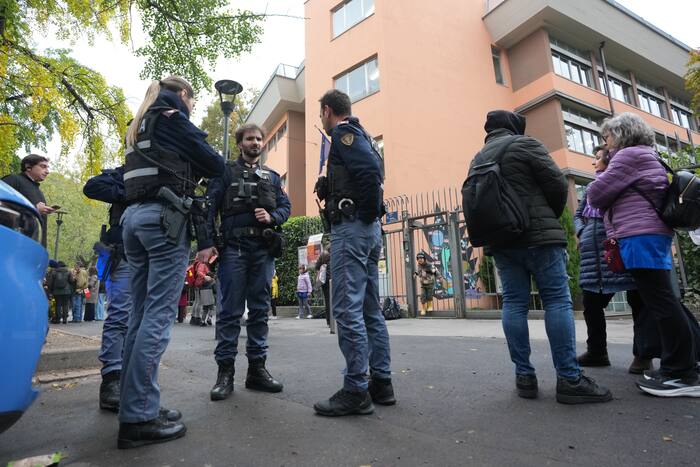
Hundreds of schools across Italy empty onto the streets. Thousands of students in Scotland and Ireland stand shivering in parking lots while bomb squads sweep empty hallways. The mainstream press reports these coordinated waves of anonymous bomb threats with breathless urgency, framing every mass evacuation as a triumph of "abundance of caution" and rapid emergency response.
They are completely wrong.
When authorities reflexively evacuate hundreds of buildings based on an unverified, copy-pasted email sent from a disposable server, they are not protecting children. They are executing the exact operational playbook designed by the attacker. Mass evacuations in response to anonymous, non-specific threats do not neutralize danger; they manufacture chaos, drain emergency resources, and guarantee that the next wave of threats will be twice as large.
The Anatomy of Asymmetric Disruption
To understand why the current protocol is broken, look at the economics of the attack.
Sending an automated email blast to five hundred school administrative addresses takes less than three minutes and costs zero dollars. Using basic virtual private networks, encrypted email providers, or compromised botnets, a single teenager in a bedroom on another continent can mask their digital footprint well enough to tie up international law enforcement for months.
Now look at the cost of the response.
When a school district defaults to an immediate, full-scale evacuation, the asymmetrical return on investment for the bad actor becomes astronomical. A three-minute email forces:
- Tens of thousands of lost instructional hours across multiple jurisdictions.
- Massive deployment of specialized K-9 units and bomb disposal teams, pulling them away from legitimate, high-probability public safety threats.
- Severe psychological distress inflicted on young children who are told their classrooms might explode.
- Acute physical danger created by herding hundreds of disorganized students into predictable, unfortified choke points outside the building.
I have spent over fifteen years advising municipal crisis teams and critical infrastructure operators on threat assessment, and I have watched billion-dollar institutions paralyze themselves over ghost threats. The lazy consensus among school administrators and local politicians is that evacuating is always the "safe" choice because nobody ever got fired for being too careful.
That cowardice is precisely what fuels the epidemic. In security terminology, this is a Distributed Denial of Service (DDoS) attack against physical infrastructure. If you shut down your entire network every time a script kiddie pings your server, you do not have a security strategy. You have a self-destruct button wired to a public doorbell.
The Deadly Blind Spot of the "Abundance of Caution"
Mainstream coverage of the incidents in Italy, Scotland, and Ireland treats evacuation as a binary choice between safety and negligence. Either you clear the building, or you gamble with lives. This is a false dichotomy pushed by people who have never studied actual attack methodologies.
Real-world bombers do not send polite, mass-emailed warnings to hundreds of schools simultaneously.
Historically and operationally, individuals or groups who go through the immense logistical risk of acquiring explosives, manufacturing a device, and planting it inside a target want the device to detonate. Warning the target ruins the operation. When genuine pre-detonation warnings do occur—such as during historical campaigns by groups like the Provisional IRA—they are hyper-specific, include recognized codewords to prove authenticity, and target a single, high-value symbolic or economic site. They are never blasted out via BCC to three hundred elementary schools.
Even worse, automatic evacuation actually increases the vulnerability of the students if a real threat exists.
Think about the tactical reality of a school evacuation. You take children out of brick-and-concrete classrooms—which offer structural compartmentalization, locked doors, and physical cover—and march them into wide-open, unfenced assembly areas like football fields and parking lots.
Imagine a scenario where a genuinely malicious actor wants to target a school population. Knowing that an anonymous email will reliably force every student and teacher onto the front lawn within seven minutes, the attacker does not even need to breach the school's interior security. They simply plant a secondary device at the designated assembly point, or use a vehicle against the exposed crowd. By making evacuation an automatic, predictable reflex, schools hand attackers a guaranteed way to herd targets out of cover and into the open.
Why Swatting Networks Target Schools
The media loves to frame these cross-border alerts as mysterious national security crises. In reality, most of these mass campaigns are driven by decentralized online extortion rings, clout-chasing cybercriminal collectives, and teenage swatting networks.
Their currency is headlines.
Every time a major European news outlet runs a banner headline announcing that "Hundreds of Schools Evacuate Amid Terrifying Bomb Plot," the perpetrators screenshot the article and post it in their private Telegram and Discord channels as a trophy. The media's sensationalism acts as a free marketing department for the attackers, proving that their three-minute script successfully disrupted an entire nation.
Law enforcement agencies like the FBI, Europol, and the UK's National Crime Agency have repeatedly documented how these networks operate. They buy or scrape public school email directories, load them into automated mailers, and watch the chaos unfold on live local news feeds. Sometimes they demand small cryptocurrency ransoms; other times, they do it purely to watch authorities dance on strings.
When officials respond with total paralysis, they validate the tactic. They teach every copycat on the internet that a free email account carries the same disruptive power as an armed brigade.
Dismantling the Myths Around School Threat Protocols
If you search online for how schools handle bomb threats, you will run into a wall of bureaucratic platitudes. Let us strip away the administrative jargon and address the core questions parents and educators are actually asking.
Should schools ignore anonymous bomb threats?
No. Ignoring a threat is negligence, just as reflexive evacuation is theater. The alternative to panic is structured threat assessment. Every incoming threat must be evaluated immediately using established intelligence matrices—such as the protocols developed by the U.S. Secret Service National Threat Assessment Center and the FBI's Behavioral Analysis Unit—before a single alarm bell is pulled.
What separates a credible threat from digital noise?
Credibility lives in the details. Threat assessors look for specific indicators:
- Specificity of location: Does the message name a specific room, locker, or HVAC unit, or does it generically threaten "your school"?
- Technical plausibility: Does the sender describe realistic components, or do they use Hollywood buzzwords like "C4 wired to a mercury switch"?
- Delivery mechanism: Was the threat sent individually with unique details about the school's layout, or was it blasted to fifty different domains in the same minute?
- Physical anomalies: Have perimeter cameras, visitor logs, or custodians detected any unauthorized entry or suspicious packages?
When an email hits two hundred schools in Italy, Scotland, or Ireland with identical phrasing and zero specific details, it scores near zero on every credibility metric. Treating it identically to a specific, localized intelligence warning is a failure of leadership.
Isn't it better to evacuate just in case?
Only if you believe disruption has zero cost. Every false evacuation triggers alarm fatigue. When students and teachers are marched outside three times in a semester for fake emails, they stop taking emergency protocols seriously. Doors get left propped open. Headcounts get sloppy. If a genuine fire or localized emergency happens the following week, the delayed, cynical response caused by alarm fatigue can turn fatal.
The Protocol That Actually Works
To break the cycle of mass school disruptions, ministries of education and local police forces must abandon the zero-tolerance evacuation model and adopt a tiered, intelligence-led response.
1. Shelter-in-Place and Targeted Visual Sweeps
When a non-specific, mass-distributed threat arrives, the default response should be Shelter-in-Place, not evacuation. Keep students inside locked classrooms, away from windows, continuing normal instruction while trained staff conduct a discreet, rapid visual sweep of common areas, hallways, restrooms, and exterior perimeters.
Staff members know their buildings better than any arriving bomb squad ever will. A custodian or teacher immediately notices if a strange backpack is sitting behind a stairwell or if a ceiling tile has been disturbed. If nothing out of place is found, the school stays open, the threat is logged with cybercrime units, and the attacker gets zero