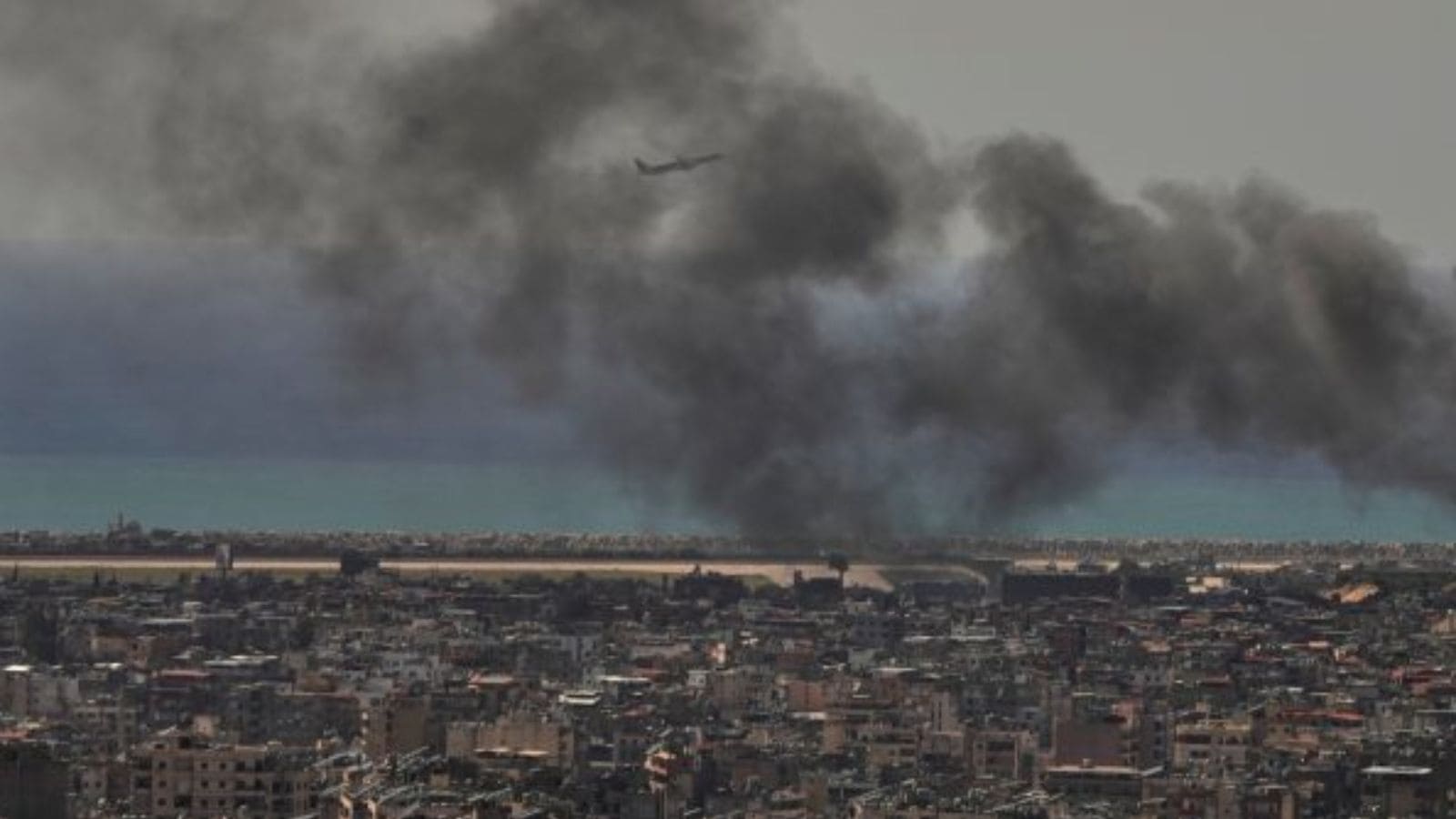
The maritime strike on a bulk carrier 15 nautical miles north of Sharjah on March 21, 2026, marks a transition from tactical skirmishing to a systematic strategy of kinetic attrition against Gulf infrastructure. This incident, occurring in tandem with the interception of three ballistic missiles and eight unmanned aerial vehicles (UAVs) over UAE territory, reveals a deliberate attempt to saturate defensive envelopes while simultaneously compromising the insurance and risk viability of the Strait of Hormuz.
The current conflict architecture is defined by the Asymmetric Displacement Ratio. For every low-cost drone or "unknown projectile" launched, the defending state must expend high-cost interceptors and sustain localized economic disruption. This imbalance is the primary driver of the present regional volatility.
The Triad of Tactical Escalation
The recent engagement demonstrates three specific operational shifts that move beyond simple retaliatory strikes:
- Geographic Displacement of Maritime Targets: By targeting a vessel north of Sharjah, outside the immediate focal point of the Strait of Hormuz, the aggressor is testing the response times of the United Kingdom Maritime Trade Operations (UKMTO) and regional naval task forces across a wider operational theater.
- Hybrid Salvo Composition: The simultaneous deployment of ballistic missiles and drones is a classic saturation tactic designed to overwhelm radar discrimination. High-altitude ballistic threats force the activation of Terminal High Altitude Area Defense (THAAD) or Patriot batteries, while low-slow-small (LSS) drones require short-range kinetic or electronic warfare (EW) intervention.
- Infrastructure Deniability: The use of an "unknown projectile" in the Sharjah strike complicates attribution and delays a formal diplomatic or military response, allowing the aggressor to maintain a gray-zone status while achieving the physical objective of disrupting shipping lanes.
Quantifying the Defensive Burden
Since the commencement of hostilities on February 28, 2026, the UAE Ministry of Defence has reported the interception of 341 ballistic missiles and 1,748 drones. These figures suggest a sustained launch cadence that seeks to identify "leakage" points in the Integrated Air and Missile Defense (IAMD) network.
The effectiveness of these defenses is near 95% for ballistic targets, yet the "residual risk" remains high. This risk is categorized by:
- Debris Flux: Even successful interceptions result in kinetic debris falling on urban centers such as Abu Dhabi and Dubai. This has already caused localized fires and structural damage to high-profile assets including Jebel Ali Port and residential areas near Zayed International Airport.
- Operational Fatigue: Constant "Red Alert" cycles for air defense crews and the civilian population create a secondary psychological and economic tax, reducing the efficiency of logistics and service sectors.
- Inventory Depletion: The rate of interceptor expenditure vs. production capacity is a critical bottleneck. Replacing a Patriot MIM-104 interceptor is an order of magnitude more expensive and time-consuming than the assembly of a Shahed-series one-way attack drone.
The Economic Cost Function of Maritime Instability
The strike near Sharjah is not merely a military event; it is a direct attack on the global energy supply chain's "Risk Premium." With Brent crude trading at approximately $119 per barrel, the market is pricing in the effective closure of the Strait of Hormuz, which facilitates 20% of global oil flow.
The impact on maritime operations follows a three-stage deterioration:
- Insurance Hardening: Following the Sharjah incident, War Risk Insurance premiums for vessels transiting the Gulf of Oman and the Persian Gulf are expected to surge. This increases the "landed cost" of commodities regardless of whether a ship is physically damaged.
- Logistics Rerouting: Vessels are already being diverted to Fujairah or outside the Gulf entirely, leading to port congestion and the slowing of refueling operations.
- Energy Infrastructure Vulnerability: The targeting of the Mina Al-Ahmadi refinery in Kuwait and energy sites in Habshan, Abu Dhabi, indicates a shift toward "Targeting of National Wealth" (TNW). The goal is to decapitate the fiscal capacity of Gulf states to sustain a long-term defensive posture.
Strategic Constraints and Capabilities
The deployment of the HMS Anson and the USS Boxer signifies a shift toward a "Protected Transit" model, yet this comes with inherent limitations. Naval assets are finite; they cannot provide 360-degree coverage for every commercial bulk carrier in the Gulf.
The reported strike on the Diego Garcia base—nearly 4,000 kilometers from the Iranian coastline—suggests that previous intelligence assessments of regional missile range were conservative. This expansion of the "threat ring" forces a redistribution of defensive assets, potentially thinning the protection over the UAE and Saudi Arabia to cover long-range contingencies.
Critical Defensive Pivot
The UAE and its partners must now move from a reactive "Intercept-on-Detection" model to a "Preemptive Suppression" strategy. This involves targeting launch platforms and command-and-control (C2) nodes before a salvo is initiated. However, this carries the risk of a full-scale regional conflagration.
The immediate requirement for maritime operators is the implementation of Electronic Support Measures (ESM) on commercial vessels to provide early warning of drone telemetry. For the state, the focus must remain on hardening "Soft Targets"—data centers, desalination plants, and power grids—against debris impacts and cyber-kinetic crossovers, as evidenced by the recent fire at an AWS data center in the region.
The conflict has entered a phase where the endurance of the defensive umbrella is the primary variable. Success is no longer measured by the number of drones downed, but by the ability to maintain economic continuity under a permanent state of kinetic pressure.
Would you like me to analyze the specific technical specifications of the interceptor systems being deployed to counter these long-range ballistic threats?