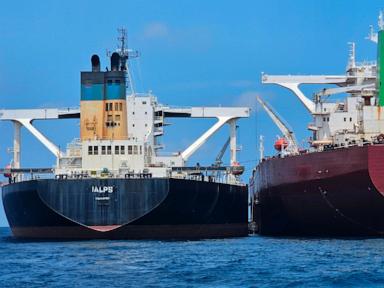
The inability of Malaysian maritime authorities to halt ship-to-ship (STS) transfers of Iranian-linked oil is not a failure of naval willpower but a calculated exploitation of international maritime law, aging infrastructure, and the physics of the global energy supply chain. The Strait of Malacca and the waters off Tanjung Pelepas serve as a critical bottleneck where the friction of international sanctions meets the fluidity of the "dark fleet." Malaysia’s jurisdictional constraints are defined by the United Nations Convention on the Law of the Sea (UNCLOS), which limits enforcement capabilities within Exclusive Economic Zones (EEZ) compared to territorial waters. This legal asymmetry creates a low-risk environment for the transfer of millions of barrels of sanctioned crude, effectively decoupling physical oil movements from the Western financial systems designed to track them.
The Triad of Jurisdictional Impotence
The operational reality of monitoring the waters near the Riau Archipelago and the Malay Peninsula rests on three distinct constraints that prevent unilateral intervention by the Malaysian Maritime Enforcement Agency (MMEA).
1. UNCLOS and the Freedom of Navigation
Under UNCLOS, ships in the EEZ—the area extending 200 nautical miles from the coast—enjoy the right of "freedom of navigation." While Malaysia has sovereignty over the resources within these waters, its police powers over foreign-flagged vessels are severely restricted. Unless a vessel is actively polluting or violating specific customs regulations within territorial waters (12 nautical miles), an MMEA boarding party lacks the legal mandate to seize cargo based on third-party sanctions, such as those imposed by the United States. Sanctions are not international law; they are domestic policy tools. For Malaysia to intervene, it would have to recognize U.S. domestic law as having extraterritorial jurisdiction, a move that would compromise its own national sovereignty and diplomatic neutrality.
2. The Sovereign Flag State Loophole
Most vessels involved in Iranian oil transfers operate under "flags of convenience" (FOC) from registries like Panama, Liberia, or the Cook Islands. The legal responsibility for the conduct of a ship lies with the flag state, not the coastal state. When a sanctioned tanker engages in an STS transfer, it is technically an interaction between two sovereign entities—the ship and its flag state—occurring on the high seas or in an EEZ. Malaysia cannot legally interfere with these transactions without the express consent of the flag state, which is often withheld or slowed by bureaucratic friction.
3. Verification and Attribution Latency
The "dark fleet" utilizes sophisticated "spoofing" of Automatic Identification Systems (AIS). By manipulating GPS coordinates, a vessel can appear to be hundreds of miles away from its actual location. Validating a ship's identity requires physical reconnaissance, which is resource-intensive. The MMEA operates with a limited fleet of offshore patrol vessels (OPVs), many of which are aged and require significant maintenance downtime. The gap between detecting a suspicious AIS signal and deploying a physical asset allows for the completion of STS transfers, which can be finalized in as little as 24 to 48 hours.
The Mechanics of STS Transfers: A Risk-Adjusted Cost Function
The choice of Malaysian waters for oil "blending" and transfers is driven by a specific set of geographic and economic variables. The cost function of these operations accounts for the risk of seizure, the cost of loitering, and the proximity to the final refining destination, typically China.
- Geographic Shielding: The proximity to Singapore’s bunkering hub allows vessels to hide in high-traffic zones. In a sea of thousands of ships, identifying a specific tanker performing an illicit transfer is a "needle in a haystack" problem.
- Hydrographic Suitability: STS transfers require calm waters and specific depths. The area off the coast of Linggi and the eastern Johor coast provides the necessary conditions for massive Very Large Crude Carriers (VLCCs) to tether and pump oil with minimal risk of environmental spill or mechanical failure.
- The Blending Premium: Iranian crude is often rebranded as "Malaysian Blend" or "Other Oil" during these transfers. By mixing sanctioned crude with non-sanctioned grades, the chemical signature of the oil is altered enough to bypass basic customs checks in the destination ports. This "laundering" adds a premium to the oil’s value by reducing the risk of the final buyer being hit with secondary sanctions.
The Dark Fleet’s Technological Evolution
The vessels engaged in these transfers are not high-tech assets; they are often "vintage" tankers that would otherwise be destined for the scrap yard. The economic viability of the dark fleet relies on the extension of the operational life of these hulls.
AIS Manipulation and Ghosting
Vessels employ "dark periods" where they disable AIS transponders entirely. However, more advanced operators use "proxy spoofing," where a third-party vessel transmits the AIS data of the tanker while the actual tanker moves to a different location for the transfer. This creates a digital alibi. Malaysia’s lack of a comprehensive, real-time satellite-integrated maritime domain awareness (MDA) system makes it nearly impossible to counter this without constant aerial surveillance.
Strategic Transshipment Hubs
The transfers rarely involve a direct route from Iran to the final customer. Instead, they utilize a "hub and spoke" model. Small Aframax tankers carry the oil from Iranian terminals to the Malaysian coast, where they offload to a stationary VLCC serving as a floating storage unit (FSU). The FSU then transfers the accumulated volume to a third vessel headed for China. This layer of abstraction ensures that the vessel delivering to the final port has no direct record of visiting an Iranian terminal.
Economic Implications for the Malaysian State
While the Malaysian government claims it can do little to stop the transfers, the presence of this "shadow economy" creates a complex fiscal reality.
The primary risk is environmental. The dark fleet consists of older vessels with questionable insurance coverage. A major oil spill during an STS transfer would devastate Malaysia’s coastal ecosystems and tourism industry. Because these vessels often use "shadow insurance" or lack reputable Protection and Indemnity (P&I) clubs, the liability for cleanup would likely fall on the Malaysian taxpayer.
The second risk is the potential for secondary sanctions on Malaysian financial institutions or port authorities. If the U.S. Treasury Department determines that Malaysia is "willfully blind" rather than "legally constrained," it could restrict Malaysian banks from accessing the SWIFT network or the U.S. dollar clearing system. This creates a tension between maintaining diplomatic ties with Middle Eastern partners and protecting the integrity of the national financial system.
Structural Bottlenecks in Enforcement
The MMEA and the Royal Malaysian Navy face a systemic "capacity-to-territory" deficit.
- Asset Obsolescence: A significant portion of the MMEA fleet is over 30 years old. The procurement of New Generation Patrol Crafts (NGPC) has been hampered by budget constraints and political shifts.
- Intellectual Property and Surveillance: Effective monitoring requires Synthetic Aperture Radar (SAR) satellite data, which can see through cloud cover and detect oil slicks or ship hulls even when AIS is off. Malaysia does not currently possess a dedicated constellation of SAR satellites for maritime enforcement, forcing a reliance on expensive third-party data providers.
- The Legal Burden of Proof: To prosecute a vessel for an illegal transfer, authorities must prove that a transaction occurred within territorial waters without a permit. Proving the origin of the oil is a separate, more difficult task involving chemical "fingerprinting" that is rarely feasible in a standard maritime patrol context.
Tactical Realignment and Maritime Strategy
To transition from a state of "limited capability" to "active deterrence," the maritime strategy must move away from physical interception toward a data-centric enforcement model.
The first step is the implementation of a mandatory "Clearance to Loiter" protocol for all VLCCs entering the EEZ. Any vessel remaining stationary for more than 24 hours without a declared mechanical emergency should be subjected to mandatory satellite monitoring and potential UAV (Unmanned Aerial Vehicle) inspection. By utilizing long-endurance drones launched from coastal bases, Malaysia can maintain a persistent "eye in the sky" at a fraction of the cost of deploying a naval vessel.
The second step involves the "follow the money" approach. Rather than targeting the ships—which are replaceable—the focus should shift to the local shipping agents and bunkering services that provide the logistical backbone for these vessels. By tightening the licensing requirements for local maritime service providers and mandating rigorous "Know Your Vessel" (KYV) checks, Malaysia can increase the friction for dark fleet operations within its waters.
Finally, Malaysia must leverage the "ASEAN Coast Guard Forum" to create a regional intelligence-sharing network. The dark fleet moves seamlessly between Indonesian, Malaysian, and Singaporean waters to exploit jurisdictional gaps. A unified radar and satellite feed shared across the Malacca Strait would eliminate the "grey zones" where these ships currently find sanctuary. Without this regional integration, the dark fleet will continue to treat the waters of Southeast Asia as a frictionless environment for sanctioned trade.