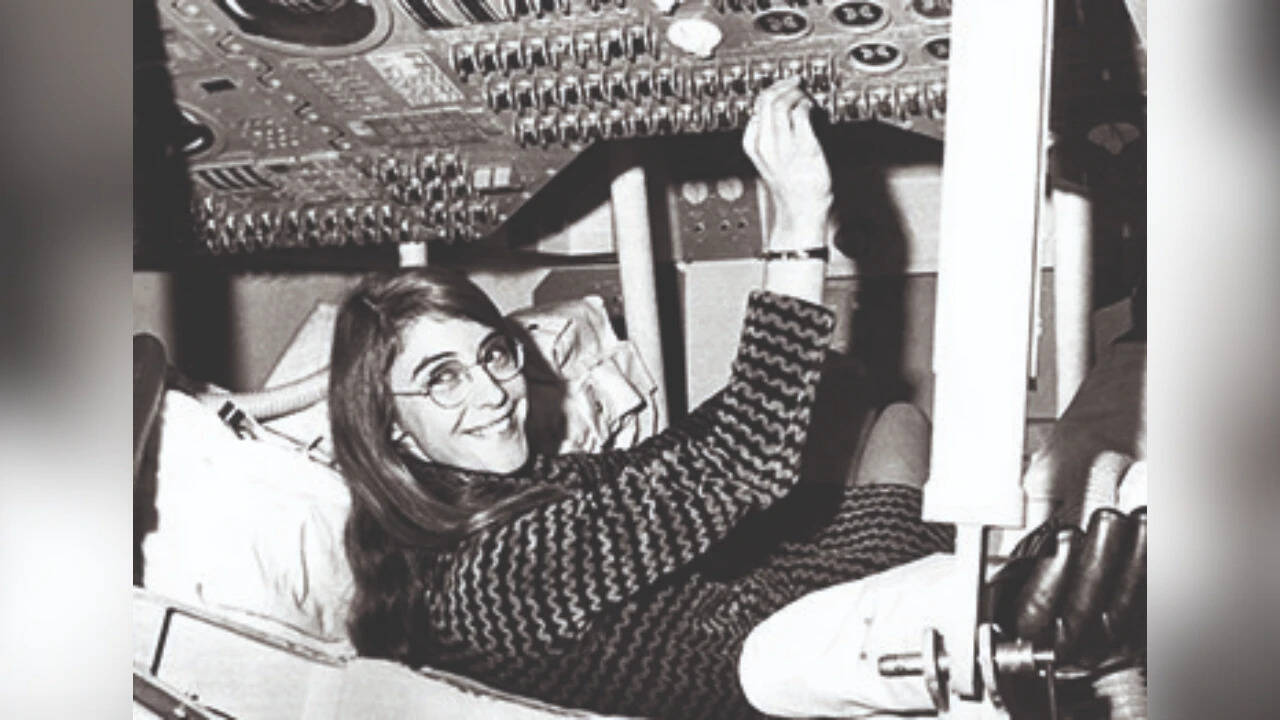
Code doesn't usually save lives on another celestial body. But back in 1969, Margaret Hamilton's code did exactly that.
When the Apollo 11 lunar module descended toward the moon, the radar system flooded the computer with unnecessary data. Most systems of that era would have choked, crashed, or rebooted, spelling absolute disaster for Neil Armstrong and Buzz Aldrin. Hamilton's software didn't blink. It possessed asynchronous executive capabilities, meaning it instantly dropped low-priority tasks to focus strictly on keeping the thrusters firing and the landing on schedule.
She died at 90, leaving behind a legacy that literally redefined how humanity interacts with machines. Yet, most casual tech histories treat software engineering as an afterthought to the raw metal of rockets and thrusters. Let's fix that misconception.
The Accidental Pioneer of Apollo Software
Hamilton didn't set out to conquer space. Born in Indiana in 1936, she studied mathematics and initially took a job writing weather prediction software at MIT alongside Edward Lorenz, the mathematician who laid down the foundations of chaos theory.
When MIT's Instrumentation Laboratory landed the contract to build the guidance computer for NASA's Apollo program, Hamilton jumped. Programming didn't have a degree path back then. There were no textbooks, no online bootcamps, and no established best practices. They had to invent the entire discipline on the fly.
She led the software engineering division for the Apollo and Skylab projects, managing hundreds of people. She walked into a massive, male-dominated aerospace complex and took charge because she understood math better than almost anyone else in the room.
Inventing Software Engineering From Scratch
People laughed when Hamilton started calling herself a software engineer. Hardware was king. Real engineers built engines, heat shields, and titanium hulls. Writing code was viewed as clerical secretary work, often handed off to women who were expected to manually punch holes in paper tape.
Hamilton changed that narrative fast. She treated code design with the same rigorous, safety-critical discipline as structural engineering. She pioneered asynchronous executive architecture, asynchronous processing, and priority scheduling. If a system got overwhelmed, her code knew what to ignore.
The famous photograph of Hamilton standing next to stacks of handwritten Apollo source code captures a physical reality that modern programmers rarely grasp. They didn't have Git repositories or integrated development environments. They wrote code on paper, handed it to keypunch operators, and prayed it worked when compiled.
The Real Test on Apollo 11
Theory met brutal reality minutes before Neil Armstrong touched down on the lunar surface. A radar switch left in the wrong position overloaded the Apollo Guidance Computer with radar data processing cycles.
Alarm bells blared in the cockpit. Program alarms 1201 and 1202 flashed yellow and red. The crew had seconds to decide whether to abort the historic landing.
Because Hamilton's software was built with robust priority scheduling, it ignored the radar glitch and prioritized landing control. It recognized that staying alive on the moon mattered more than updating the radar display. Armstrong trusted the guidance system, ignored the warning lights, and landed the Eagle.
Her Lasting Impact on Modern Tech
When you stream a movie, fly on a commercial jetliner, or open an app on your phone, you are benefiting from the defensive programming principles Hamilton championed decades ago. She taught the world that software must expect failure, anticipate human error, and gracefully handle chaos.
She didn't just write code for the moon. She created the blueprint for how modern digital civilization functions.
Next time you hear someone talk about tech disruptors, remember the mathematician from Indiana who looked at a blank slate, invented an entire engineering discipline, and kept humanity safe in the dark void of space.


