Names matter. They are not merely ink on parchment or digital pixels glowing on a screen. They are anchors. When you whisper the name of a place, you summon centuries of sweat, blood, resilience, broken pottery in the arroyos, and piñon smoke drifting over high-desert mesas. You summon stories told by the hearth when the winter wind howls down from the Sangre de Cristo mountains.
Imagine Elena, sitting on her porch in the shadow of the Sandia Mountains just outside Albuquerque. She is eighty-two. Her hands are dry and mapped with blue veins, shaped by a lifetime of kneading green chile dough and tending to adobe walls that require constant, tender mending. Her great-grandfather walked these dry riverbeds when they belonged to empires that rose and vanished like morning fog. To Elena, New Mexico is not a geographic polygon on a spreadsheet. It is a pulse.
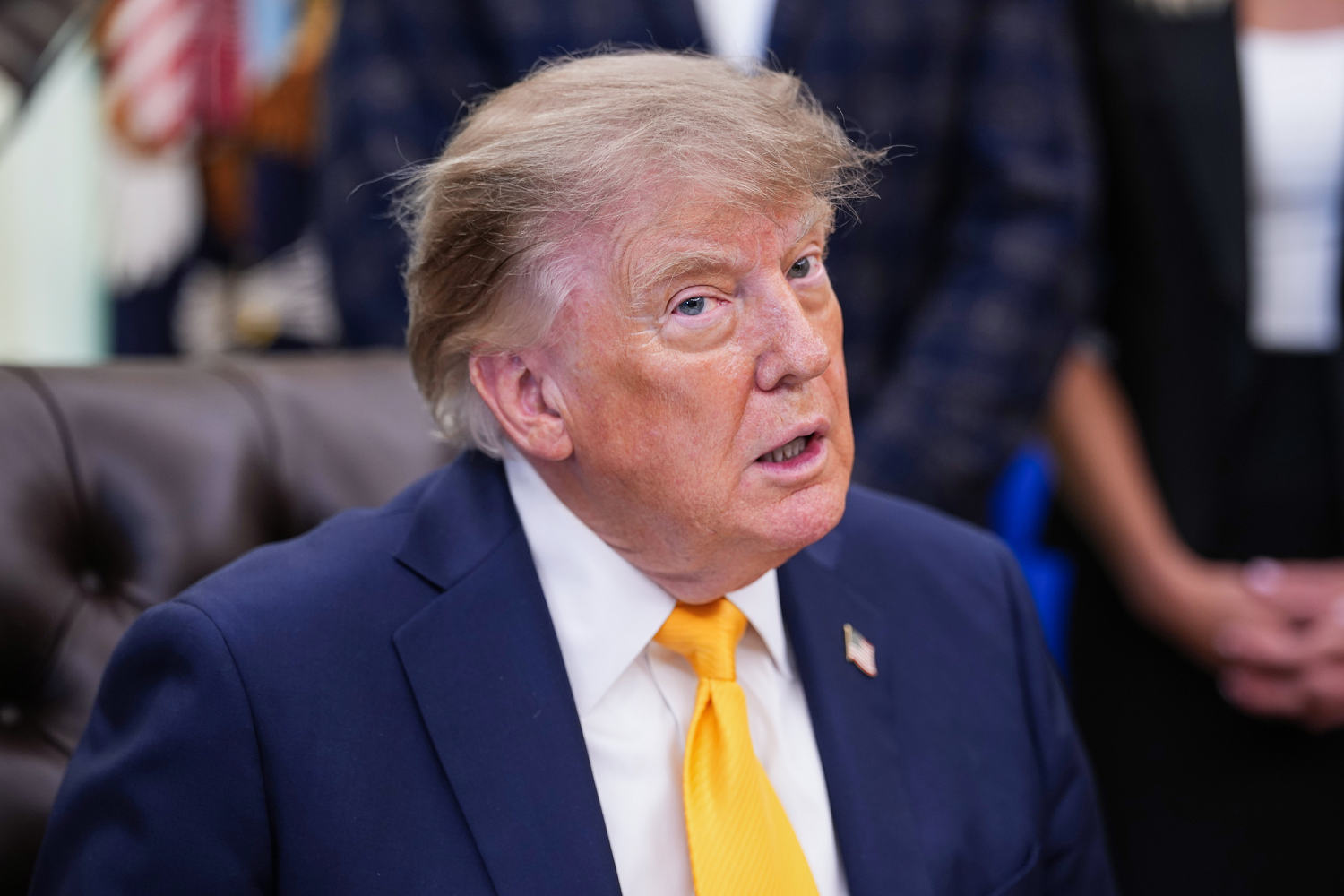
So when a digital whisper turns into a digital shout—when social media feeds flicker with bizarre pronouncements from a former president suggesting the state should be renamed "New America"—Elena does not laugh. She feels a cold, familiar knot in her stomach. It is the chill of erasure.
The story began in the peculiar ecosystem of modern political theater. A digital post, born in the breathless echo chambers of online discourse, floated the idea that New Mexico needed a rebrand. The justification, thin as desert air, hinged on the state's very name. To some who view the world through a narrow, nationalist lens, the word "New" followed by a foreign identifier sounds too distant, too un-American, too complicated. Why not "New America"? Why not stamp a uniform, frictionless corporate identity over a place that has stubbornly resisted homogenization for four hundred years?
The reaction from actual New Mexicans was swift, sharp, and deeply rooted in historical pride. Democratic lawmakers across the state did not just issue standard press releases; they responded with a visceral defense of identity. They pointed out what anyone who has spent a Tuesday afternoon in Chimayó already knows: the name predates the United States Constitution by nearly two centuries.
Governor Michelle Lujan Grisham and congressional delegates like Senator Martin Heinrich and Representative Melanie Stansbury did not treat the comment as a harmless joke. They understood the underlying pathology. It is a symptom of a modern sickness—the desperate urge to colonize language, to flatten the rich, messy, beautiful complexity of a multicultural tapestry into a sterile marketing pitch.
Let us look at the history, stripped of political posturing. The name "Nuevo México" was first used by Spanish explorers in the sixteenth century, referring to the lands north of the Rio Grande. It predates the founding of New York, New Hampshire, and New Jersey. Long before European boots touched these river valleys, Tiwa, Tewa, Towa, Keres, Zuni, and Apache nations named every arroyo, canyon, and peak in languages that carried creation stories within their very syllables. When Mexico gained independence from Spain in 1821, the territory retained its name. When the United States acquired it through the Treaty of Guadalupe Hidalgo in 1848, the name stayed. It survived wars, territorial disputes, economic collapses, and the dawn of the atomic age in the secret desert labs of Los Alamos.
To suggest renaming it is to reveal a staggering ignorance of American history. It is an attempt to rewrite the past because the current chapter makes certain people uncomfortable.
Consider the absurdity of the logistical nightmare alone. Every driver's license, every deed to a home, every school banner, every state seal, every court document, every indigenous sovereignty agreement, every highway sign across thirty-one million acres would have to be forged anew. Millions of dollars diverted from crumbling infrastructure, underfunded schools, and rural healthcare clinics, all to satisfy an aesthetic whim born in a digital vacuum.
But money is the least of it. The real cost is psychological.
Names are the guardians of memory. When you strip a name from a landscape, you perform a quiet lobotomy on its inhabitants. You tell the descendants of Spanish settlers, Pueblo nations, Navajo code talkers, and homesteaders of every stripe that their history is contingent upon the approval of outsiders who cannot find Española on a map.
Politics often feels like a distant spectator sport, a gladiator match waged on cable television and social media algorithms designed to make your blood boil. We scroll through outrage after outrage, numbed by the sheer velocity of the modern news cycle. A ridiculous post appears in the morning; by nightfall, it is buried under a dozen fresh scandals.
Yet, local resistance to this kind of casual erasure matters. It is where the line is drawn. When New Mexico's leaders pushed back, they were not just defending a syllabus or a geographic label. They were protecting the soul of a place that refuses to be digested by a monoculture.
Elena watches the sun dip below the horizon, painting the sky in violent shades of violet and burnt orange. The mountains turn to charcoal silhouettes against the fading light. The air smells of cedar and dry earth. No one on her street is talking about renaming the state. They are talking about water rights, the coming harvest, and whether the irrigation ditch needs clearing before the spring snowmelt. They are living a reality far too substantial to be altered by a keyboard warrior's passing fancy.
The name remains. The history stands, stubborn as the black basalt rocks scattered across the mesa. And as long as people remember who they are and where they came from, no algorithm or online decree can ever rewrite the ancient song of the land.


