The red earth of Central America holds memories in its veins. If you walk through the hills of the Bosawás Biosphere Reserve just after a tropical downwelling, the air smells of wet iron, ancient roots, and a heavy, damp green that feels almost prehistoric. It is a place where time is measured not in hours, but in the slow decay of fallen mahogany and the steady pulse of rivers that have carved their way through the stone for millennia.
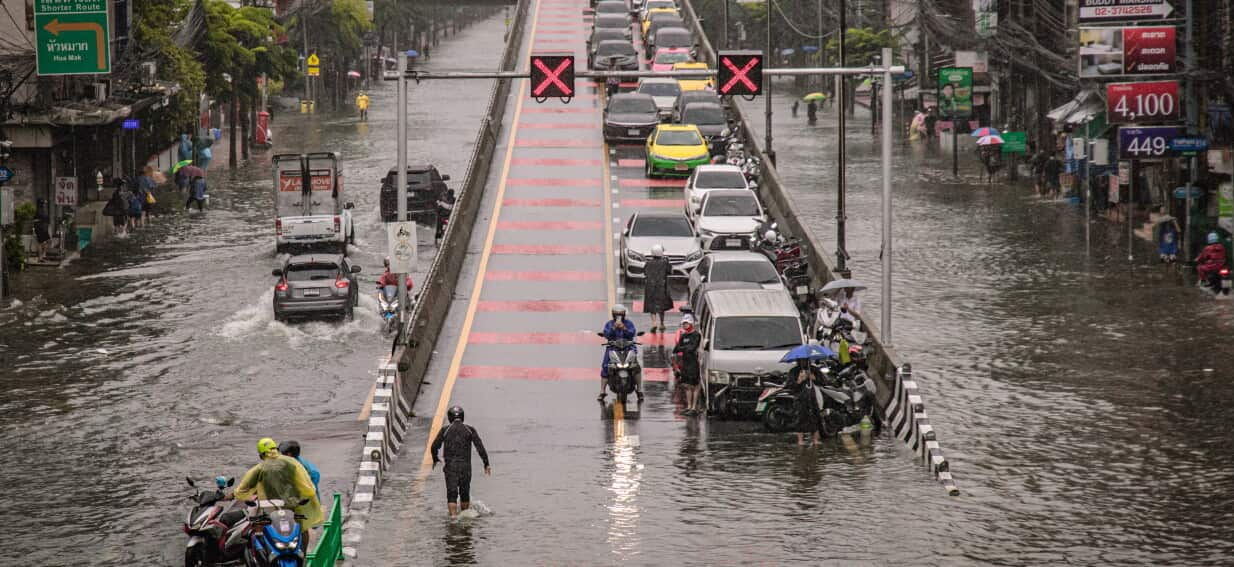
For generations, families have lived alongside these rivers. They know the moods of the water. They know when the gold dust glimmers in the pan during the dry season, and they know the exact shade of grey the sky turns before the monsoon breaks. But today, the soil is changing its allegiance. Also making waves lately: The Afternoon Bangkok Turned Into An Ocean.
Consider Mateo. He is a hypothetical farmer, yet his calloused hands, his faded straw hat, and the quiet worry lines around his eyes are drawn straight from the lives of dozens of rural men living along the mining frontier. Mateo does not care about geopolitical treaties or sovereign debt ratios. He cares about the creek behind his cabin. For years, that creek was clear enough to see the silver-scaled river fish darting between smooth pebbles. Now, it runs the color of weak coffee, thick with silt, tasting faintly of chemicals that burn the back of the throat.
Mateo is watching his world get signed away on paper thousands of miles from his doorstep. Additional insights on this are covered by Reuters.
The Stroke of a Pen
Across the globe, power often enters a room quietly. It does not wear combat boots. It wears a bespoke suit, carries a leather briefcase, and speaks in the measured, neutral tones of diplomacy and trade.
In recent years, the government of Nicaragua has redrawn the invisible borders of its geography. Through a series of sweeping concessions, administrative reclassifications, and bilateral agreements, the state has steadily handed over rights to roughly a tenth of its national landmass to Chinese mining interests. To put that in perspective, imagine taking a map of a sovereign nation, closing your eyes, and coloring in an entire tenth of it with a thick, permanent marker. Forests, watersheds, indigenous territories, and ancestral hunting grounds—all absorbed into the ledger of corporate expansion.
The numbers are staggering, yet they roll off the tongue like dry statistics. Ten percent. Millions of acres. Billions of dollars in projected mineral yields. Copper, silver, and above all, gold.
Gold has always been a curse disguised as a blessing. It hypnotizes empires. It bends the spine of history. When the Spanish galleons first probed these coasts centuries ago, they came for the yellow metal, leaving behind empty riverbeds and decimated populations. Today, the flags are different, but the gravity of the metal remains unchanged. The modern extraction machine does not rely on men with pickaxes and wooden pans. It arrives with heavy machinery, hydraulic dredges, cyanide leach pads, and a terrifying efficiency that can strip a mountainside down to its bare ribs in a matter of months.
What the Concession Papers Leave Out
When a government grants mining rights over vast swaths of territory, official press releases talk about economic stimulation, infrastructure development, and foreign direct investment. They speak of modernization. They speak of progress.
They rarely speak of the silence.
Silence is what happens when the wild parrots no longer nest in the canopy because the sonic boom of exploratory blasting has shattered their mating patterns. Silence is what happens when an indigenous community, whose legal title to the land was supposed to protect them, realizes that paper rights are fragile things when weighed against the financial heft of a global superpower.
Imagine sitting on your porch at dusk. The crickets are chirping, but underneath their song is a low, mechanical thrum that never stops. It is the sound of a distant processing plant chewing through the earth twenty-four hours a day. It is the sound of heavy trucks shifting gears on newly cut dirt roads that slice straight through virgin rainforest.
This is the invisible tax of resource extraction. The wealth is funneled upward, bottled, and shipped across oceans to satisfy the insatiable industrial appetites of glittering megacities thousands of miles away. Meanwhile, the local population inherits the fallout: polluted watersheds, deforested hillsides prone to catastrophic mudslides during hurricane season, and a fractured social fabric where neighbors are suddenly pitted against one another over land sales, compensation promises, and employment scraps.
The Geography of Dependency
To understand how Nicaragua arrived at this crossroads, you have to look at the geometry of isolation. Pushed to the margins of international finance by years of political friction, sanctions, and strained diplomatic ties with Western democracies, the ruling administration in Managua found itself searching for new patrons.
Enter the East.
For Beijing, the strategy is a masterclass in global resource security. By securing mining concessions in strategic Latin American corridors, China locks down the raw materials essential for high-tech manufacturing, green energy transitions, and global monetary hedging. Gold is the ultimate anchor in an uncertain financial climate. It is a universal language of value that requires no translation.
For Nicaragua, trading land for capital is a high-stakes gamble. It provides an immediate injection of state revenue, a cushion against economic collapse, and a partner who asks very few questions about internal governance, human rights, or environmental oversight. It is a marriage of convenience born out of geopolitical necessity.
Yet, every transaction has a ledger that balances out in blood and earth.
When foreign conglomerates move in, local autonomy evaporates. Small-scale artisanal miners—men and women who have panned the rivers for generations to feed their children—find themselves criminalized, pushed off claims they consider their birthright, or forced to work as low-wage laborers in the very pits that displaced them. The romance of the prospector is replaced by the harsh reality of industrial wage slavery.
The River Remembers
Back by the creek, Mateo watches the water run brown. He picks up a handful of wet mud. It smells of sulfur and old decay.
He remembers when his grandfather told him that the earth is not something you own; it is something you borrow from the future. Every pound of gold extracted, every acre of forest cleared, and every poisoned watershed left behind is an IOU written in a currency that cannot be repaid.
The agreements signed in glass-walled boardrooms in distant capitals feel distant, almost unreal, when you are standing knee-deep in the wreckage of your own backyard. But the consequences are immediate. They are written in the failing crops, the migrating wildlife, and the quiet despair of communities watching their ancestral home get auctioned off to the highest bidder.
History suggests that gold rushes never end well for the places where the gold is actually buried. The boom fades, the machinery packs up, the tunnels cave in, and the foreign capital moves on to the next fresh frontier, leaving behind hollowed-out mountains and broken communities.
The red soil of Central America has seen empires rise and fall. It has swallowed stone temples, rusted out colonial armaments, and outlived every king and dictator who ever tried to tame it. Long after the contracts expire, long after the heavy trucks have fallen silent and the last ounce of gold has been melted down into anonymous bars, the earth will remain.
And it will remember who traded its soul for a line on a balance sheet.