Ink dries on paper. Blood dries on stone. And somewhere between Washington and Jerusalem, a piece of parchment containing fifteen distinct promises sits rejected, folded into silence.
To look at a peace plan from a distance is to misread it entirely. Maps drawn in air-conditioned rooms three thousand miles away always look neat. Lines are straight. Zones are color-coded. Numbers add up to neat little percentages of hope. But down on the asphalt of Gaza, life does not move in straight lines. Life here is a scramble for clean water, a frantic calculation of shelter, a sleepless night spent listening to the concussive thump of distant steel.
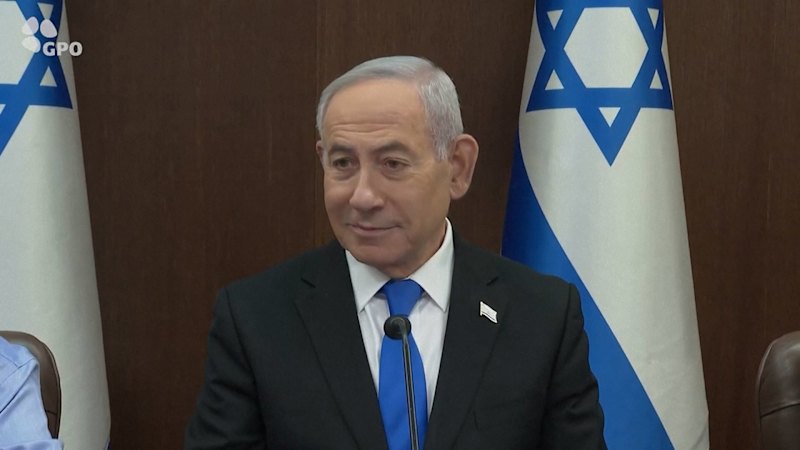
Benjamin Netanyahu looked at the fifteen-point blueprint backed by American architects and said no.
The headline is cold. It sounds like a bureaucratic footnote. A rejection stamp on a manila folder. But behind that rejection lies a collision of political survival, generational trauma, and an intractable disagreement over what tomorrow is even allowed to look like.
Consider what the plan actually asked for. A ceasefire. The return of hostages. A phased withdrawal. A blueprint for a quiet morning after. To anyone standing outside the blast radius, it sounds like oxygen. Why refuse oxygen when you are choking?
Because the men holding the levers of power do not breathe the same air as the people living in the rubble.
I remember the smell of concrete dust. It clings to your throat like fine grit, refusing to wash out no matter how much water you drink. It is the signature scent of a shattered street. When politicians debate frameworks, they debate nouns and verbs. When families live through a war, they debate whether the bakery down the block is still standing or if it became a crater this morning.
Netanyahu’s refusal is rooted in a specific, unyielding calculus. To him, accepting a comprehensive framework that leaves Hamas intact or leaves the Philadelphi Corridor under contested control is not peace. It is a pause. It is a timer ticking down to the next explosion. His political survival depends on projecting absolute strength, an unbending posture that promises total victory. Any compromise looks like an admission of failure. Any concession is treated as a crack in the armor.
Stop for a moment and look at the other side of the ledger.
Inside Gaza, millions of people are trapped in a slow-motion catastrophe. Mothers boil leaves to feed crying infants. Doctors operate by the flickering light of cell phones because the generators died hours ago. For them, the American-backed plan was not a political maneuver. It was a lifeline thrown to a drowning swimmer. When that lifeline was pulled back because the leadership at the top could not agree on the terms of the pull, the despair deepened.
How do you explain a geopolitical stalemate to a child who only knows the sound of incoming artillery? You cannot. You can only offer analogies that feel entirely inadequate.
Imagine two people locked in a burning room. One refuses to open the door because they suspect an ambush on the other side. The other is already suffocating from the smoke. Both are technically acting out of self-preservation. Both are guaranteeing their mutual destruction.
This is where we find ourselves. A diplomatic choreography of stubbornness.
The United States pushes because an election looms, because the optics of endless carnage erode moral authority, because allies are supposed to steer each other away from the cliff. Arab intermediaries shuttle between capitals carrying whispered messages, trying to bridge a gap wider than a canyon. They trade drafts like merchants trading high-risk bonds.
Yet, the core demand remains an insurmountable wall. Netanyahu insists that Israel must retain operational freedom in Gaza indefinitely. Hamas insists on a complete end to the war before the final hostage is handed over. These positions are mutually exclusive. They occupy the same space and try to push each other out of existence.
Physics tells us that two solid objects cannot occupy the same point in space simultaneously. Politics proves the opposite. These opposing demands are jammed together, grinding against one another, creating immense heat and zero movement.
The cost of this deadlock is paid in currency that cannot be refunded. Every day the fifteen-point plan sits dead on a desk, another home crumbles. Another life is snuffed out in a conflict that has long since surpassed the boundaries of strategic logic and entered the territory of pure tragedy.
We look for villains because villains make stories easy. We look for heroes because heroes give us permission to hope. But reality is messier than a script. It is populated by frightened politicians clinging to power, militant factions willing to trade human shields for leverage, and ordinary civilians caught in the crossfire of a history they never asked to author.
The map of peace remains unburned, but it is torn to shreds.
And out on the dusty streets, under a sky that has seen too much smoke, the day begins the only way it knows how. With another sunrise over a broken city, waiting for a miracle that keeps getting rescheduled.
The silence after the rejection is heavy. It does not sound like peace. It sounds like holding your breath.