The mud in Kyiv smells of old coal, frozen diesel, and wet wool. It is the kind of damp that settles into the marrow long before it reaches the skin. On a gray Tuesday that feels less like morning and more like the continuation of an endless, unwashed dusk, the city moves with a deliberate, bruised rhythm. Sirens do not empty the streets anymore; they merely change the posture of the people walking them. Shoulders drop an inch. Steps grow heavier.
Down the broad, stone-lined corridors of government buildings, behind glass that has been reinforced with crisscrossing strips of packing tape like fractured bone, a different kind of quiet hangs in the air. It is the quiet of men who have slept in their clothes for days.
Hours earlier, thousands of miles to the east, hands had shaken across polished mahogany in Moscow, or perhaps they hadn't—perhaps they remained as still as marble while terms were drawn, redrawn, and pushed across velvet-lined tables. Putin talks. The phrase is a machine-tooled abstraction, a sterile headline meant to be consumed over morning coffee in quiet kitchens far away from the concussive thud of artillery. But here, in the capital, abstraction is a luxury reserved for the dead.
Then the envoys arrive.
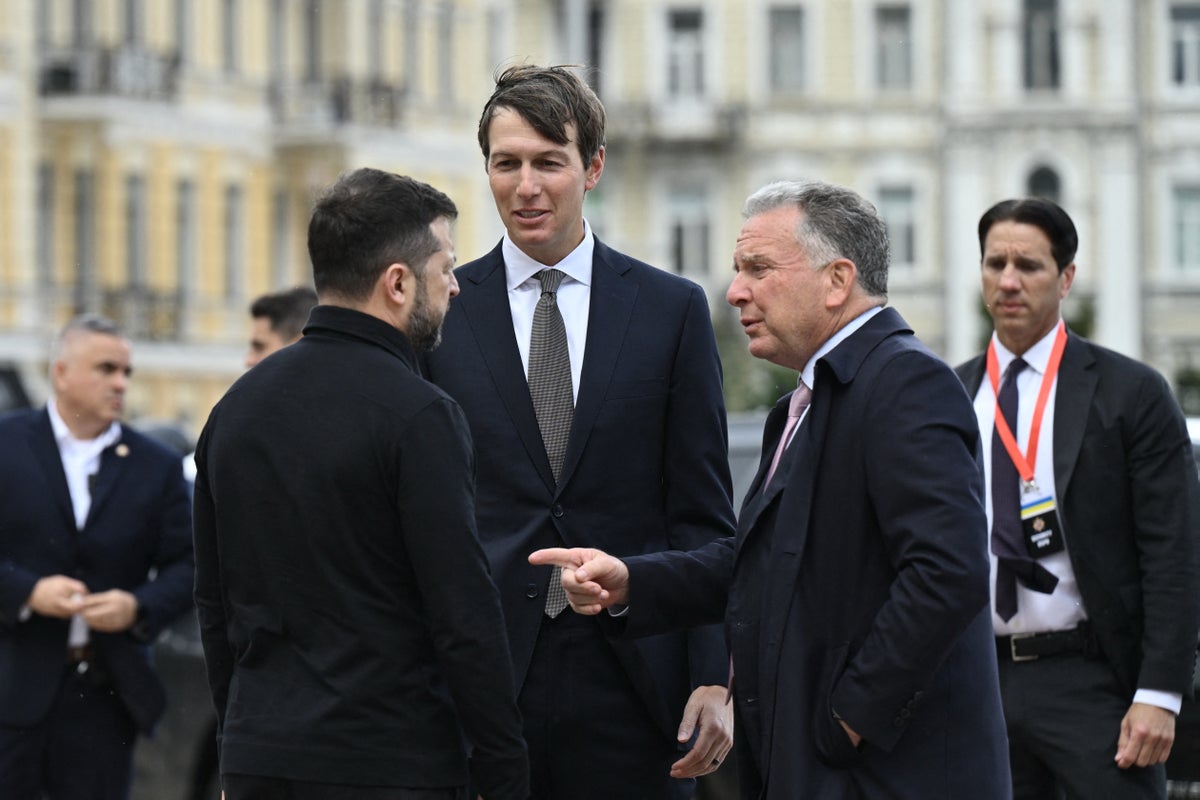
They step out of armored black SUVs with the brisk, insulated efficiency of people who carry return tickets in their breast pockets. American diplomats, fresh from the briefings, carrying the heavy, unspoken cargo of Washington’s shifting patience. They are here because the map is bleeding at the edges. They are here because when the man in Moscow speaks, the shockwaves travel instantly down the wire to the streets of Kyiv, vibrating in the teacups of old women and the rifle straps of nineteen-year-olds huddled in frozen trenches sixty miles east.
Let us be honest about what diplomacy looks like at the edge of a crater. It is not the grand ballroom elegance of history books. It is cold coffee in paper cups. It is the nervous flicker of fluorescent lights during a brownout. It is President Volodymyr Zelenskyy—dark-eyed, stubbled, wearing his perpetual olive-green fleece—listening intently through an interpreter, weighing every cadence, looking not just for what is said, but for what is being quietly withheld.
When the envoys sit across from him, they bring more than diplomatic notes. They bring a weather report from a distant capital where political winds shift with the polling data. Every sentence uttered in that room is shadowed by an invisible listener: the artillery duel that never stops.
Boom.
It is distant, muffled by three layers of double-paned glass and sandbags, but it punctuates the translation.
Boom.
The frontline is not a line. It is a scar carved across black earth, three hundred miles of shattered brick, frozen mud, and shredded pine forests. It is where boys from Sumy and electricians from Odesa are currently living in holes carved into the frost, boiling snow for tea while drones buzz like angry hornets through the gray soup of the sky.
To understand why these high-level meetings matter—why envoys must fly across oceans to sit in fortified basements—you have to understand the mathematics of exhaustion. Wars do not usually end with a sudden, cinematic revelation of truth. They grind down until the sheer weight of existence outweighs the will to fight, or until the supply lines snap. And right now, the supply lines are tethered to the political will of legislative bodies thousands of miles away, bodies distracted by their own domestic theater, flickering screens, and upcoming elections.
Imagine a bridge built out of toothpicks over a roaring river. Every time a politician in Washington debates an aid package, someone pulls out another toothpick. The people standing in the middle of the bridge—the soldiers holding the treeline near Avdiivka, the medics working by candlelight in underground stabilization points—feel the sag beneath their boots. They do not have the luxury of cynicism. Cynicism requires a safety net.
This is why Zelenskyy’s face is etched the way it is. It is the face of a man managing a deficit of time. Every conversation with an envoy is a negotiation for existence itself. Not glory. Not territory for the sake of empire. Simply the right to wake up tomorrow under a blue-and-yellow flag instead of a tricolor born of conquest.
Outside the meeting room, life persists in its stubborn, defiant defiance. An old woman sweeps broken glass off the pavement outside a bakery that still manages to bake warm bread, despite the power cuts. A stray dog trots purposefully past a checkpoint, unbothered by the sandbags. This juxtaposition—the mundane heartbeat of a city refusing to die alongside the geopolitical chess match deciding its fate—is the defining tragedy and triumph of this war.
The frontline battles rage on while the diplomats talk. That is the grim reality of modern conflict. The diplomacy does not pause the violence; it merely tries to shape the contours of what remains when the smoke finally clears.
Consider what happens next when the doors close and the motorcades roll back toward Boryspil Airport. The envoys will fly home to heated rooms, advisors, and television studios where they will brief committees on "strategic alignment" and "escalation management." They will use clean words for dirty things.
Back in the trenches, the mud will freeze harder as night falls. The drone operators will check their batteries. The artillery will find its range. And somewhere in the dark, a soldier will pull a crumpled photograph from his pocket, looking at a face he hasn't seen in two years, wondering if the men in the suits spoke his name today, or if he was just a line item on an agenda meant to be negotiated away in the quiet hours before dawn.


