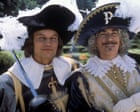
Charles de Batz de Castelmore did not die like a character in a book.
There was no witty final line, no slow-motion fall into the arms of a weeping comrade, and certainly no magic. On June 25, 1673, during the Siege of Maastricht, a musket ball tore into his throat. It was a messy, loud, and brutally efficient end for a man who had survived decades of high-stakes espionage and battlefield chaos. For three hundred and fifty years, the man the world knows as d’Artagnan remained a ghost, his physical self dissolved into the clay of the Netherlands while his fictional shadow grew into a giant.
We have spent centuries chasing the wrong man.
Alexandre Dumas gave us a superhero in a plumed hat, a romanticized duelist who defined our collective idea of French chivalry. But the real d’Artagnan was something far more interesting: a gritty, pragmatic survivor who rose from a penniless Gascon family to become the "Captain-Lieutenant" of the Musketeers and a personal confidant to the Sun King, Louis XIV. Now, it seems the earth is finally ready to give him back.
The Clay and the Captain
Imagine a shallow trench outside the city walls of Maastricht. The air is thick with the sulfurous stench of black powder and the copper tang of blood. In the chaos of the Franco-Dutch War, there was no time for ornate cathedrals or state funerals. When a high-ranking officer fell, he was often buried where he lay, or tucked into a nearby churchyard with a haste that borders on disrespect.
For years, historians have pointed toward the small Church of Saint Peter and Paul in Wolder, a suburb of Maastricht. Local tradition whispered that the fallen hero of the 1673 siege was interred there. Recently, researchers have begun to peel back the layers of that silence. While the discovery of skeletal remains in such a location isn't a guaranteed "eureka" moment, the evidence is coalescing into a shape that looks remarkably like the legendary captain.
Archaeology is rarely about the "aha!" moment seen in movies. It is a slow, agonizing process of elimination. You aren't looking for a sword or a name tag; you are looking for the story the bones tell. You look for the signs of a life spent in the saddle—the wear on the hip sockets that suggests a man who lived half his life on a horse. You look for the healed fractures of old duels. Most importantly, you look for the trauma of the final moment. A musket ball to the throat leaves a specific, devastating signature on the cervical vertebrae.
The King’s Shadow
To understand why this discovery feels like an electric shock to the historical community, you have to look past the velvet and the capes. The real Charles de Batz was the King’s "fixer." When Louis XIV needed to arrest the immensely powerful and corrupt Finance Minister Nicolas Fouquet, he didn’t send a bureaucrat. He sent d’Artagnan.
For years, d’Artagnan acted as Fouquet’s jailer, moving him from fortress to fortress. It was a job that required a rare blend of absolute loyalty and human decency. History tells us that d’Artagnan treated his high-profile prisoner with a level of respect and kindness that was almost unheard of in the 17th century. He was a man of the state, yes, but he was also a man of a particular, fading code.
This is the human element that a pile of bones in a Dutch churchyard represents. It isn’t just about verifying a myth; it’s about reconnecting with a person who was caught between the old world of feudal honor and the new world of absolute monarchy.
The Problem with Legends
The difficulty with finding d’Artagnan is that we are digging through two types of dirt: the literal soil of Maastricht and the metaphorical silt of fiction.
Dumas took the skeleton of d’Artagnan’s life—his Gascon roots, his entry into the Musketeers, his rise to power—and draped it in a "tapestry" of exaggeration. (Wait, let's call it a heavy cloak of lies instead.) In the novels, d’Artagnan dies just as he receives his marshal’s baton. In reality, he died in a trench because the Duke of Monmouth—the illegitimate son of England’s Charles II—demanded a reckless, unnecessary second assault on the city's "Great Hornwork."
D’Artagnan knew the attack was a suicide mission. He protested. He argued. But when the order was given, he led his men into the fire anyway.
That is the tragedy of the real man. He didn't die for a grand cause; he died because of a young royal's ego. If the remains in Wolder are indeed his, they belong to a man who was tired, aging, and far too experienced to believe in the romanticized death his fictional counterpart eventually received.
Why the Bones Matter Now
You might ask why it matters if we find a few centuries-old fragments of calcium and carbon. Does it change the books? No. Does it change the movies? Certainly not.
But it matters because of the "invisible stakes." When we find the physical remains of a person who has become a myth, we collapse the distance between us and the past. We stop seeing history as a series of dates and start seeing it as a series of choices.
If these remains are confirmed through DNA testing—a difficult task, given the need for a clean maternal or paternal line from 300 years ago—we are forced to reckon with the mortality of our heroes. We have to acknowledge that the man who inspired the "All for one, and one for all" mantra was a human being who felt the cold of a Dutch winter and the fear of a looming musket line.
The process of identification is a puzzle with missing pieces. Researchers are currently cross-referencing burial records with the specific locations of the 1673 casualties. They are looking for the "officer’s burial"—bodies treated with just a bit more care than the common foot soldier, perhaps buried in a coffin rather than a shroud.
The Silent Witness
Consider the sheer improbability of survival. Most of the men who fell at Maastricht are gone, their bones churned back into the earth by centuries of farming and urban expansion. To have a specific site, a specific church, and a specific skeleton that matches the age and trauma profile of Charles de Batz is a statistical miracle.
It is a reminder that the past is never truly buried. It is just waiting for the right moment to resurface.
There is something haunting about the idea of d’Artagnan lying under a quiet Dutch floorboard while the world above him moved from muskets to machine guns, from horses to high-speed rail. He missed the French Revolution. He missed the rise and fall of Napoleon. He missed the very books that would make his name immortal.
He was just a soldier who did his job and stayed in the ground when his job was done.
The Final Verification
The next steps won't be flashy. There will be no grand announcements tomorrow. Instead, there will be white-coated technicians in labs, peering at degraded strands of genetic material. They will look for markers that tie these bones to the de Batz family tree in Gascony. They will measure the thickness of the skull and the wear on the teeth.
They will try to find the man inside the Musketeer.
But even if the DNA is too far gone, even if the evidence remains circumstantial, the search itself has done something vital. It has stripped away the Hollywood glitter. It has reminded us that beneath the fiction is a core of hard, uncomfortable truth.
The real d’Artagnan didn't need a ghostwriter to make his life significant. His significance was etched into his service, his loyalty to a King who perhaps didn't deserve it, and his final, fatal walk into the Dutch mud.
If you go to Maastricht today, you can see a statue of him. He looks bold, heroic, and defiant. But if you want to find the real man, you have to look lower. You have to look at the ground. You have to think about the weight of the armor, the heat of the sun, and the sudden, sharp end of a long journey.
The earth is a stubborn vault, but it eventually gives up its secrets. Whether this skeleton is officially labeled "Charles de Batz" or remains an "anonymous officer," the legend has already been humanized. We no longer see a caricature in a wide-brimmed hat. We see a man who went to work one morning and never came home.
He is no longer a character in a book. He is a neighbor from another century, finally being invited back into the light.
The sword is gone, the plume has rotted, but the man remains. It is enough.