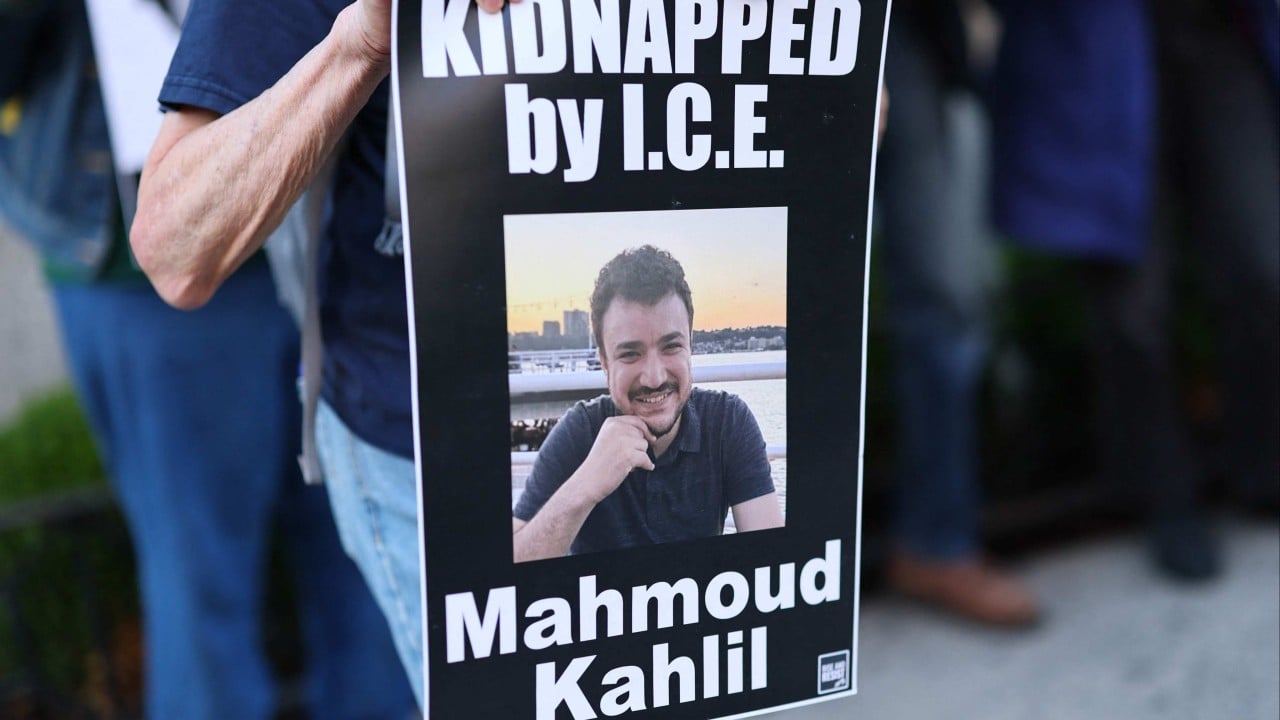
A green card holder who has never been charged with a crime gets swept up by federal agents in New York, flown over a thousand miles to Louisiana, and told his political speech threatens U.S. foreign policy. Sound like a dystopian thriller? It became the central battleground of a major constitutional fight when Mahmoud Khalil petitioned the U.S. Supreme Court to review his deportation case.
If you're following immigration or First Amendment battles, you've probably seen headlines saying Khalil wants the Supreme Court to step in. Most quick recaps stop right there. That misses the whole point of why this petition matters.
At stake in Khalil v. Trump (Docket No. 26-530) isn't just whether one former Columbia University graduate student gets to stay in the country. The real question is simpler—and far more alarming for legal scholars—than people realize. Can a detained noncitizen ask a federal district judge to intervene while deportation proceedings are still moving, or do federal courts have to slam the door until a final removal order is already on the books?
How Mahmoud Khalil Asking the Supreme Court to Review His Deportation Case Got Here
To understand why Khalil's lawyers took this fight to Washington, you have to look at the timeline. It moved fast, and it got messy in two different court systems at once.
Khalil, a former Columbia University graduate student and lawful permanent resident married to a U.S. citizen, became a prominent figure during campus protests over Israel and Gaza. On March 8, 2025, federal immigration agents arrested him in New York. Within days, Immigration and Customs Enforcement (ICE) moved him to the LaSalle Detention Center in Jena, Louisiana—more than 1,000 miles from his wife, who was heavily pregnant with their first child, and his legal team.
Critics quickly called the transfer forum shopping because Louisiana sits inside a circuit widely viewed as more favorable to aggressive government enforcement. Meanwhile, the government leaned on an obscure immigration provision, 8 U.S.C. § 1227(a)(4)(C), tied to Secretary of State Marco Rubio's determination that Khalil's presence or activities could have potentially serious adverse foreign policy consequences for the United States. Later, the government also pursued a separate allegation involving his green card application.
Here is where things split in two directions:
- In federal court: Khalil's attorneys—including lawyers from the ACLU and the Center for Constitutional Rights—challenged his detention and argued the government was retaliating against protected political speech. A federal district judge in New Jersey blocked his removal and ordered his release in June 2025 after he spent 104 days in custody, missing his son's birth along the way.
- In immigration court: Immigration proceedings moved on a parallel track. An immigration judge found him deportable in April 2025, and in April 2026 the Board of Immigration Appeals (BIA) upheld a removal order—even as his federal court protections remained a major point of legal contention.
Then came the turning point in federal appeals court. On January 15, 2026, a divided panel of the U.S. Court of Appeals for the Third Circuit ruled 2–1 that the district court lacked jurisdiction to hear Khalil's habeas challenge while removal proceedings were still ongoing, pointing to statutory channeling rules under 8 U.S.C. § 1252(b)(9). In May 2026, the full Third Circuit narrowly declined to rehear the case en banc in a 6–5 vote. After getting extensions granted by Justice Samuel Alito, Khalil's legal team filed their petition for a writ of certiorari on October 19, 2026.
The Jurisdiction Trap Everyone Overlooks
Honestly, if you read a surface-level news brief, you might think the Supreme Court is immediately going to rule on whether criticizing U.S. policy toward Israel is protected speech for a green card holder. That's not how appellate procedure works.
Courts decide cases on jurisdiction and statutory text before they ever reach the juicy constitutional questions. The Third Circuit didn't say, "Free speech doesn't apply to green card holders." It said district courts generally cannot step in mid-stream on questions arising from removal actions until there is a final order of removal.
Think about why that distinction matters so much in practice. If a person is locked up for months over speech they claim is constitutionally protected, and the courthouse doors are locked until the deportation machinery grinds through to a final order, what happens to the constitutional right in the meantime? Delay isn't neutral when someone is sitting behind bars or facing a chilling effect on campus speech.
On the other hand, the government's argument isn't pulled out of thin air either. Congress wrote strict limits into federal immigration law specifically to stop piecemeal litigation from clogging district courts every time an agency makes a move in a removal case. Supporters of strict limits argue that letting district judges jump in early creates conflicting orders, slows enforcement, and bypasses Congress's chosen review path.
That tension is why legal observers have paired Khalil v. Trump with Trump v. Suri, another high-profile dispute involving a scholar detained over pro-Palestinian advocacy. Together, they highlight a sharp clash among federal courts over when detainees can get immediate federal court review and how far executive power reaches in student and activist cases.
New Allegations of DOJ Misconduct and Secrecy
If the jurisdictional fight were the whole story, this case would already be complicated enough. What makes the late-2026 developments even more explosive are questions about fairness inside the immigration system itself.
Unlike regular federal judges who have lifetime tenure and sit in an independent judicial branch, immigration judges and the Board of Immigration Appeals operate inside the Department of Justice—under the executive branch. That structural reality has drawn scrutiny from legal scholars across decades, regardless of which party holds the White House.
In May 2026, The New York Times reported on internal BIA records showing Khalil's appeal was expedited in an unusual nine-day window, and three BIA members recused themselves from the appeal. Following a Freedom of Information Act request that went unanswered to Khalil's satisfaction, he sued the Justice Department in November 2026 seeking records of communications between the immigration judge, BIA members, government officials, and outside parties.
"Due process requires neutrality. Our laws become meaningless if deportation is a predetermined outcome." — Alina Das, Director of the NYU Immigrant Rights Clinic
From the administration's perspective, officials have maintained that their actions fall within statutory authority and national security or foreign policy judgment, and that immigration courts followed the law. Still, when an agency that answers to the president adjudicates a politically charged case on a lightning timeline—and then resists turning over internal correspondence—public trust takes a hit. You don't have to take a side on campus protests to see why neutral decision-making matters in court.
Common Misconceptions About This Case
Whenever a case goes viral, bad information spreads faster than a court docket update. Let's clear up a few things people routinely get wrong.
He Was Deported Immediately After His Arrest
False. Khalil was detained for 104 days starting in March 2025, ordered released in June 2025 by a federal district judge, and remained in the United States as his legal battles continued through 2026. Even after the BIA issued a removal order in April 2026, federal court orders and appellate proceedings prevented immediate removal while his challenges played out.
Green Card Holders Have Zero Free Speech Protections
Not quite. Lawful permanent residents do not have the exact same legal footing as citizens on every immigration question, and Congress has broad authority over immigration rules. That said, courts have long recognized that noncitizens lawfully present in the U.S. have significant constitutional protections, including First Amendment rights—though how those rights interact with specific immigration statutes is fiercely contested here.
The Supreme Court Automatically Hears Every Big Petition
Wrong again. Thousands of petitions land on the Supreme Court's docket every term, and the justices take only a small fraction. Whether the Court grants review in Khalil v. Trump depends on whether the justices believe there is a genuine circuit split, an important unresolved legal question, and a clean vehicle to decide it without getting tangled in procedural snags.
What This Means for Students, Advocates, and Legal Watchers
If you're a student visa holder, a green card holder, an organizer, or just someone watching how executive power gets tested in 2026, don't wait for a final Supreme Court opinion to pay attention. Court battles over jurisdiction and foreign policy provisions move slowly, while enforcement policies can shift overnight.
A few practical steps make sense right now:
- Know your exact immigration status and limits. A visa, a green card, and citizenship carry different legal risks and procedures. If you're a noncitizen engaged in political advocacy or campus organizing, talk to an experienced immigration attorney before a crisis hits, not after an arrest.
- Keep emergency contacts and legal numbers written down. Phone access can be cut off or delayed during initial custody or transfers, as Khalil's family and lawyers experienced in early March 2025. Make sure trusted family members know your A-number (if you have one) and have your counsel's contact info handy.
- Track primary dockets, not just social media clips. Headlines often mash together district court injunctions, BIA rulings, Third Circuit jurisdiction opinions, and Supreme Court certiorari filings. Checking sources like SCOTUSblog or official court dockets helps you tell what actually happened from what someone merely predicts.
- Watch the statutory details. Pay close attention to how courts interpret provisions like 8 U.S.C. § 1227(a)(4)(C) and 8 U.S.C. § 1252(b)(9). Boring-looking statutory sections often do the heaviest lifting in high-profile constitutional fights.
Whether the Supreme Court takes up Khalil's petition or leaves the lower-court rulings standing, the clash over executive authority, due process, and political speech isn't going away anytime soon.