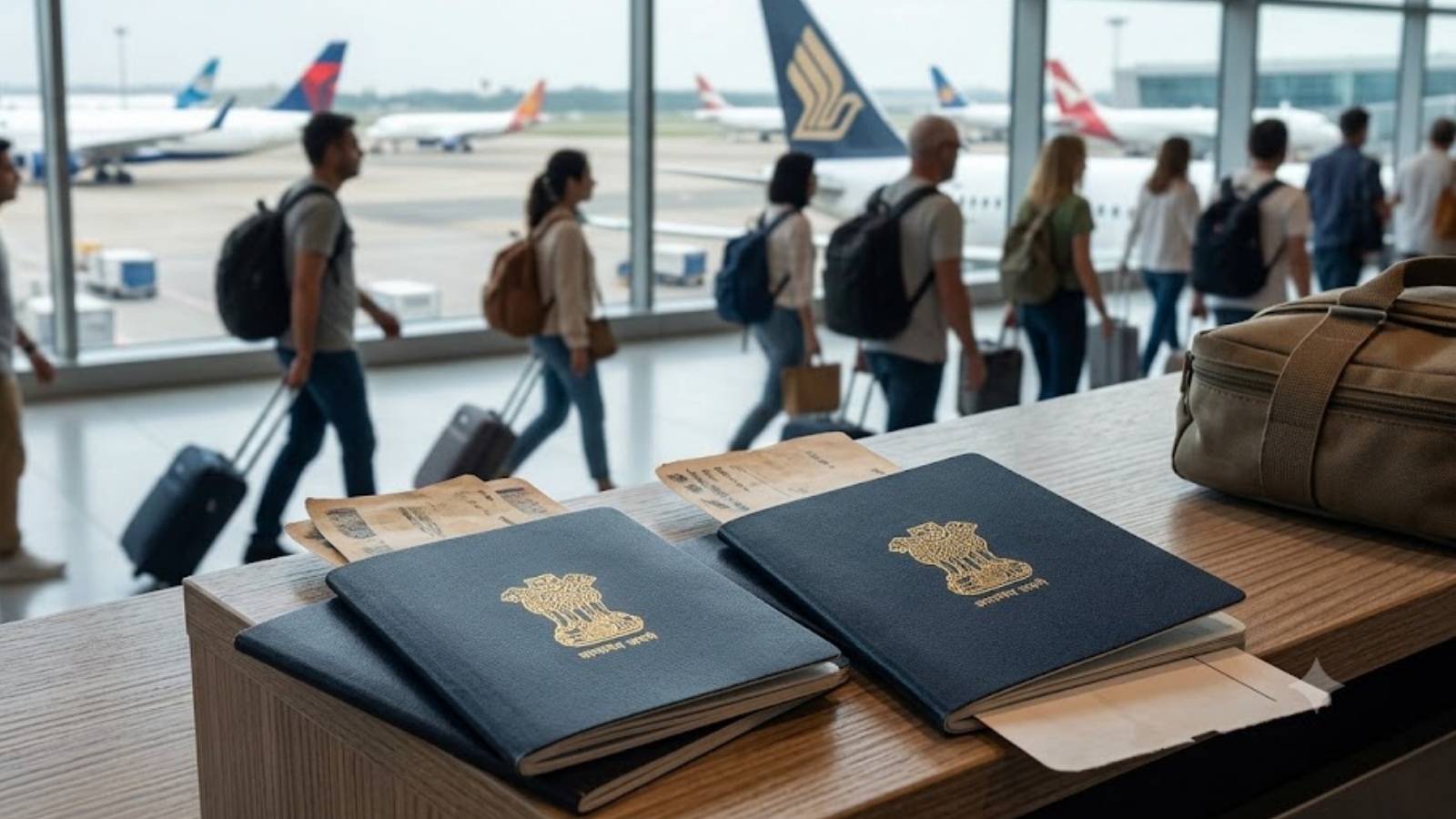
The global cost of national identification infrastructure is adjusting to long-term inflationary pressures. Effective July 1, 2026, the Ministry of External Affairs (MEA) executed its first comprehensive structural rate adjustment under the Passports (Amendment) Rules, 2026. This fiscal intervention radically alters the cost function of consular services for the approximately 4.5 million Indian expatriates residing within the United Arab Emirates.
This pricing shift operates concurrently with an operational overhaul of the consular delivery mechanism. The Indian diplomatic missions in Abu Dhabi and Dubai are transitioning their customer-facing architecture, terminating long-term agreements with legacy operators BLS International and SGIVS Global to transition to a unified network under Alhind Tours and Travel. The intersection of statutory price increases and vendor displacement introduces complex logistical variables for expatriates navigating document renewals.
The Economics of the Consular Fee Restructuring
The revised pricing model shifts the fiscal burden directly onto the end-user by increasing base processing fees up to 75% globally when measured in Indian Rupees (INR). Within the UAE jurisdiction, the localized price transmission manifests as a 58% to 66% surge for standard booklet issuance, reflecting adjusted exchange rate pegs and administrative overhead.
The primary cost drivers divide clean-slate applications, renewals, and expedited processing tracks into distinct fiscal tiers.
Standard Processing Tiers
The baseline tier captures non-expedited renewals and fresh issuances for adult applicants. The structural increases follow a clear scalar logic based on document capacity:
- Standard 36-Page Booklet: The base consular fee ascends to Dh450, representing a 57.8% increase from the previous baseline of Dh285.
- Jumbo 60-Page Booklet: Designed for high-frequency travelers, this tier escalates to Dh630, marking a 65.7% upward shift from the previous cost of Dh380.
The Premium Acceleration Premium
The Tatkal scheme, which provides accelerated processing for urgent travel mandates, features an altered pricing geometry. Rather than applying a linear multiplier, the new framework levies a fixed speed premium layered across the higher baseline rates:
- Tatkal 36-Page Booklet: The fee scales to Dh900 from its previous mark of Dh855.
- Tatkal 60-Page Booklet: The cost adjusts upward to Dh1,080, compared to the legacy rate of Dh950.
The mathematical structure reveals that while standard applications absorbed the highest percentage increases, the absolute cost of expedited processing remains heavily weighted toward upfront liquidity. The compressed variance between legacy and revised Tatkal rates indicates an administrative intent to narrow the price gap between standard and expedited tracks, potentially managing volume distribution within the new processing centers.
Risk Mitigation and Loss Penalty Frameworks
The updated schedule introduces steep financial penalties for document replacement, acting as an implicit regulatory deterrent against the loss or damage of physical sovereignty credentials. For individuals requiring document replacement in lieu of lost or damaged passports, the economic penalties are severe.
| Document Type & Service Track | Revised Fee Schedule (UAE) |
|---|---|
| Lost/Damaged 36-Page Standard | Dh900 |
| Lost/Damaged 36-Page Tatkal | Dh1,350 |
| Lost/Damaged 60-Page Standard | Dh1,080 |
| Lost/Damaged 60-Page Tatkal | Dh1,350 |
This penalty architecture treats secondary verification and risk-assessment processing as highly resource-intensive administrative workflows. Ancillary verification products—including Police Clearance Certificates (PCC), Surrender Certificates, and Global Entry Program (GEP) clearances—have also been standardized to a flat fee of Dh145 each.
Operational Bottlenecks in Vendor Transition
The financial adjustments occur alongside a systemic shift in the delivery network. The transition to Alhind Tours and Travel as the exclusive manager of Indian Consular Application Centres (ICACs) creates an immediate operational bottleneck.
[Legacy Providers: BLS / SGIVS] ---> (Blackout Window: June 26-30) ---> [New ICAC Network: Alhind]
                                             |
                              [Emergency Consular Track Only]
To facilitate data migration and asset transfer, the legacy platforms ceased appointment scheduling after June 25, initiating a five-day total service blackout from June 26 through June 30. During this window, routine processing is entirely frozen.
The primary structural vulnerability in this transition is the sudden concentration of demand. The five-day suspension of routine workflows guarantees an immediate backlog of applications on July 1. This surge intersects precisely with the deployment of unseasoned staff and newly configured software environments at the incoming ICAC locations.
Applicants must anticipate initial friction points, including extended appointment queues, extended data-entry processing times, and potential synchronization delays with the central passport issuance engine.
Strategic Action Plan for Expatriates
Navigating this transition requires a data-driven approach to minimize both fiscal exposure and processing delays. Expatriates must evaluate their current document validity against the operational timeline of the new vendor.
1. Execute Emergency Consular Tracks If Eligible
During the transition blackout ending June 30, individuals facing immediate document expiration or unplanned travel emergencies must bypass civilian application centers entirely. The Indian Embassy in Abu Dhabi and the Consulate General in Dubai retain direct, non-interrupted processing capabilities strictly for emergency passports, urgent visas, and essential document attestation.
2. Audit Document Expiry Windows
Any individual holding a passport with less than nine months of validity remaining should prepare for immediate submission in the first week of July. While the financial window to secure legacy pricing has closed, delaying applications into the peak summer travel season will compound the risks associated with the vendor transition backlog.
3. Factor in Secondary Vetting Timelines
Because ancillary documents like Police Clearance Certificates have been repriced and integrated into the unified ICAC framework, applicants requiring simultaneous passport renewals and employment-linked background checks must decouple these applications when possible. Booking standalone verification tracks early will prevent a delay in one workflow from freezing the other.
The structural pricing floor for Indian consular services has permanently risen. Long-term expatriate financial planning must now account for higher administrative costs as a fixed operational expense of maintaining overseas residency.