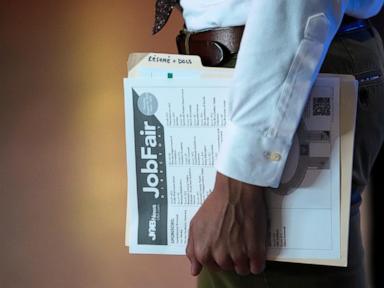
Initial unemployment claims in the United States have stabilized at 211,000, a figure that signals a labor market in a state of high-pressure equilibrium rather than one succumbing to the traditional gravitational pull of high interest rates. While surface-level analysis links these numbers to seasonal adjustments or cyclical hiring, the underlying driver is a structural shift in corporate risk-appetite fueled by the protracted conflict in Iran. The traditional "Phillips Curve" logic—where low unemployment inevitably triggers inflation—is being rewritten by a geopolitical risk premium that forces firms to hoard labor despite rising operational costs.
The Triad of Labor Market Resilience
To understand why 211,000 remains the floor for jobless benefits, we must deconstruct the labor market into three distinct functional pillars. These pillars explain why the Federal Reserve's tightening cycle has yet to break the back of employment demand.
- Skills Gapping and Institutional Memory Preservation: Corporations are currently operating under a "Scarring Hypothesis." Having lost significant human capital during the 2020-2022 period, firms now view layoffs as a high-risk gamble. The cost of re-hiring and training a specialized worker in 2026 exceeds the carrying cost of maintaining that worker during a period of reduced output.
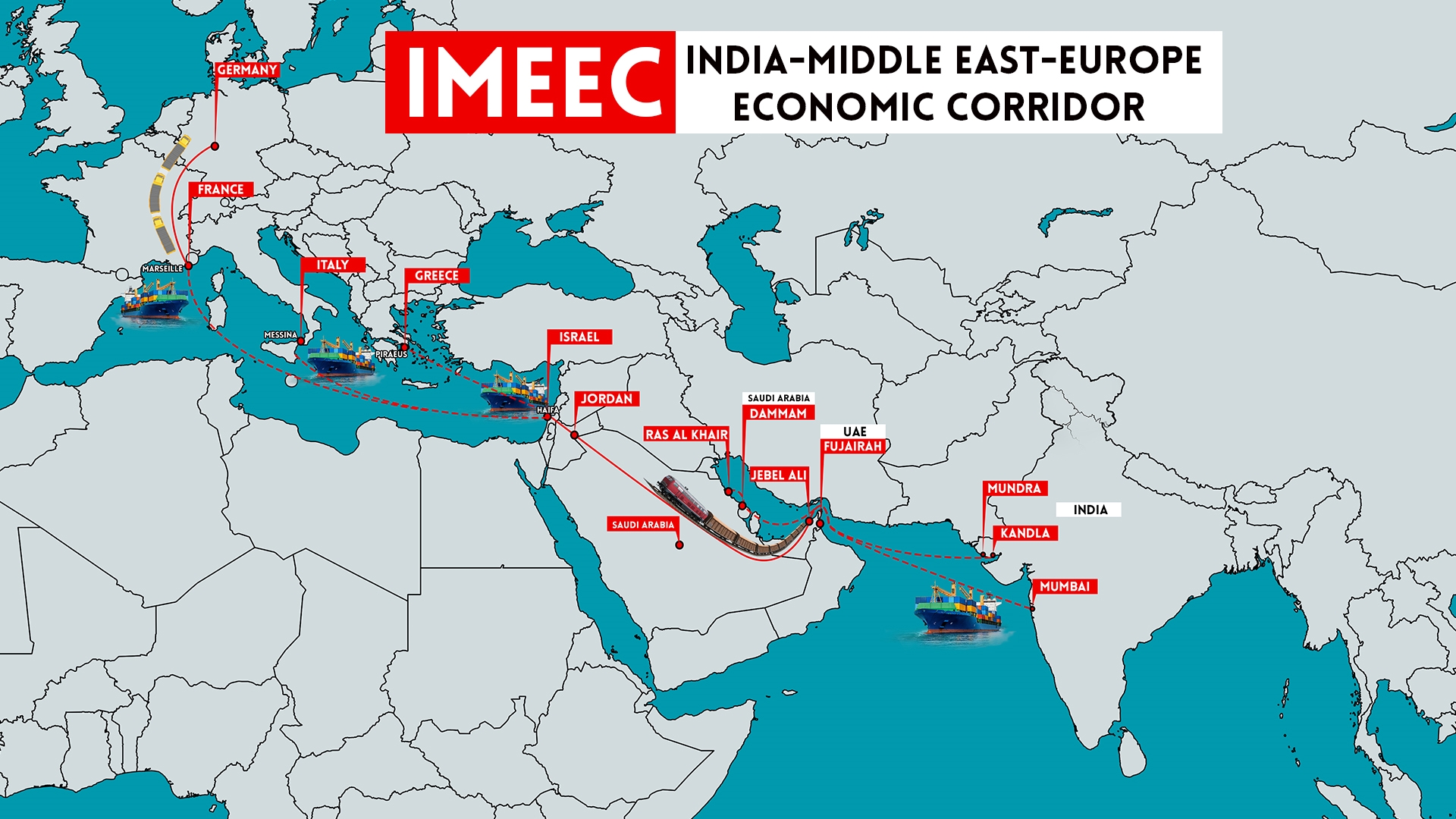
- The Supply-Chain Onshoring Mandate: The conflict in Iran has effectively severed critical logistical arteries in the Middle East. This has accelerated the transition from "Just-in-Time" to "Just-in-Case" inventory management. Onshoring requires a physical workforce in domestic hubs, creating a permanent bid for industrial and logistical labor that remains insulated from broader consumer spending slowdowns.
- Fiscal Impulse Offset: Massive federal investments in infrastructure and green energy provide a baseline of employment that is insensitive to the federal funds rate. This creates a "bimodal" labor market where white-collar tech contractions are being perfectly offset by blue-collar industrial expansion.
http://googleusercontent.com/image_content/222
Geopolitical Friction and the Cost of Capital
The war in Iran acts as a global tax on production. Energy markets have internalized a permanent risk premium, but the second-order effect on the US labor market is more nuanced. We are observing a phenomenon termed "Input Substitution Neutrality." Typically, when energy costs rise, firms seek to automate (capital substitution). However, the global semiconductor shortage—exacerbated by the war’s impact on neon gas and rare-earth transit—has increased the price of automation.
Human labor has, paradoxically, become the more flexible and predictable variable in the production function. When the cost of a robotic arm increases by 30% due to supply chain failures, the relative value of a $25-per-hour technician increases. This prevents the mass layoffs usually associated with energy-driven recessions.
The Mechanics of the 211,000 Threshold
The 211,000 figure represents the "frictional floor." In a healthy, dynamic economy, a certain percentage of the workforce is always in transition. This floor is comprised of:
- Structural Mismatches: Workers in declining sectors (legacy retail, traditional media) whose skills do not align with the burgeoning defense and domestic energy sectors.
- Geographic Displacement: Labor demand is currently concentrated in the "Battery Belt" and the Southwest, while the Northeast corridor sees a cooling of demand.
- Regulatory Lag: The time required for state-level unemployment offices to process claims creates a statistical smoothing effect that hides immediate-term volatility.
Measuring the Iran Conflict Risk Premium
The duration of the conflict in Iran directly correlates with the "Long-End" of the yield curve. As the war drags on, the expectation of "Higher for Longer" interest rates becomes entrenched. This creates a specific pressure point for small-to-medium enterprises (SMEs) that rely on floating-rate credit lines.
The divergence in the labor market is becoming more pronounced between "Cash-Rich Megacaps" and "Credit-Dependent SMEs." Megacaps are the primary drivers of the 211,000 stability; they have the balance sheets to withstand the Iran conflict's inflationary pressure. Conversely, SMEs are beginning to show the first signs of stress. If the conflict enters a secondary escalation phase—specifically involving the Strait of Hormuz—the cost of sea-freight insurance will likely force a capitulation in SME hiring, potentially pushing claims toward the 250,000 mark.
The Efficiency Trap in Modern HR Systems
A critical reason jobless claims haven't spiked is the widespread adoption of AI-driven "Predictive Retention" tools. HR departments are no longer reacting to turnover; they are anticipating it. By identifying employees at risk of leaving and offering preemptive incentives, firms have significantly reduced "Churn-Induced Filings."
This creates an illusion of stability. While the flow of new people into unemployment is low, the duration of unemployment for those who do lose their jobs is increasing. The "Beveridge Curve"—the relationship between job openings and the unemployment rate—is shifting outward. This suggests that while fewer people are being fired, those who are find it significantly harder to re-enter the workforce because the available jobs require highly specific technical skills related to the new "War Economy" infrastructure.
Probability of a "Hard Landing" Pivot
The stability of jobless claims at 211,000 is often cited as evidence of a "soft landing." This is a fundamental misreading of the data. High employment in a high-inflation environment is often a lagging indicator of a "Liquidity Trap." Firms are keeping workers because they expect demand to return, but if the Iran conflict leads to a sustained oil price of over $120 per barrel, that demand will evaporate.
The trigger for a spike in jobless claims will not be interest rates, but rather a "Margin Compression Event." When the cost of energy and labor both exceed the price-elasticity of the consumer, firms will be forced into a "Sudden Stop" layoff cycle. We are currently in the "pre-compression" phase, where companies are eating the costs in hopes of a swift geopolitical resolution.
Strategic Allocation of Human Capital in a Volatile Era
For the C-suite, the current data suggests a "Wait and See" approach is no longer viable. The 211,000 claims floor indicates that the labor market is fully priced. There is no "undervalued" labor left to be found. Organizations must transition from labor acquisition to labor optimization.
The focus must shift toward:
- Cross-Functional Reskilling: Reducing the need for external hires by creating internal mobility pipelines that can pivot workers from "Non-Core" projects to "Conflict-Resilient" divisions.
- Energy-Hedging Through Remote Work: Reducing the physical footprint of the office to offset the rising cost of energy-intensive operations.
- Vertical Integration of Recruitment: Moving away from third-party recruiters and toward direct-to-university pipelines to ensure a steady flow of talent that is immune to the volatility of the general labor market.
The geopolitical situation in Iran is not merely a "headwind"; it is a fundamental reconfiguration of the global cost structure. The US labor market is holding steady not because the economy is "healthy" in the traditional sense, but because it is in the process of armor-plating itself against a prolonged period of global instability.
Expect the 211,000 level to persist as long as the conflict remains contained within its current borders. However, any broadening of the theater of war will likely lead to a bifurcation of the labor market: a rapid surge in defense-related hiring and a systemic collapse in discretionary service sectors. The window for proactive workforce restructuring is closing; the next quarter will demand a definitive choice between labor hoarding and aggressive automation to preserve margins against the rising tide of geopolitical friction.