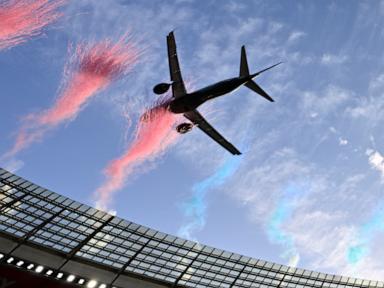
Fifty-six thousand fans screamed in pure ecstasy as two commercial passenger jets skimmed the roof of Cape Town’s DHL Stadium. It felt like classic rugby theater. But online, the tone shifted from celebration to panic within minutes.
Flight data later revealed that the lead aircraft—an Airlink Embraer E190—cleared the stadium roof by a razor-thin 41 to 46 feet. Now, the South African Civil Aviation Authority (SACAA) is officially reviewing the stunt. Also making headlines in this space: The Anatomy of Judicial Closure A Quantitative Breakdown of the Duane Davis Verdict.
When commercial airliners start dodging stadium architecture for pre-match entertainment, we need to talk about where the line is drawn.
The Anatomy of a Viral Stunt
The low-level flypast happened right before the high-stakes Test match between the Springboks and the All Blacks. Airlink, a major regional carrier and sponsor of the tour, rolled out a striking visual formation. A green Embraer E190 and a black Embraer E195—representing the team colors—roared over the turf at roughly 150 knots, right as stadium pyrotechnics exploded. More details on this are covered by TIME.
Cameras caught the lead jet pitching up sharply, its tail dipping perilously close to the concrete structure. To the crowd inside, it was an adrenaline rush. To pilots watching from home, it looked like a disaster waiting to happen.
Flightradar24 tracking data put the lowest standard pressure altitude reading at 50 feet. Once adjusted for Cape Town's local atmospheric pressure and the roughly 164-foot height of the DHL Stadium, experts calculated the actual roof clearance to be between 41 and 46 feet.
Defending the Maneuver
Airlink didn't stay quiet. The airline pushed back against safety critics by emphasizing the sheer amount of preparation behind the flight.
According to the carrier, the operation underwent rigorous planning and rehearsal. Both aircraft were crewed by three senior captains handling command, co-pilot, and technical safety duties, boasting over 75,000 combined flight hours. Airlink insisted that digital flight data recorder logs confirmed the jets stayed entirely within the speed and altitude limits approved by SACAA.
The airline even volunteered its black box data directly to the regulator for an independent review. They wanted transparency. They wanted to prove that professional execution trumped internet hysteria.
Why Experience Doesn't Eliminate Risk
South Africa has a deep, emotional history with stadium flypasts. Think back to the legendary 1995 Rugby World Cup final, when a South African Airways Boeing 747 thundered over Ellis Park. It’s a point of national pride.
Yet, aviation veterans are drawing a hard line. Chris Martinus, president of the Aircraft Owners and Pilots Association South Africa, pointed out the core problem with such low clearances. When an aircraft flies that low over a confined urban structure, pilots have zero safety margin if something goes wrong.
If a sudden gust of wind hits, if an engine ingests a stray bird, or if unexpected turbulence rolls off the stadium bowl, recovery time simply doesn't exist at 45 feet.
International aviation consultants have echoed those warnings. Commercial regional jets like the Embraer E-Jet series are built for passenger transport, not airshow acrobatics over packed bowl stadiums. Setting a precedent where commercial airliners buzz crowds at rooftop levels invites copycat maneuvers that could end in tragedy.
The Fallout and Where Safety Stands Now
The regulatory pressure is already mounting. Following consultations and the launch of the SACAA probe, Airlink prudently pulled the plug on another planned low-level flyover scheduled for Johannesburg’s FNB Stadium.
The aviation authority is combing through flight data logs to determine if the permissions granted for special air events were stretched past safe operational thresholds. A final report with recommendations is expected once the review wraps up.
Rugby culture loves grand spectacles, but crowd entertainment should never gamble with aviation safety. Let the regulators do their job, and keep passenger jets where they belong—safely in the open sky.


