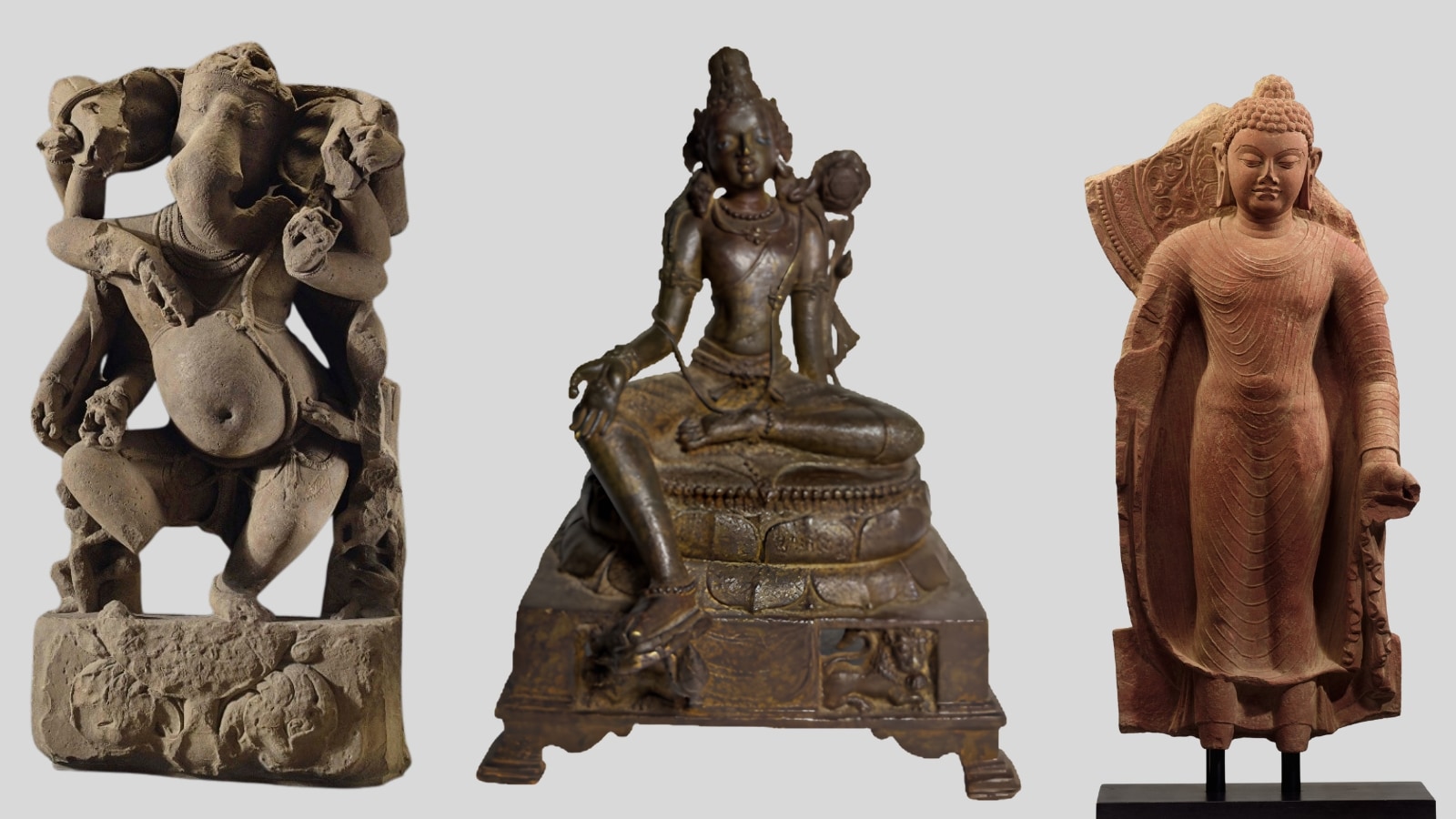
The headlines are predictably triumphant. $14 million in stolen history. 657 artifacts. A "massive win" for cultural diplomacy. The press releases from Manhattan’s District Attorney and the Indian Consulate read like a script for a feel-good heist movie where the good guys finally get their gold back.
It is a lie.
While the mainstream media celebrates the "repatriation" of these idols, bronzes, and terracotta fragments, they are ignoring the cold, hard reality of the global art market and the systemic failures of heritage management. We aren’t "saving" history; we are participating in a high-stakes game of cultural musical chairs that does nothing to stop the bleeding. If you think shipping 600 crates to a government warehouse in Delhi solves the looting crisis, you aren't paying attention to how the black market actually functions.
The Illusion of Restitution
The $14 million figure is a vanity metric. In the high-end art world, $14 million is a rounding error. When a single Modigliani can fetch $170 million, 657 items totaling $14 million tells you exactly what happened: these were the mid-tier scraps of a smuggling network, the "volume" goods used to pad the ledgers while the true masterpieces vanished into private vaults in Geneva or Singapore.
By focusing on these bulk returns, law enforcement creates a smokescreen of efficacy. We celebrate the recovery of a 10th-century sandstone sculpture while the logistical infrastructure that moved it—the crooked exporters, the bribed customs officials, and the "clean" galleries in Mayfair—remains largely untouched. The Subhash Kapoor network, which is the ghost haunting this specific haul, operated for thirty years. Three decades of systematic extraction cannot be undone by a few hundred photo-ops.
The "Safe Haven" Fallacy
Here is the uncomfortable truth: India is currently ill-equipped to handle the volume of returned items.
When these artifacts land, they don't go back to the temples or the dust-choked villages they were ripped from. They go into the "strong rooms" of the Archaeological Survey of India (ASI). If they are lucky, they get a blurred photo in a catalog. If they aren't, they sit in crates for another twenty years, effectively "re-stolen" from public view by bureaucracy.
The argument for repatriation usually rests on the idea that an object belongs in its "original context." But the original context for a Chola bronze was a living, breathing temple where it was bathed in milk and draped in silk. In a government warehouse, it is just an asset on a balance sheet. We are swapping a private collector’s mantle for a government basement. Both are graveyards for art.
The Economic Incentive of Silence
Looting is a supply and demand problem. As long as the West treats these objects as "art" and the East treats them as "national identity," the price will only go up.
Restitution actually increases the rarity—and thus the value—of the pieces remaining in private hands. Every time the US returns a haul to India, the "provenance-cleared" pieces sitting in New York penthouses jump in value. The market doesn't shrink; it tightens. We are inadvertently subsidizing the very collectors who fueled the theft in the first place by making their un-seized assets more exclusive.
If we were serious about stopping the trade, we wouldn't just return the objects. We would destroy the market liquidity.
The Provenance Problem
The industry thrives on "gray" provenance. An item appears in a Swiss catalog in 1972. Nobody asks where it was in 1971. The 657 artifacts returned recently represent a failure of the "Due Diligence" era.
Current international law, specifically the 1970 UNESCO Convention, is a sieve. It relies on voluntary compliance and a "buyer beware" mentality that is laughed at by serious smugglers. Collectors don’t care if a piece is stolen; they care if it is provably stolen. There is a massive difference.
I’ve sat in rooms with dealers who can track a piece of stone from a temple wall in Bihar to a pedestal in Manhattan with terrifying precision—and then produce three different sets of paperwork to "legalize" the journey. These 657 items weren't caught because the system worked; they were caught because one man, Kapoor, got sloppy with his shipping manifests.
A Better Way: The Museum Franchise Model
Stop sending things back to die in warehouses.
If India wants to protect its heritage while maximizing its soft power, it should stop demanding the physical return of every minor terracotta shard and start demanding ownership with long-term custodial leases.
Imagine a scenario where the Metropolitan Museum of Art is forced to acknowledge Indian ownership of a piece but is allowed to keep it on display—provided they pay a "heritage tax" directly into a fund for the physical security of active temples in rural India.
This does three things:
- It keeps the art visible to the global public.
- It generates a continuous revenue stream for conservation where it’s actually needed.
- It removes the "investment" value for the museum, as they no longer own the asset.
Instead, we have the current "All or Nothing" approach. We demand the physical object, the museum hides it in the basement to avoid a PR nightmare, and the looters in the field keep digging because they know the "market" for replacements is now even hungrier.
The Myth of the "Poor Looters"
The competitor article likely paints a picture of desperate villagers digging up their own history for a few dollars. That’s a romanticized fairy tale.
Modern looting is a paramilitary operation. It involves ground-penetrating radar, heavy machinery, and organized crime syndicates that also move drugs and weapons. When you celebrate the return of these artifacts without demanding the dismantling of the financial networks that funded the radar and the trucks, you are congratulating a fire department for saving a single chair while the rest of the skyscraper is still engulfed in flames.
The Hard Truth About Security
The ASI manages over 3,600 monuments. They have a fraction of the budget required to provide even basic CCTV for half of them.
When an artifact is returned, it is often sent back to a country where the theft rate remains staggeringly high because the guards are underpaid and the "monuments" are often just ruins in the middle of a forest. We are returning objects to the same vulnerability they were stolen from.
Until India digitizes its entire national register—creating a blockchain-backed 3D scan of every significant temple carving in situ—repatriation is just a temporary transit. You can’t protect what you haven't cataloged. If a statue isn't on a digital ledger, it doesn't "exist" when it shows up at a port in Los Angeles.
Stop Clapping for the Minimum
The return of these 657 pieces is not a victory. It is a symptom of a broken system that only catches the low-hanging fruit.
If we want to protect the soul of a civilization, we need to stop treating these artifacts like recovered stolen cars. They are not commodities. They are the DNA of a culture. And right now, we are letting the DNA be sold to the highest bidder, only demanding a small sample back when the police happen to trip over a shipping container.
Stop celebrating the return. Start demanding the names of the buyers who funded the theft. Start demanding the prosecution of the gallery owners who laundered the history.
Until then, these $14 million returns are just the cost of doing business.
Ship the crates. Take the photos. Then watch as the next 600 pieces leave through the back door.



