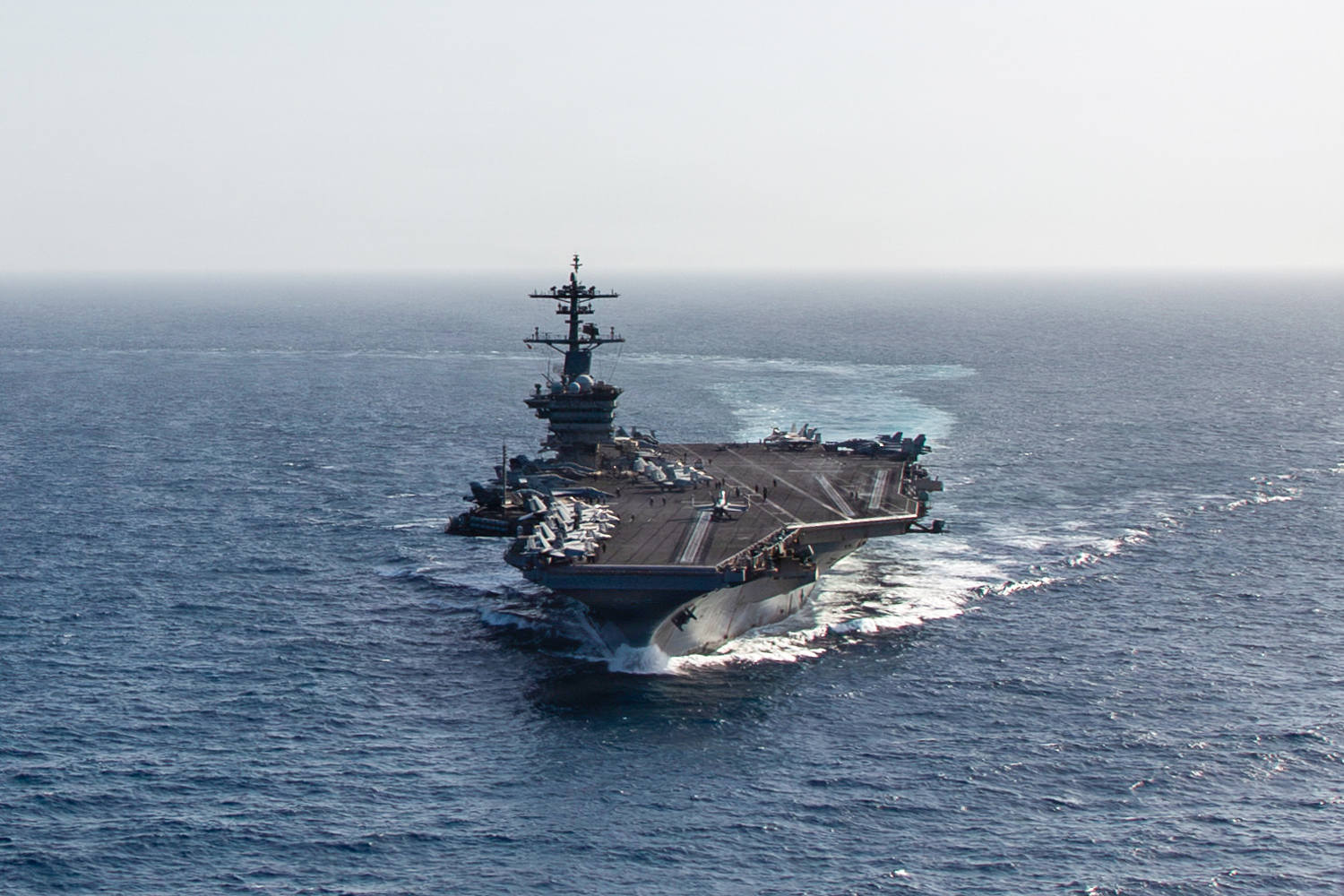
The sea does not care about your schedule. It does not look at a calendar, and it does not count the rotations of the moon. It only rolls, gray and indifferent, against a hull of welded steel.
For more than nine months, that gray was the entire world for the five thousand souls aboard the USS Abraham Lincoln.
When the ship left San Diego, the world looked a certain way. Leaves fell, jackets zipped up, and families waved from the pier with the quiet, practiced resilience common to military towns. The deployment was supposed to follow a rhythm. Seven months. Maybe a little more. Then the return, the smell of home cooking, the long-overdue embrace on the concrete. But history intervened. When hostilities with Iran erupted in February, the map changed. Orders shifted. The Lincoln was redirected, plunging deep into the combat zones of the Middle East to serve as an unyielding floating airbase.
And then, the port calls stopped.
Consider what happens to a human mind when the horizon never changes. For over two hundred and fifty consecutive days, the crew lived without the simple salvation of stepping onto solid ground. No shore leave. No sudden burst of green grass under combat boots. Just the relentless hum of the reactor, the metallic vibration of the flight deck, and the roar of catapults launching aircraft into an unforgiving sky. Day bled into night across endless stretches of salt water.
Back home, communication became a fragile lifeline. A wife waiting in California watched her phone like an altar, parsing the short, hurried texts sent through erratic satellite signals. Doing okay. Still busy. To anyone else, those words sound mundane. To a military spouse, they are coded messages of survival, hinting at the heavy, grinding fatigue building beneath the deck plates.
Stories began to trickle out through family networks and military newspapers. Whispers of strained water systems, tight rations, and dwindling hygiene supplies. The psychological weight of isolation compounded the physical strain. When you spend months performing high-stakes maintenance and launching combat sorties under a relentless desert sun, the margin for error shrinks to zero. Every missed meal schedule or restricted phone call adds another invisible stone to an already overloaded rucksack.
Naturally, Washington reacted with the expected friction. Officials debated metrics and operational necessities. Defense leaders pointed to high retention rates and tactical successes, emphasizing that the strike group had crushed its mission, executing thousands of sorties without missing a single beat. Top brass flew out to inspect the vessel, praising the undeniable resilience of sailors who kept the machinery of war functioning despite unprecedented demands.
Yet numbers and political talking points miss the heartbeat of the matter.
A carrier is not just a strategic asset. It is a floating city populated by nineteen-year-olds fixing electronics, twenty-four-year-olds loading ordnance, and seasoned chiefs trying to keep spirits intact when the mail hasn't arrived in weeks. When a deployment stretches past the breaking point, the toll is paid in quiet moments of exhaustion in cramped berthing compartments. It is felt in the hollow eyes of a sailor staring out at an empty sea, wondering if the calendar on the bulkhead is broken.
Now, the tide is finally turning.
The Japan-based USS George Washington has arrived in the theater, gliding into position to assume the heavy watch in the Gulf of Oman. The relief has come, marking the end of an extraordinary, record-stretching deployment for the Lincoln. The great carrier has begun its long, westward transit across the Pacific, heading home to San Diego.
It will take roughly three weeks for the ship to bridge the distance between the Middle East and the California coast. Three weeks of steaming through the open ocean, the tension slowly bleeding out of the crew as the miles tick down. For the families waiting on the pier, those final weeks will crawl like years.
When the Lincoln finally ties up to the dock, the steel hull will rest. The engines will power down. But the true measure of those nine months won't be found in the combat logs or the tactical summaries. It will live in the quiet space of an embrace on the pier, where a sailor finally sets down a weight they were never meant to carry alone.