Salt crusts on the jalousie windows before the wind even arrives. You can smell it hours before the radar picks it up—an ancient, metallic tang of deep ocean churned up from miles below, mixed with the damp, crushed-leaf scent of valley ginger.
In the islands, people watch the ocean long before they look at the sky.
For thirty-four years, the horizon has kept a promise. Since Iniki tore across Kauai in 1992, ripping roofs off concrete and turning sugar cane fields into scouring pads of mud, generations have grown up under a quiet assumption. Hurricanes, people whisper on porches as the trade winds rattle the wind chimes, simply do not hit us anymore. The big storms curve north. They die out in the cold water trenches. They are ghost stories told to tourists during afternoon squalls.
That contract with the geography of the Pacific is about to fracture.
Consider what happens when a community builds its entire identity on routine. The morning school run in Kailua. The rhythmic thunk of a surfboard hitting the back of a truck in Haleiwa. The steady hum of generators at local markets, checked once a year and then forgotten in the back of a dark garage. Life here moves to the slow, predictable swing of the humidity.
Now, the weather maps are turning an ugly, bruised purple.
Meteorologists are tracking a system that refuses to follow the old rules. Warmer ocean temperatures—heat stored up in the upper layers of the sea like a battery waiting to discharge—are feeding a monster that should have withered by now. The atmosphere is heavy, thick with moisture, holding its breath.
To understand why this moment feels different, you have to look at the math of vulnerability.
Imagine living on a rock that is isolated by thousands of miles of open water. Every gallon of milk, every spare part for a diesel generator, every pharmaceutical vial arrives on a container ship or in the belly of a cargo plane. The supply chain is a fragile thread stretching across an immense blue desert. When a storm threatens the mainland, there are highways. There are neighboring states. There is a horizon you can drive toward until the clouds break.
In Hawaii, the horizon is just more water.
Older residents remember the eerie stillness after Iniki. They remember the weeks without electricity, the lines for ice stretching around gas stations, the strange silence of a tropical night unbroken by the hum of a single refrigerator. Back then, cell phones were heavy bricks carried by businessmen, and the internet was a distant hum in university labs. Information traveled by transistor radio and word of mouth across front yards.
Today, we face a potential direct hit with pockets full of screens and minds addicted to real-time updates, yet we are fundamentally just as exposed to the raw weight of wind and water.
The air grows heavy. The barometric pressure drops, pressing against the inner ear with a dull, persistent ache that local fishermen recognize instantly. It is the signature of a storm drawing a deep breath.
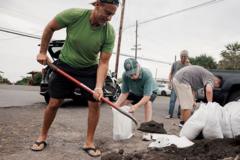
People are clearing the hardware store shelves. Cases of bottled water vanish into car trunks. Plywood sheets are hoisted against glass panes with the heavy, rhythmic thud of hammers echoing down suburban streets. Yet beneath the hurried preparation, there is a profound, shared disbelief. Thirty-four years is a long time. It is long enough for a child born in the wake of the last disaster to grow up, have children of their own, and look at hurricane warnings as background noise on the evening news.
That illusion of immunity is the most dangerous thing on the island right now.
The science is stark. Climate patterns are shifting the lanes where tropical cyclones traditionally form and travel. Waters that were once safety barriers are now operating as fuel stations for erratic systems. A storm does not care about history. It does not respect the decades of calm that turned emergency plans into dusty binders tucked behind old surfboards.
When the wind finally shifts, it will not arrive with a warning siren. It will start as a whisper in the upper canopy of the eucalyptus trees, a strange, low whistle that makes the dogs whimper and crawl beneath couches. The ocean will begin to heave, long, grey rollers marching toward the reef with a cold indifference, smashing against the lava shelves with spray that tastes of salt and ancient stone.
This is the hidden cost of living in paradise. We trade insurance for beauty. We accept the volcanic fire and the sudden flash floods in exchange for the trade winds and the eternal summer. But every so often, the ledger has to be balanced.
The sky darkens to the color of wet slate.
On the north shore, the waves are already changing shape, doubling back on themselves in confused, angry swells. Down in the valleys, the chickens have gone quiet, hiding beneath the roots of the banyan trees. The air smells of ozone and impending change.
We are standing at the edge of a long-held silence, waiting to see what the wind brings home.