The iron gate of the base did not swing open with a triumphant creak; it grated slowly across the gravel, pushed by men who were suddenly in a terrible hurry to leave. For two decades, that perimeter fence had marked a boundary line between two different definitions of reality. Inside, air conditioning hummed, coffee brewed in aluminum urns, and monitors flickered with satellite feeds tracking distant movements across the Tigris. Outside, the dust blew in thick red waves, coating the olive trees and settling into the creases of faces that had grown old waiting for a promise that was never quite fulfilled.
Now, the hum is dying. The convoys roll south in the dead of night, their headlights cutting through the Mesopotamian dark like yellow knives. Dust rises behind the armored vehicles, thick and choking, lingering long after the tail lights fade into the horizon.
In Erbil, the tea cools untouched on the zinc tables of the market square.
Shopkeepers do not speak in loud voices anymore. They lean over their counters, their eyes darting toward the southern hills where the flat plains begin to fold into jagged, slate-colored mountains. They know what those empty barracks mean. To a soldier in Washington or a bureaucrat in a paneled office thousands of miles away, a withdrawal is an orderly metric on a spreadsheet, a boxed item checked off a strategic timeline. To the people who live in the shadow of those mountains, it is the removal of the last steel peg holding up a very fragile tent.
Consider what happens when the anchor is pulled.
The wind changes direction.
For the Kurdish communities scattered across northern Iraq, the departure of American forces carries a weight that cannot be measured in troop counts or logistics manifests. It is felt in the gut. For years, the presence of those troops acted as an invisible shield—imperfect, heavily criticized, frequently frustrating, but present nonetheless. It created a strategic buffer. It forced calculations in Baghdad and Tehran that kept the most aggressive ambitions in check.
Now, that buffer is evaporating into the desert heat.
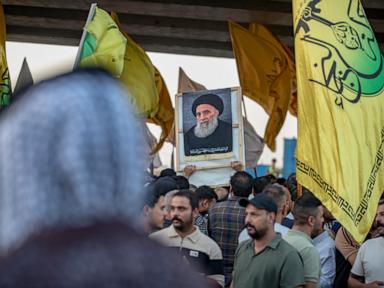
Down the road, past the checkpoints where young men in mismatched camouflage check papers with tired eyes, the mood is entirely different. Banners flutter from streetlamps. Bright red and green posters bearing the insignia of powerful militias line the avenues of Diyala and Salah ad-Din. Men in civilian clothes with military bearing stand on street corners distributing sweets. They laugh, embracing one another with theatrical warmth, their cell phones held high to capture the moment of triumph.
To them, the departure is not just a military maneuver. It is a coronation.
The militias, forged in the crucible of civil conflict and bound tightly to regional patrons across the border, see an open field. For years, they chafed against the constraints imposed by a foreign superpower operating in their backyard. They launched rockets into perimeter walls, probed defenses, and tested limits, all while playing a dangerous game of shadows with a superpower that often seemed reluctant to strike back with decisive force.
Now, the target is gone. The walls are empty.
A hypothetical scenario helps clarify the new arithmetic on the ground. Imagine a village nestled in the disputed territories, say around Makhmour, where the Kurdish regional government's security forces—the Peshmerga—and the federal Iraqi forces share an uneasy, paper-thin line of control. When an American patrol rolled through that region once a week, local commanders from rival factions maintained a polite fiction of cooperation. They sat in concrete bunkers, drank small glasses of bitter tea, and nodded at translators' words. They avoided escalation because escalation meant answering to a third party with eyes in the sky and fire from the clouds.
Remove that third party.
The tea gets colder. The polite nods stop.
The rival commander across the trench no longer sees an arbiter; he sees an opportunity. He looks across the dry creek bed and measures the distance not in miles, but in hours. How long until reinforcements can arrive from Erbil? How fast can Baghdad mobilize a response if a skirmish breaks out over a water well or a grain silo? The answers to those questions are no longer anchored by the presence of a global superpower stationed just down the highway. The answers now depend entirely on raw power, shifting alliances, and the brutal logic of local dominance.
Fear is a quiet thing. It does not usually announce itself with explosions or sirens. In the Kurdish provinces, fear sounds like the rustle of dry paper as families look up old property deeds, wondering if they will need to pack their lives into the trunk of a sedan before the snows melt in the peaks. It sounds like the hushed phone calls made to relatives in diaspora communities in Europe and North America, asking about visa rules, job markets, and the price of plane tickets out of Baghdad.
It is the terrible realization that history is about to resume its old, violent habits.
The historical context here is heavy, soaked in blood and betrayal. Generations of Kurds have lived through cycles of brief autonomy followed by crushing abandonment. They remember the aftermath of previous conflicts, the sudden shifts in geopolitical winds that left them exposed to tanks and artillery supplied by governments thousands of miles away. Every grandparent in Sulaymaniyah or Dohuk carries a mental archive of broken treaties and sudden flights into the mountains.
When American officials speak of transitioning to a phase of normal diplomatic relations and advisory support, they use the clean language of modern statecraft. They talk about partnerships, capacity building, and sovereign independence. But words spoken in air-conditioned conference rooms in foreign capitals sound hollow when translated into the dialects of the frontier. Sovereignty is an abstract concept when the local police station lacks the ammunition to hold off a well-funded irregular force equipped with night-vision goggles and heavy artillery.
The militias, meanwhile, are not burdened by diplomatic niceties. Their messaging is direct, unapologetic, and omnipresent. Through satellite television channels, encrypted messaging apps, and billboards plastered across major thoroughfares, they broadcast a simple narrative: the occupiers have fled, the region belongs to its native resistance, and anyone who stands outside the newly forged consensus is an agent of foreign influence.
That narrative is dangerous because it provides a ideological justification for pre-emptive aggression. If every rival is branded a traitor or a foreign asset, then conflict ceases to be an unfortunate tragedy and becomes a moral duty.
The economic fallout mirrors the psychological strain. Investors who had gingerly brought capital into the northern markets are quietly liquidating their positions. Real estate values in Erbil are dipping as developers pause projects, waiting to see if the border crossings remain secure or if trade routes with the south become choke points controlled by hostile armed groups. A functioning economy requires predictability. It requires the quiet confidence that contracts will be honored and property will not be seized by men with rifles at three o'clock in the morning.
That confidence is vanishing.
Consider the ordinary border guard standing shift at a crossing point between federal territory and the autonomous region. He is twenty-four years old. He has a wife and two children in an apartment with unpainted concrete walls. He wears a helmet that is a decade old and boots with worn soles. He knows every vehicle that passes through his lane. He also knows that if a column of heavily armed militia vehicles approaches his checkpoint tomorrow morning, his phone calls to headquarters will be met with cautious hesitation.
In that moment of hesitation, empires do not matter. Strategy papers do not matter. Only the weight of the rifle barrel pointed in his direction matters.
The international community watches from a safe distance, issuing statements drafted by committees—statements that urge restraint, dialogue, and mutual respect for constitutional norms. These communiqués are meticulously crafted to offend no one and commit to nothing. They are diplomatic theater, performed for an audience that stopped believing in the script long ago.
The real theater is happening on the ground, in the dust and the heat, where power is being redistributed one village, one checkpoint, and one grain silo at a time.
There is a profound tragedy in the speed with which human beings adapt to impending danger. At first, there is shock, a frantic scramble to find reassurances, a desperate hope that someone, somewhere, will change their mind and reverse the decision. Then comes the sullen silence of acceptance. People go back to their work. Bakers light their ovens; taxi drivers navigate the potholes; children walk to school past concrete blast walls that are slowly being covered in graffiti and dust.
They do not pretend that everything is fine. They simply realize that waiting for a savior is a luxury they can no longer afford.
As the last transport planes lift off from the southern airfields, their engines roaring a final farewell into the Middle Eastern sky, the noise echoes off the mountains and fades into silence. The lights go out in the command centers. The maps are rolled up and packed into metal trunks.
Out on the plains, the dust settles back onto the leaves of the olive trees. The banners snap in the hot wind. And in the quiet corners of the borderlands, people turn to face the dark, alone, wondering how long the night will last.