Dust sticks to sweat before the first mile is even behind you.
The air does not move in the Horn of Africa. It sits heavy, baking the earth until the tracks turn to fine white powder that coats the ankles, rises into the throat, and settles behind the eyes like grit. To walk here is to wage a quiet war against gravity, distance, and time. Read more on a similar subject: this related article.
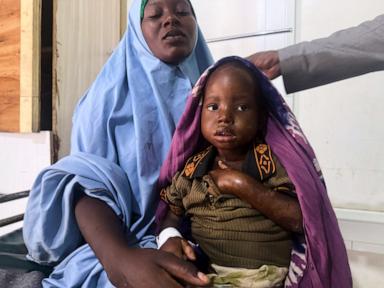
Consider Amina. She is not a statistic on a briefing document compiled in a climate-controlled room thousands of miles away. She is a mother whose universe has shrunk to the weight of the child strapped to her back. Fatuma is three years old, but she feels light as a bundle of dry sticks. A child of three should run ahead, chase dust devils, laugh at the wind. Fatuma’s arms are no thicker than a thumb. Her breathing is shallow, a dry flutter like a moth trapped in a cupped palm.
Seventy-two hours. Three full days and nights of walking across the scorched scrubland of Somalia. No vehicle. No paved road. Just a horizon that recedes with every step and a sun that beats down like an anvil. Further journalism by Mayo Clinic explores related perspectives on this issue.
When international reports mention the child malnutrition emergency in Somalia, they speak in the sanitized language of crisis metrics. They refer to acute food insecurity, severe wasting rates, and displaced populations. They measure catastrophe in percentages. But percentages do not bleed. Percentages do not whisper in the dark when the water gourd is bone dry, praying that the next dune hides a dirt road, a village, a tent with a red cross.
The human mind cannot easily grasp a million starving children. It numbs. It deflects. So we must narrow our focus until the vast, abstract tragedy takes the shape of a single pair of cracked heels grinding into the dirt.
Amina left her home because the earth stopped yielding. The rains failed once. Then twice. Then the third time, the sky simply turned its back. The family goats, their ribs showing like cage bars, dropped one by one until the corral was silent. In a land where survival depends entirely on the fragile margin between pasture and drought, losing the livestock means losing the floor beneath your feet.
When Fatuma stopped crying and simply stared past her mother’s shoulder with glazed, sunken eyes, Amina knew the final countdown had begun.
This is the hidden cost of the climate shockwaves hitting East Africa. It is not merely an environmental failure; it is a slow-motion human displacement that forces mothers to make impossible choices. Stay and watch your children fade into shadows, or pick them up and walk toward a ghost city of tents where foreign aid workers and makeshift clinics might—just might—have a packet of therapeutic peanut paste and a clean cup of water.
The walk itself is a crucible.
Every step requires a deliberate negotiation with exhaustion. The blisters break and reform beneath layers of dust. The tongue swells against the roof of the mouth. At night, the temperature plummets, and the desert wind cuts through worn cotton shawls like a blade, bringing shivers to small bodies already hollowed out by hunger. Amina shared her last drops of warm, metallic water with Fatuma hours ago. She walks on dry fuel, driven by the primal, terrifying certainty that if she stops moving, her daughter dies in the dirt.
We call this an emergency. But emergencies imply suddenness—an earthquake, a flash flood, a collapsing bridge. What unfolds across Somalia is a slow hemorrhage. It builds over seasons, starved of headlines until a photograph breaks through the digital noise. A ribcage pressed against skin. A fly settling on an eyelid. A mother kneeling in the sand.
When Amina finally reached the outskirts of the stabilization center—a sprawling expanse of canvas and tin roofs humming with the desperate energy of thousands of displaced families—she did not collapse in tears. She was past crying. She simply unknotted the cloth from her chest, laid her child on a narrow cot, and looked at the nurse with eyes that had stared down death for seventy-two hours.
Fatuma was admitted with severe acute malnutrition accompanied by systemic infection. Her body had begun cannibalizing its own muscle tissue to keep the heart beating. In the language of the clinic, she was red-flagged. In the language of a mother, she was still breathing.
For the first forty-eight hours, recovery is agonizingly fragile. A starving child cannot simply be fed a heavy meal; their digestive system, starved of enzymes and shrunken by lack of use, will reject food. They must be coaxed back from the edge with exact, measured doses of mineral-enriched milk and ready-to-use therapeutic food. Every spoonful is a minor victory against the void.
Multiply Amina’s journey by hundreds of thousands. Across Somalia, millions face the compounding pressures of prolonged drought, conflict, and economic collapse. The humanitarian response struggles to keep pace, firefighting an inferno with buckets while funding streams wax and wane with the fickle attention span of global media cycles.
Yet, behind the bleak numbers lie stories of fierce, stubborn resilience. The local health workers who walk miles between nomadic settlements, checking mid-upper arm circumferences with colored paper tapes. The mothers who share their meager rations with neighbors. The sheer, defiant refusal to let a generation slip away into silence.
The dust settles over the camp as another day surrenders to the dusk. Inside the stabilization tent, the hum of an oxygen concentrator breaks the stillness. Fatuma stirs, her small hand twitching against the coarse blanket. She is still too thin, still fighting for every breath, but the hollow stare has softened into something resembling awareness.
Amina sits on the edge of the cot, her hands calloused and caked with the red earth of a long, terrible road. She does not look back at the miles she walked. She looks only at her daughter’s chest rising, falling, rising.
The journey is far from over. But the first step out of the dark has been taken.