The desert air in Kuwait does not merely warm; it presses. It is a physical weight that settles on your shoulders before dawn and refuses to lift long after the sun has vanished into a haze of dust and exhaust. Years ago, standing near the perimeter fence of Camp Arifjan, I remember watching the heat shimmer off the asphalt in waves so dense they made the horizon look like liquid. Out there, the horizon isn't just a geographical limit. It is a boundary of consequence.
Step across it one way, you are within the sprawling logistical heartbeat of the United States military in the Middle East. Step across it another, and you are standing at the edge of a geopolitical fault line that has been trembling for decades. For another perspective, read: this related article.
Today, that fault line is splitting open.
When reports surface that Iran has targeted American installations in Kuwait despite stark, unfiltered warnings from Donald Trump, the headlines usually read like static. They list the hardware. They quote anonymous officials. They treat deterrence like a math problem where if you add enough aircraft carriers and public threats, the equation balances out. Further reporting regarding this has been shared by TIME.
It never balances out.
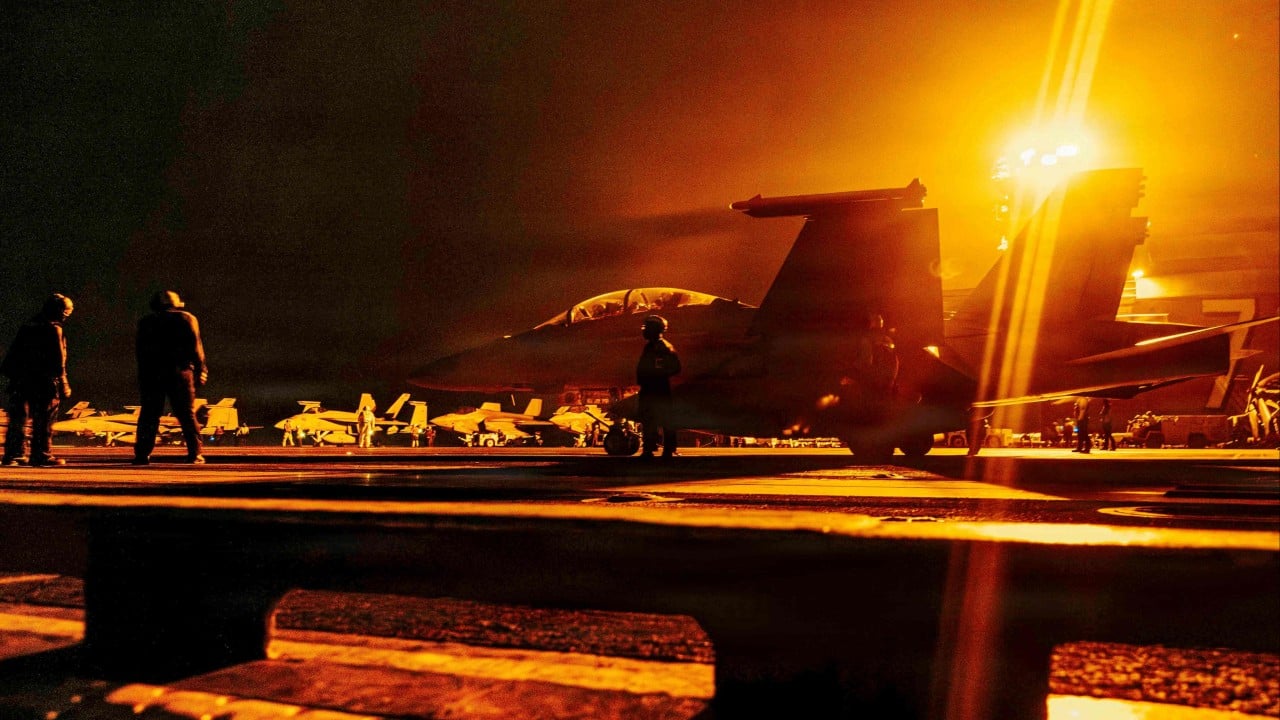
Consider what happens inside a command bunker when the red lights begin to pulse. This is not a hypothetical scenario; it is the lived reality for thousands of service members whose names will never make the evening news. Master Sergeant David Vance—a fictionalized composite based on dozens of real logistical NCOs who have rotated through the Gulf—sat in a windowless operations center sixty feet below the surface, staring at a wall of screens. The air conditioning hummed with a low, tooth-rattling vibration. Outside, the perimeter guards adjusted their night-vision gear against a pitch-black night where every shadow could conceal a drone, a rocket, or a catastrophic miscalculation.
"The warnings don't stop the physics," Vance used to say, recounting the endless cycle of alerts. "They just change the countdown."
For months, the dynamic between Washington and Tehran has been defined by a dangerous escalation ladder. Donald Trump’s warnings were characteristically blunt, broadcast across social media and official channels with the subtlety of a sledgehammer. The message was simple: cross the line, and the retaliation will be absolute.
Yet, deterrence relies entirely on the adversary believing you are willing to pay the price of admission. Tehran’s calculus has shifted. They no longer seem intimidated by the shadow of American supremacy. By directing actions—whether through proxy militias or direct capability demonstrations—toward Kuwaiti soil, they are sending a message written in fire. They are probing the perimeter. They are testing whether the superpower that spent twenty years entangled in desert wars still has the stomach for another round, or if the threats are merely paper tigers designed for domestic political consumption.
Kuwait is uniquely vulnerable in this standoff. It is not an aggressor. It is a host, a diplomatic bridge, and a vital logistics hub that keeps the entire American posture in the region functioning. When regional tensions spike, Kuwait becomes the unwilling shock absorber for every kinetic action between Washington and Tehran. Every threat hurled across the Gulf lands squarely on Kuwaiti sand.
The cost of this posturing isn't measured in abstract geopolitical theory. It is measured in the sleepless nights of families in suburban Ohio or Texas waiting for a phone call. It is measured in the quiet anxiety of Kuwaiti citizens watching their stable, prosperous nation get sucked into a regional vortex they did nothing to create.
We talk about deterrence as if it were a shield. It is more like a tripwire. Every time a warning is issued and ignored, every time a projectile finds its way toward an installation, the wire pulls tighter.
The sand outside Camp Arifjan is still there, shifting silently in the wind, burying the footprints of everyone who has ever tried to draw a permanent line upon it. But lines in the desert have a habit of blowing away. What remains is the raw, human friction of two powers staring each other down across a narrow strip of water, waiting to see who blinks first, while the rest of us hold our breath in the dark.