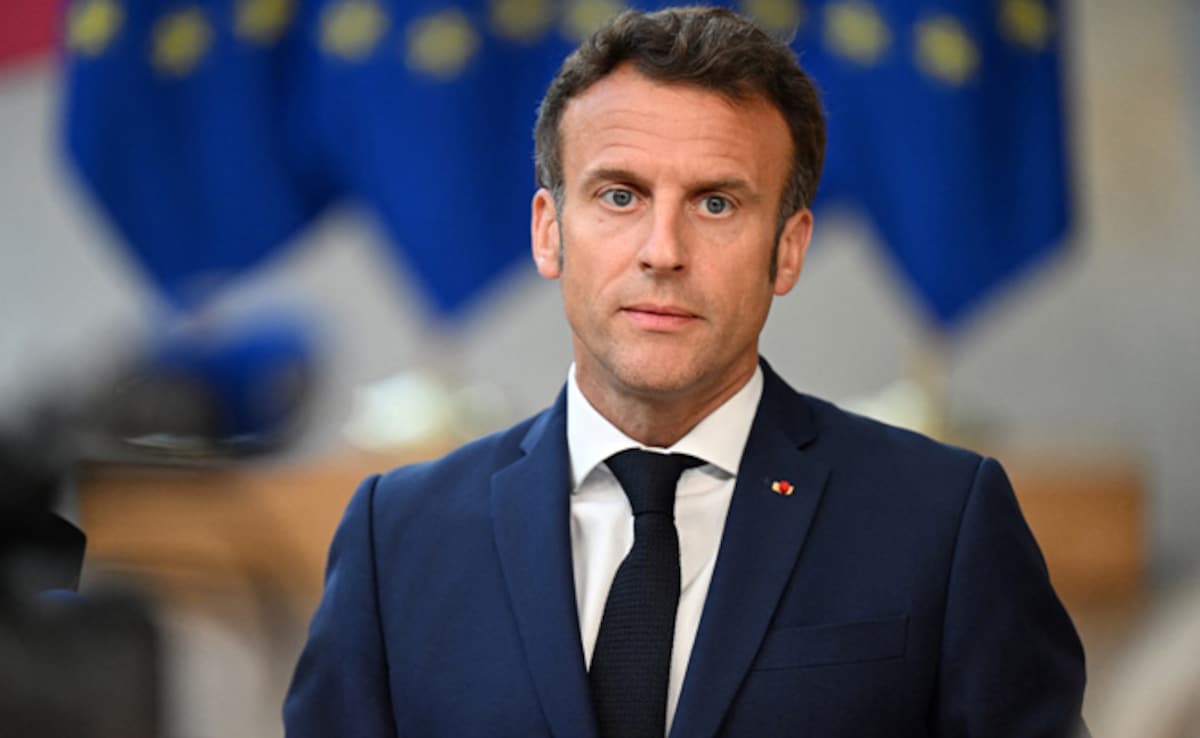
The death of a French soldier during a recent strike on United Nations peacekeepers in Lebanon represents more than a localized tragedy. It marks a violent collision between European diplomatic ambitions and the brutal reality of a shifting Middle Eastern conflict. President Emmanuel Macron confirmed the loss, which occurred as tensions between Israeli forces and Hezbollah militants reached a boiling point along the Blue Line. While official statements focus on mourning and the sanctity of international law, the incident strips away the veneer of safety typically afforded to UNIFIL (United Nations Interim Force in Lebanon) personnel. This was not a random accident of war. It was the predictable result of a mission operating with a 20th-century mandate in a 21st-century combat zone.
For decades, the presence of French troops in Lebanon has served as a cornerstone of Paris’s foreign policy. Lebanon is not just another former mandate; it is the last major foothold of French soft and hard power in the Levant. When a French soldier dies under the blue helmet, the ripples reach far beyond the Elysee Palace. It forces a hard look at why these troops are stationed in the line of fire with rules of engagement that prioritize observation over active defense. The soldier’s death highlights a systemic failure to adapt to a landscape where non-state actors and sovereign militaries no longer respect the neutral buffers established by the UN.
The Illusion of the Blue Buffer
The United Nations Interim Force in Lebanon was designed to keep two conventional powers apart. That world no longer exists. Today, UNIFIL finds itself sandwiched between the Israel Defense Forces (IDF) and a highly sophisticated, entrenched paramilitary force in Hezbollah. The recent attack that claimed a French life underscores a terrifying truth. Neither side currently views the UN presence as an impenetrable barrier. Instead, the peacekeepers are increasingly treated as an obstacle to be bypassed or, in the worst cases, a target of "collateral" aggression.
Critics of the mission have long argued that UNIFIL is toothless. Under Resolution 1701, the force is tasked with ensuring the area between the Litani River and the Blue Line is free of unauthorized weapons. Yet, the reality on the ground is a labyrinth of tunnels and hidden missile caches. French intelligence services are well aware of this discrepancy. They know that their soldiers are essentially performing theater, maintaining a "presence" while the very war they are meant to prevent builds its infrastructure right beneath their outposts. This recent fatality is the price paid for maintaining that diplomatic fiction.
Macron’s Strategic Bind
President Macron finds himself in an impossible position. To withdraw French troops would be to admit the total collapse of French influence in the region. It would signal to Iran, Israel, and the various Lebanese factions that Paris is no longer a player. However, staying the course without a radical change in the mission’s mandate puts more lives at risk for diminishing returns. The French public, already weary of foreign entanglements after the messy withdrawal from the Sahel in Africa, has little appetite for a protracted, bloody commitment in Lebanon.
The "why" behind the continued presence is rooted in historical prestige. France views itself as the protector of Lebanon’s sovereignty. But sovereignty is a ghost in a country where the central government lacks a monopoly on force. By keeping soldiers on the Blue Line, France is attempting to bankroll a stability that the local actors themselves have not fully bought into. When the projectiles started flying, the French uniform offered no special protection. This is a cold awakening for a nation that prides itself on its unique "third way" diplomacy.
The Failure of Resolution 1701
The legal framework governing this mission is effectively dead. Resolution 1701 was a product of the 2006 war, intended to create a zone where only the Lebanese Army and UNIFIL held sway. Nineteen years later, the zone is one of the most heavily militarized strips of land on the planet. The French soldier who died was patrolling a ghost of a treaty.
Military analysts have pointed out that the IDF’s current operations involve high-intensity urban and rural clearing that does not account for the slow-moving protocols of UN observers. On the other side, Hezbollah’s use of "human shield" tactics near UN outposts creates a situation where peacekeepers are inevitable victims of counter-battery fire. France has repeatedly called for restraint, but calls for restraint are rarely heard over the sound of 155mm artillery.
Reconstructing the Command Structure
If France intends to remain the lead nation in UNIFIL’s maritime and land components, the operational hierarchy requires an overhaul. Currently, the chain of command is bogged down by the need for consensus among troop-contributing nations. This leads to hesitation. In a high-threat environment, hesitation is fatal. The French military is renowned for its rapid-response capabilities, yet in Lebanon, its hands are tied by a bureaucratic UN structure that requires clearance for almost every tactical movement.
There is a growing movement within the French defense establishment to demand "enhanced" peacekeeper status. This would mean heavier weaponry and the authority to proactively intercept threats to their own safety. It is a controversial move. It would transition the force from peacekeeping to peace-enforcement, a shift that many UN member states fear would lead to a direct war with regional powers. Yet, without this shift, the French presence remains a collection of high-value targets.
The Geopolitical Cost of Silence
The international response to the soldier’s death has been predictably muted. Standard expressions of regret from Washington and London do little to change the calculus on the ground. For France, the silence from its allies is deafening. There is a sense that while the U.S. and other Western powers are happy to have France take the lead—and the risk—in Lebanon, they are not willing to provide the political cover necessary to actually enforce the UN mandate.
This leaves Paris isolated. If Macron pushes too hard against Israel for the strike, he risks a rift with a key intelligence partner. If he ignores the aggression, he looks weak to his domestic audience and his soldiers. It is a masterclass in the pitfalls of "middle power" diplomacy. France wants the seat at the table but is currently paying for it in blood without having a say in the menu.
Intelligence Gaps and Electronic Warfare
Investigative leads suggest that the tactical failure leading to the attack may involve a breakdown in deconfliction communication. Modern warfare in Lebanon is defined by intense electronic warfare. GPS jamming and signal interference are constant. It is entirely possible that the units involved in the strike were operating in a "digital fog," unable to distinguish between a militant position and a UN observation post.
If this is the case, it raises serious questions about the equipment provided to the French contingent. Are they being sent into a high-tech war zone with low-tech communication gear? The discrepancy between the IDF’s technological suite and UNIFIL’s aging infrastructure is a recipe for disaster. France has the technology to protect its own, but the UN’s restrictive procurement and deployment rules often prevent these assets from reaching the front lines.
The Economic Collapse Factor
One cannot discuss the military risk without the economic context. Lebanon is a failed state in all but name. The Lebanese Armed Forces (LAF), which UNIFIL is supposed to support and eventually hand over control to, are struggling to pay their soldiers. France has been subsidizing the LAF with fuel and food rations. This puts French troops in the odd position of being the logistics department for a local army that is too weak to actually secure its own borders.
This dependency creates a vacuum. When the LAF cannot step up, the pressure on French soldiers increases. They are no longer just observers; they are the only functioning security apparatus in certain sectors. This "mission creep" has happened without a corresponding increase in firepower or legal protection. The death of a soldier is often the first sign that the mission has drifted too far from its original purpose.
Looking Beyond the Blue Line
The path forward for France is narrowing. The status quo is a death trap. Every day that French soldiers remain in Lebanon under the current mandate is a day they are gambled against a geopolitical catastrophe. There is no "stability" to preserve in southern Lebanon right now; there is only a war to be managed. If Paris continues to insist on the sanctity of a defunct buffer zone, more coffins will return to French soil.
The definitive reality is that the era of "passive" peacekeeping is over. In a region defined by precision strikes and scorched-earth tactics, a blue beret is a target, not a shield. France must decide if the prestige of the Lebanon mission is worth the recurring cost of its soldiers' lives. The strategic utility of the presence is fading, replaced by a grim cycle of mourning and ineffective protests at the Security Council.
The death of this soldier should be the final warning. The choice is no longer between peace and war, but between a dignified exit and an inevitable, forced retreat under fire. France’s long history in Lebanon is reaching a breaking point, and no amount of diplomatic rhetoric can mend a buffer zone that has already been shattered by the reality of modern combat.