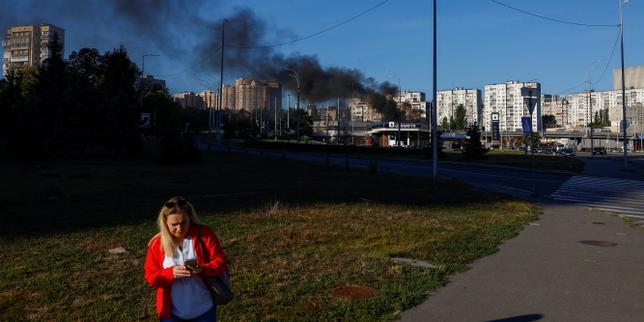
War isn't just about men and rifles anymore. It is a grinding math problem involving steel, electricity, and fuel. When you watch headlines flash about renewed counter-offensives in the industrial heartland of Donetsk and simultaneous strikes hitting railway junctions across western regions, you are looking at two sides of the exact same coin. Logistics dictate survival. Every tank shell, every crate of rations, and every wounded soldier depends on an intricate, vulnerable network of tracks and bridges. Break the network, and the front line collapses.
Most observers miss the fundamental truth of modern mechanized warfare. They focus entirely on the dramatic footage of armored columns clashing in muddy fields. Yet, thousands of miles away from the front line, a freight train sitting idle on a bombed-out siding in western Ukraine can decide whether a brigade in the east holds its ground or retreats in chaos. Understanding this dynamic requires looking past the daily casualty counts and examining how supply lines shape every tactical choice made by military commanders. For a more detailed analysis into similar topics, we suggest: this related article.
The Logistics Nightmare Behind Every Offensive
Moving an army takes staggering amounts of energy. A single mechanized brigade burns through tons of fuel, ammunition, and spare parts every single day. Trucks help, but they cannot compete with the sheer volume-carrying capacity of heavy rail networks. Ukraine spans a massive geographic area, meaning long-distance transport relies heavily on Soviet-era railway infrastructure that was built for high-capacity movement.
When fighting intensifies in regions like Donetsk, the demand for rail transport spikes instantly. Troops need fresh ammunition, fortifications require concrete and timber, and armored vehicles need constant maintenance parts. But running those trains is becoming an extreme hazard. If the tracks leading from the western borders—where international aid arrives—are compromised, the entire eastern front feels the shockwave within hours. For additional context on this topic, extensive coverage can also be found on The Guardian.
Commanders face an impossible puzzle. They must push forward to regain occupied territory while simultaneously defending their rear lines from precision missile strikes. Every time a transformer station or a rail switch gets hit hundreds of miles away from the trenches, soldiers in the east pay the price. It is a slow, methodical bleed that drains operational momentum before a counter-offensive can even reach its full stride.
Why Donetsk Remains the Ultimate Test of Attrition
Let us be honest about Donetsk. It is not just territory on a map. It is a sprawling industrial landscape of fortified heights, deep trench systems, and ruined towns that have been contested for years. Fighting here means grinding through layer after layer of defensive positions. You cannot rush through it. You cannot use flash-in-the-pan tactics to clear out a region fortified with concrete bunkers and minefields stretching for miles.
A counter-offensive in this environment requires brutal persistence. Ukrainian forces have spent months probing weak spots, launching localized attacks, and trying to unbalance enemy positions. But progress is measured in hundreds of meters, not miles. Every advance demands massive artillery support, which in turn chews through ammunition supplies at a terrifying rate.
This creates a vicious cycle. To maintain pressure in Donetsk, you need relentless supply flows. But the very act of massing forces and supplies makes logistics hubs prime targets for incoming strikes. The enemy watches rail yards, fuel depots, and staging areas with drone surveillance around the clock. The moment a weakness appears in air defense coverage, the strikes come screaming in.
Striking the Lifelines How Railway Attacks Alter the Equation
Targeting railway infrastructure in western regions is a deliberate strategy to choke off the flow of aid and reinforcements. By hitting electrical substations, repair depots, and rail junctions far from the active combat zones, attackers aim to paralyze the entire logistics grid. Western Ukraine serves as the primary gateway for international military and humanitarian supplies entering the country. Disrupting transport here sends ripples all the way to the front lines.
When railway lines lose power or sustain bomb damage, trains stop moving. Diesel locomotives can bypass some electrical outages, but they are slower, heavier, and harder to source in large quantities. Repair crews work around the clock, fixing blown rails and patching overhead wires within hours of an impact. It is an endless game of cat and mouse. One side smashes the tracks, and the other side welds them back together before nightfall.
The psychological toll is just as significant as the physical damage. Railway workers operate in constant danger, knowing that marshalling yards and stations are high-priority targets. Yet, the trains keep rolling. This stubborn resilience keeps the supply chain alive, even when operating under conditions that would paralyze most commercial networks worldwide.
The Hidden Costs of Modern Infrastructure Warfare
We rarely talk about the secondary effects of hitting civilian infrastructure like rail systems. These networks share tracks with passenger trains carrying displaced families, medical transports, and essential civilian cargo. When a freight corridor gets hit, civilian mobility grinds to a halt right alongside military logistics.
Furthermore, repairing heavy railway infrastructure requires specialized equipment and rare heavy components. You cannot just pick up a replacement high-voltage transformer at a local hardware store. Sourcing these parts takes time, diplomatic pressure, and complex international supply chains. Every successful strike leaves a scar that takes weeks or months to heal completely, forcing operators to rely on improvised workarounds and slower alternative routes.
This is why modern defense strategies place such a massive emphasis on mobile air defense systems. Protecting a thousand miles of railway track is practically impossible. Instead, defenders must shield key nodes—major bridges, central marshalling yards, and vital power sub-stations—with advanced missile batteries. Every missile used to protect a railway switch is a missile not used on the front lines, creating a constant tug-of-war for scarce defense resources.
Assessing the Real Strategic Horizon
Looking at the current state of affairs, the conflict has settled into a brutal contest of national endurance and industrial capacity. Breakthroughs do not happen overnight. They are earned through grueling logistical discipline, tireless engineering work, and the sheer grit of people refusing to let their supply lines snap.
The renewed push in Donetsk combined with ongoing sabotage of western supply routes tells us something vital about where this war is heading. Neither side can afford a quick knockout blow. Instead, both are trying to bleed the other's logistics dry. The side that manages its supply networks better, repairs its tracks faster, and keeps its ammunition flowing to the front will dictate the terms of engagement.
Keep your eyes on the supply lines, not just the front-line maps. That is where the war is actually won or lost. Focus on the rail schedules, the power grids, and the repair crews working in the dark under air raid sirens. That is the reality behind the headlines.


