The air in the Po Valley doesn't just sit; it weighs. It is a thick, humid blanket that smells of river mud, diesel, and the stubborn industriousness of Italy’s northern plains. For decades, if you looked closely at the bars in Varese or the small factories in Bergamo, you would see men who looked like they were holding up that heavy sky with nothing but their bare shoulders. They wore ribbed white tank tops—the canottiera—and they spoke a dialect that sounded like stones grinding in a riverbed.
They felt forgotten. Rome, with its marble columns and its labyrinthine bureaucracy, was a thousand miles away in spirit, a "thief" that swallowed their taxes and gave back nothing but red tape.
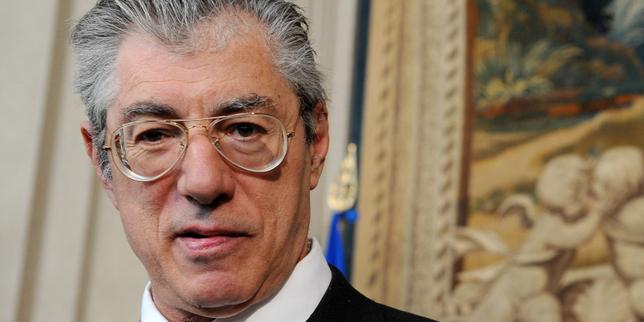
Then came the stroke of lightning. His name was Umberto Bossi.
He didn't look like a savior. He didn't speak like the polished orators of the Christian Democrats or the fiery intellectuals of the Communist Party. He was gravel-voiced, disheveled, and prone to gestures that would make a diplomat faint. But when he stood on a makeshift wooden stage in the early 1980s, he didn't just give a speech. He gave a roar.
The Birth of a Tribal Ghost
Politics is often sold as a series of policies, but in reality, it is a hunt for identity. Before Bossi, the "North" was a geographic direction. After him, it became a nation. He christened it Padania. It was a mythical realm, perhaps, but to the mechanic in Brescia who watched his earnings vanish into the Roman maw, it felt more real than the Italian Republic.
Bossi understood a fundamental human truth: people will follow a leader who shares their resentments. He didn't use the Latinate, flowery prose of the capital. He used the language of the bar. He talked about "the people" versus "the palace." He made the canottiera a political uniform.
Imagine a small-town rally in 1987. The smoke from cheap cigarettes hangs low. Bossi is at the microphone, his hair a mess, his tie—if he’s even wearing one—askew. He tells the crowd that they are the engine of the country, yet they are treated like the fuel. He talks about "Rome the Thief" (Roma Ladrona). The crowd doesn't just clap; they vibrate. For the first time, their local grievances aren't just complaints—they are a crusade.
He was the "Senatùr," a title that became inseparable from his person. He wasn't just a senator; he was the embodiment of a regional rebellion that threatened to crack the Italian boot right at the shin.
The Kingmaker’s Gambit
The early 1990s in Italy felt like the end of the world. The "Mani Pulite" (Clean Hands) corruption scandals were tearing the old political guard to shreds. The giants were falling. Giants like Giulio Andreotti and Bettino Craxi were being chased out of office, leaving a vacuum so large it threatened to collapse the state.
Bossi didn't just step into that vacuum; he kicked the door down.
But a rebel can only get so far on shouts alone. To truly change the country, the barbarian had to enter the gate. This led to the most improbable wedding in European political history. On one side was Silvio Berlusconi, the billionaire media tycoon with the perfect tan and the cruise-ship crooner’s smile. On the other was Umberto Bossi, the man who looked like he’d just finished fixing a tractor.
It was a marriage of convenience that birthed the modern Italian right.
Berlusconi provided the glamour and the television screens. Bossi provided the muscle and the soul of the northern heartland. Without Bossi, Berlusconi was just a rich man with an ego. With Bossi, he was the leader of a coalition that could actually win. They were the "Polo delle Libertà," an alliance that proved that the populist and the plutocrat could share a bed if they had a common enemy.
The Silence After the Storm
In 2004, the roar was suddenly silenced. A devastating stroke didn't kill the Senatùr, but it stole his greatest weapon: his voice.
The man who had built an empire on words—harsh, jagged, rhythmic words—was suddenly forced into a stuttering shadow of himself. It is one of the great ironies of Italian history that the man who wanted to break the country apart spent his final decades as a fragile, almost spectral figure in the halls of the very parliament he once despised.
The transition was painful to watch. The League—his League—began to change. Under the ambitious gaze of a younger generation, specifically Matteo Salvini, the party stopped looking only at the North. It stopped dreaming of Padania and started dreaming of Italy. The green scarves of regionalism were traded for the "Italy First" slogans of national populism.
Bossi watched from the sidelines, a lion in a cage of his own failing health. He saw his "Northern League" become simply "The League." The movement that once wanted to secede from the south was now campaigning for votes in Sicily.
There is a specific kind of sadness in seeing your creation outgrow you, then abandon your core philosophy to survive. Bossi was the architect of the bridge, but he was no longer allowed to cross it.
The Ghost in the Machine
To understand the Italy of today—the Italy of Giorgia Meloni and the shifting tectonic plates of European populism—you have to look back at the smoke-filled rooms where Bossi first grumbled about taxes and identity. He was the prototype. Long before the "forgotten man" became a staple of global political analysis, Bossi had already found him in a factory in Lombardy and given him a flag to wave.
He proved that you didn't need a PhD or a pedigree to reshape a nation. You just needed to understand what people said when they thought no one was listening. He tapped into the primal fear that the world is moving too fast and that the people in charge don't know your name.
His legacy isn't found in the laws he passed—many of his grandest dreams of federalism remained half-baked or stalled in committee. Instead, his legacy is the permanent scar he left on the Italian psyche. He shifted the center of gravity. He made the periphery the center.
The news of his passing is, in many ways, just a formal notification of a departure that began years ago when the stroke took his thunder. Yet, there is a hollowness now. Even for those who hated his politics—and there were many who saw him as a divisive, xenophobic force—there was a grudging recognition of his authenticity. In an era of polished, AI-generated talking points and social media managers, Bossi was a raw, unedited nerve.
He was the man who dared to suggest that the map we draw isn't always the map we feel in our hearts.
The white tank tops are rarer now. The factories are more automated. The dialects are fading into a standardized Italian broadcast from smartphones. But as the sun sets over the Ticino River, the echoes of that gravelly voice still linger in the valley. It’s a reminder that beneath the surface of any modern state, there are ancient, tribal rhythms just waiting for someone to beat the drum.
The Senatùr has left the building. But the fire he lit, for better or worse, is still burning in the hearth of every voter who feels like a stranger in their own land.
Imagine a man sitting at a wooden table, staring at a tax form he doesn't understand, written by people he will never meet. He looks out the window at the hills he loves. He feels a surge of quiet, desperate anger. That man is still there. And as long as he is, the ghost of Umberto Bossi will never quite be at rest.
Would you like me to analyze the specific political shifts within the League that occurred during Bossi's final decade?