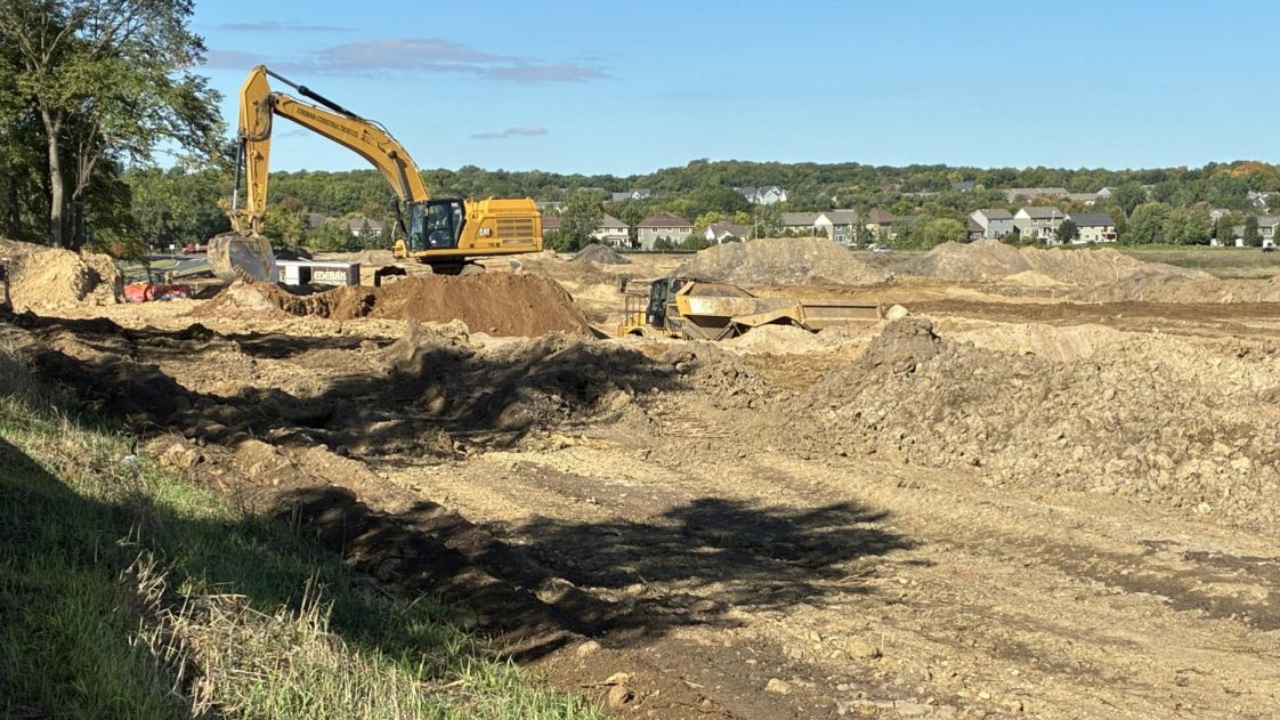
The soil remembers the weight of a heavy iron plow. It remembers the rhythmic clatter of a John Deere idling in the damp morning mist, cutting through the silence of a Minnesota county where generations measured time not in hours, but in seasons of corn and soybean.
The soil is quiet now. Soon, it will be excavated.
In its place, 262 homes will rise. Sidewalks will pour. Mailboxes will stand in neat, identical rows where the south pasture used to catch the golden light of October dusk.
This is the story of a family farm sold to developers, but it is also a story happening at the edge of every major city across the American heartland. It is a slow, quiet erasure. A transformation written in zoning permits and municipal approvals.
To understand what happened in Minnesota, we have to look past the real estate transaction. We have to look at the kitchen table.
The Anatomy of a Forced Farewell
Picture a worn oak table. Scratched by belt buckles, stained by coffee rings, piled high with documents that smell faintly of printer toner and legal binding.
Arthur sits there. His hands are large, rough-skinned, the fingernails permanently rimmed with dark earth—the kind of hands that spent forty years repairing tractor transmissions in sub-zero barns. Beside him is his daughter, Elena, who traded her work boots for a laptop and a corporate career in the Twin Cities ten years ago.
They are looking at property tax assessments. They are looking at debt service ratios. They are looking at the stark, uncompromising math of modern agriculture.
Operating a mid-sized family farm today is a masterclass in financial vulnerability. Equipment costs scale upward like rockets. Fertilizer prices fluctuate based on geopolitical conflicts halfway across the world. A single bad drought or a collapsed commodity market can wipe out three years of profit in a single afternoon.
And then the developer calls. Or rather, the letters start arriving in the mailbox. Unsolicited offers from LLCs with vague, reassuring names like Prairie View Holdings or Heartland Development Group.
At first, the offers go straight into the trash.
Then comes the year the combine breaks down beyond repair. Then comes the year property taxes spike by forty percent because municipal boundaries creep closer, reclassifying green fields as transitional commercial or residential zones. The local township wants tax revenue. They want sewer lines extended. They want rooftops to pay for the new high school football stadium.
The farm becomes an island. Surrounded by subdivisions, hemmed in by four-lane bypasses, subject to noise complaints from neighbors who moved to the country because they liked the view, only to complain that the tractors are too loud at 5:00 AM during harvest week.
The pressure is relentless. It is structural. It is economic gravity.
The Paper Trail of Progress
When the local planning commission approved the rezoning for the 262-home community, the local newspaper ran a brief item on page four. Dry. Neutral. A transaction completed.
Agricultural land rezoned for residential use.
Density: Low-to-medium.
Projected timeline: Groundbreaking next spring.
To a municipal planner, this is progress. This is the solution to a regional housing shortage. Young families need roofs over their heads. Teachers, nurses, and electricians are priced out of the urban core, desperate for a patch of suburban lawn where their kids can ride bicycles without dodging heavy traffic.
Housing demand is real. The numbers are staggering. We need more homes.
Yet every time a subdivision replaces a farm, something irreplaceable vanishes. We trade biological diversity and watershed management for asphalt shingles and manicured Kentucky bluegrass lawns treated with chemical weed killers.
Consider what happens to rainwater.
For a century, that Minnesota farm acted as a massive sponge. When a torrential summer storm slammed across the plains, the roots of native grasses, cover crops, and deep-tilled soil absorbed millions of gallons of water, filtering it slowly down into the regional aquifer.
Now, pave over fifty acres of that land with roofs, driveways, and cul-de-sac streets. Water hits concrete and runs off. It floods storm drains. It overwhelms local creeks, eroding banks and washing sediment downstream. The municipality responds by engineering multi-million-dollar retention ponds—artificial substitutes for the natural hydrology we just paved over.
We pay twice. Once for the development, and again to manage the artificial disasters the development creates.
The Human Cost on the Edge of Town
Ask anyone who grew up in a farming community about the day the neighboring land sold. They will tell you about the silence.
It is not a peaceful silence. It is a hollow sound.
It starts with the auctioneer’s tent going up in the gravel yard. The tractors, the disk harrows, the grain wagons, the old shop tools laid out on long wooden trestles with numbered yellow tags taped to their rusted frames. Neighbors show up not just to buy, but to bear witness. They bid fifty dollars for an old grease gun or two hundred for a welding table, buying relics of a neighbor's livelihood like mourners at a wake.
Arthur didn't attend the equipment auction. He stayed inside with the curtains drawn, listening to the chant of the auctioneer drift across the empty yard through the screen door.
When the last tractor rolled onto a low-boy trailer and headed down the county road, the era was over.
What replaces it is a different kind of community. Subdivisions are designed for privacy, not proximity. People garage their cars, press a button to close the automatic door, and disappear inside. The front porch becomes an architectural ornament rather than a social institution.
This is not a moral failing of the people who buy those 262 homes. They are simply looking for a place to live, to raise their children, to find stability in an unpredictable economy. They did not steal the land; they bought the only product available in a market starved for inventory.
The tragedy lies in the system that forces us into an impossible binary choice: either preserve open spaces and watch housing prices soar out of reach, or pave over the agricultural beltline and watch our food security and ecological heritage wash down the storm drain.
The Unspoken Future
Drive down that same Minnesota county road five years from now.
The rusty mailbox will be gone. The windbreak of aging cottonwood trees, planted by Arthur’s grandfather to break the fierce winter blizzards sweeping across the flatlands, will have been bulldozed to widen the entrance for a turning lane.
There will be a stone monument by the brick-paved entrance sign. It will bear a name like Meadowlark Estates or Whispering Pines.
Irony lingers in those names. We clear-cut the woods and drain the marshes, only to name the resulting streets after the very wildlife we evicted.
The houses will fill up with life. Children will chase soccer balls in yards that used to yield ten thousand bushels of corn per harvest. Grills will smoke on summer evenings. Life goes on, resilient and adaptable as human life always is.
But somewhere beneath the sod, beneath the vapor barrier, beneath the concrete slab of garage floor number 142, the earth remembers. It remembers the smell of turned loam after a spring rain. It remembers the crows circling over the stubble fields in November.
And as the city lights grow brighter on the horizon, pushing the dark a little further back each year, the horizon gets a little closer, and the wild, open breath of the land grows a little thinner.