The air in Naypyidaw does not move; it sits. By April, the humidity in Myanmar’s purpose-built capital reaches a state of physical aggression, pressing against the skin like a damp, heavy wool blanket. In the concrete stillness of a prison cell, that heat isn't just weather. It is a slow, methodical interrogation of the body.
For Aung San Suu Kyi, a woman whose life has been defined by the architecture of confinement, the walls have changed again.
News filtered out of the military-controlled capital that the 78-year-old former State Counsellor—the Nobel Peace Prize winner who once symbolized the world’s brightest democratic hopes—has been moved from the sterile isolation of a prison to house arrest. The junta’s spokesperson, Major General Zaw Min Tun, framed the decision as an act of mercy, a response to the blistering heatwave. "Since the weather is extremely hot, it is not only for Aung San Suu Kyi... We are working to protect them from heatstroke," he said.
But mercy is a complicated word in a country fractured by a three-year civil war. Behind the official statement lies a tangled web of political theater, failing health, and the desperate optics of a military regime losing its grip on the edges of the map.
The Weight of the Keys
To understand the gravity of a move from a cell to a house, you have to look at the woman herself. Aung San Suu Kyi is no longer the vibrant icon of the 1990s, standing on a chair behind the gates of her family’s lakeside villa in Yangon, addressing throngs of supporters with flowers in her hair. She is nearly eighty. She has spent the better part of two decades in some form of detention. Since the coup on February 1, 2021, she has been shuffled through a series of undisclosed locations, eventually landing in a custom-built annex of the Naypyidaw prison.
Her health has become a silent protagonist in this drama. Reports of dental infections so severe she couldn't eat, bouts of dizziness, and vomiting have leaked through the cracks of the junta’s information blackout.
The military says it is the heat.
The skeptics say it is the fear of what happens if she dies on their watch.
There is a specific kind of nightmare for any authoritarian regime: the martyr. If Aung San Suu Kyi were to perish in a prison cell, she would cease to be a political prisoner and become an eternal, unassailable ghost. By moving her to house arrest, the military buys itself insurance. They transform her from a prisoner of conscience back into a political pawn, one they can use to signal a "softening" to the international community or as a bargaining chip when the resistance forces press too close to the capital.
A Country in the Dark
Imagine a map of Myanmar. Now, imagine it as a piece of parchment being burned from the outside in.
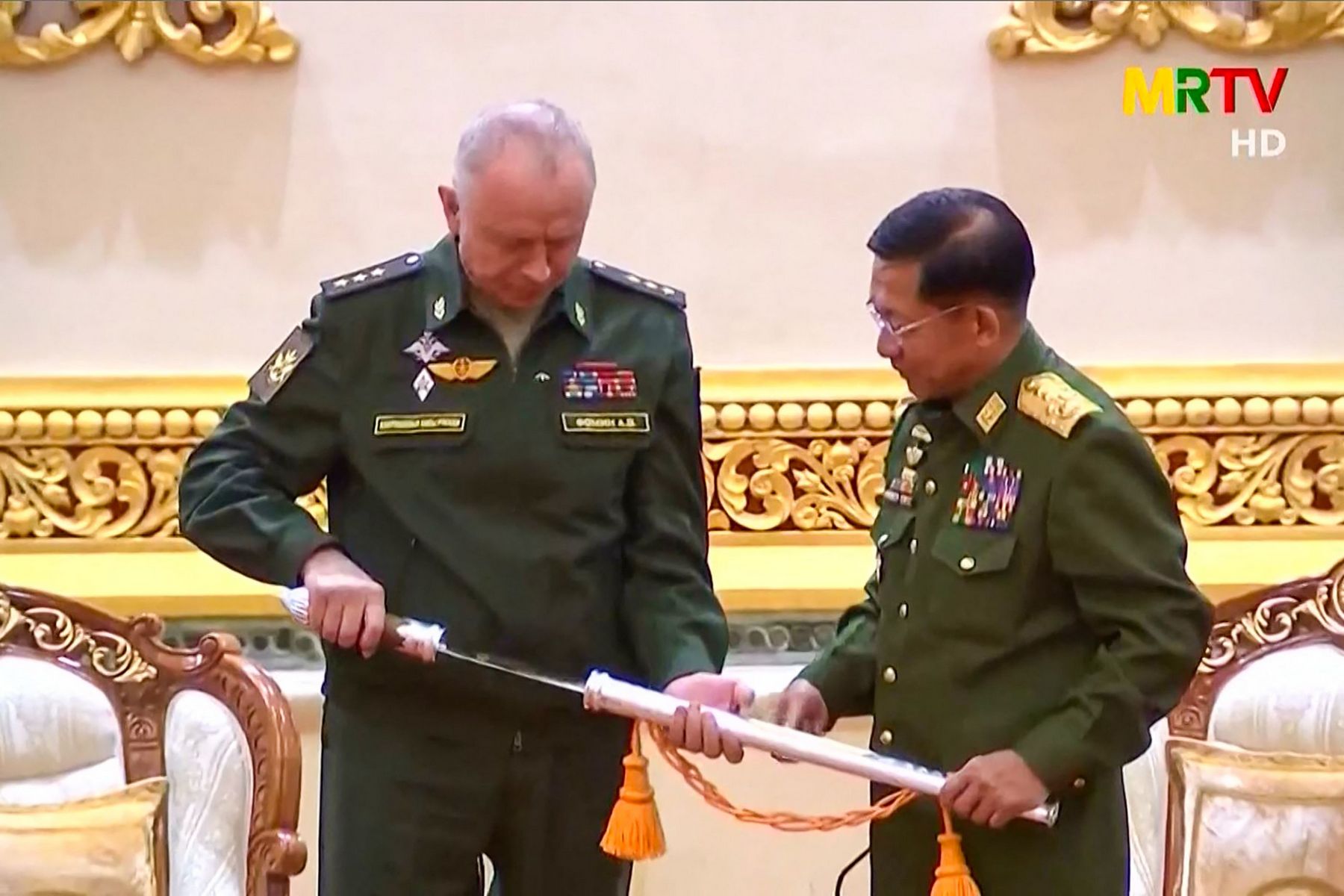
The edges are charred. In the borderlands, the "Three Brotherhood Alliance"—a coalition of ethnic armed groups—has inflicted humiliating defeats on the military. They have seized trade routes to China. They have captured entire battalions. For the first time in decades, the Tatmadaw (the Myanmar military) looks vulnerable.
The move to relocate Suu Kyi isn't happening in a vacuum. It is happening as the junta loses territory, morale, and revenue.
But for the people living in the heart of the country, the news of her "transfer" is met with a weary, cynical sigh. They have seen this movie before. In 2010, she was released from house arrest to much fanfare, ushering in a decade of messy, imperfect reform. This time feels different. The youth of Myanmar, the generation that took to the streets in 2021 and eventually took up arms in the jungle, have moved beyond the cult of personality.
To them, she is a symbol of a past they are trying to reclaim, but she is no longer the sole commander of the future. The struggle has outgrown the individual.
The Invisible Stakes
Why does a change in address for one elderly woman matter to a world distracted by a dozen other crises?
Because Myanmar is the canary in the coal mine for the global retreat of democracy. When the military seized power, they didn't just arrest a leader; they attempted to delete the will of 54 million people. The legal proceedings against Suu Kyi—resulting in a combined sentence of 27 years on charges ranging from illegally importing walkie-talkies to election fraud—are widely dismissed as a farce.
Moving her to house arrest is a low-cost concession. It costs the military nothing to let her sit in a cooler room, but it gains them a headline that suggests progress.
Think of the house as a gilded cage within a larger, more violent cage. Outside the gates of whatever villa she now occupies, the country is suffering. The currency has plummeted. The power goes out for twelve hours a day. The "mercy" shown to the Lady is not extended to the thousands of other political prisoners languishing in Obo or Insein prison, where the heat is just as oppressive and the medical care non-existent.
The Ghost in the Machine
There is a profound loneliness in this transition. In prison, she was a prisoner among prisoners. Under house arrest, she is isolated in a different way. She is cut off from her lawyers, her family, and the people she once led. She becomes a rumor.
The military thrives on rumors.
By keeping her location secret, even under house arrest, they maintain a monopoly on her image. They can release a photo when it suits them. They can claim she is "resting" when they need to buy time. They have turned a human being into a flickering light on a dashboard—a signal to be manipulated.
The heatwave is real. Temperatures in Naypyidaw have indeed soared past 40 degrees Celsius. But in the high-stakes poker game of Southeast Asian geopolitics, the weather is rarely just the weather. It is a convenient veil.
If the military truly cared about heatstroke, they would release the thousands of young protesters packed into overcrowded cells where the air is thick with the scent of unwashed bodies and despair. They would stop the airstrikes on villages that have sent hundreds of thousands fleeing into the forests, where there is no shelter from the sun.
Instead, they move the Lady.
They shift the pieces on the board because the game is going poorly for them. They hope the world sees a gesture of humanity. They hope the "merciful" act of moving an old woman out of the sun will distract from the smoke rising from the villages in Sagaing and Magway.
As the sun sets over the white marble monuments of Naypyidaw, the heat begins to radiate off the asphalt, refusing to dissipate. Aung San Suu Kyi sits somewhere in that heavy, golden twilight. She is no longer in a cell, but she is not free. She is simply waiting in a slightly larger room, listening to the silence of a capital city built by generals who feared their own people.
The walls are thinner now. The air might be cooler. But the bars are still there, invisible and absolute, held in place by the stubborn, terrifying hope of a woman who refuses to disappear and a military that no longer knows how to let go.