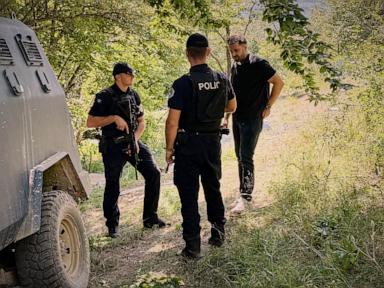
Decades pass, but the silence remains loud in Kosovo. Families wake up every single day wondering where their children, parents, and siblings are buried. It's a heavy, grinding pain that doesn't fade with time. Right now, forensic teams are back on the ground, shovels hitting the dirt at newly identified mass grave sites tied to the 1998-99 war.
You'd think closure would come fast after a conflict ends. It doesn't. Thousands of people remain missing, and every new excavation feels like a desperate race against time, shifting memories, and political stalling. Also making news recently: Why The Luigi Mangione Trial Circus Is The Worst Possible Way To Fix Healthcare.
The Brutal Reality of Search Operations
Finding a mass grave twenty-five years after a war isn't like watching a crime drama. It's slow, agonizing, and messy. Witnesses die. Memories fade. Landscapes change. Concrete gets poured over old dirt.
When forensic experts start digging based on fresh satellite data or tip-offs, they aren't greeted with clear answers right away. They find fragments. Bone shards, rusted personal items, shreds of clothing. Every single site requires meticulous care. More details into this topic are detailed by NBC News.
Governments talk a big game about cooperation, but information sharing between regional actors has always moved at a snail's pace. Too many archives remain locked. Too many people who know exact locations keep quiet.
Why This Matters Right Now
People outside the region often ask why these old wounds can't just heal on their own. They can't. You can't build a stable future on top of unmarked graves.
The ongoing excavations aren't just about recovering bones. They're about basic human dignity. Until every family knows the truth, normal life stays on pause. International organizations keep pushing local authorities to step up their efforts, but funding fluctuates and political roadblocks pop up constantly.
If you want to understand why reconciliation stalls in the Balkans, look right here. It's not just about ethnic tensions or economic policy. It's about accountability. When people can't bury their dead, trust is impossible.
What Needs to Happen Next
Stopping the guesswork requires hard pressure on those holding back archive records. Governments must treat missing persons as a humanitarian emergency, not a political bargaining chip.
Forensic technology has improved massively. DNA matching is sharper, and ground-penetrating radar lets teams scan areas without tearing up whole neighborhoods blindly. But technology means nothing without political will.
Families don't care about diplomatic summits or speeches. They just want a grave they can visit. Until that happens for everyone, the war isn't really over.