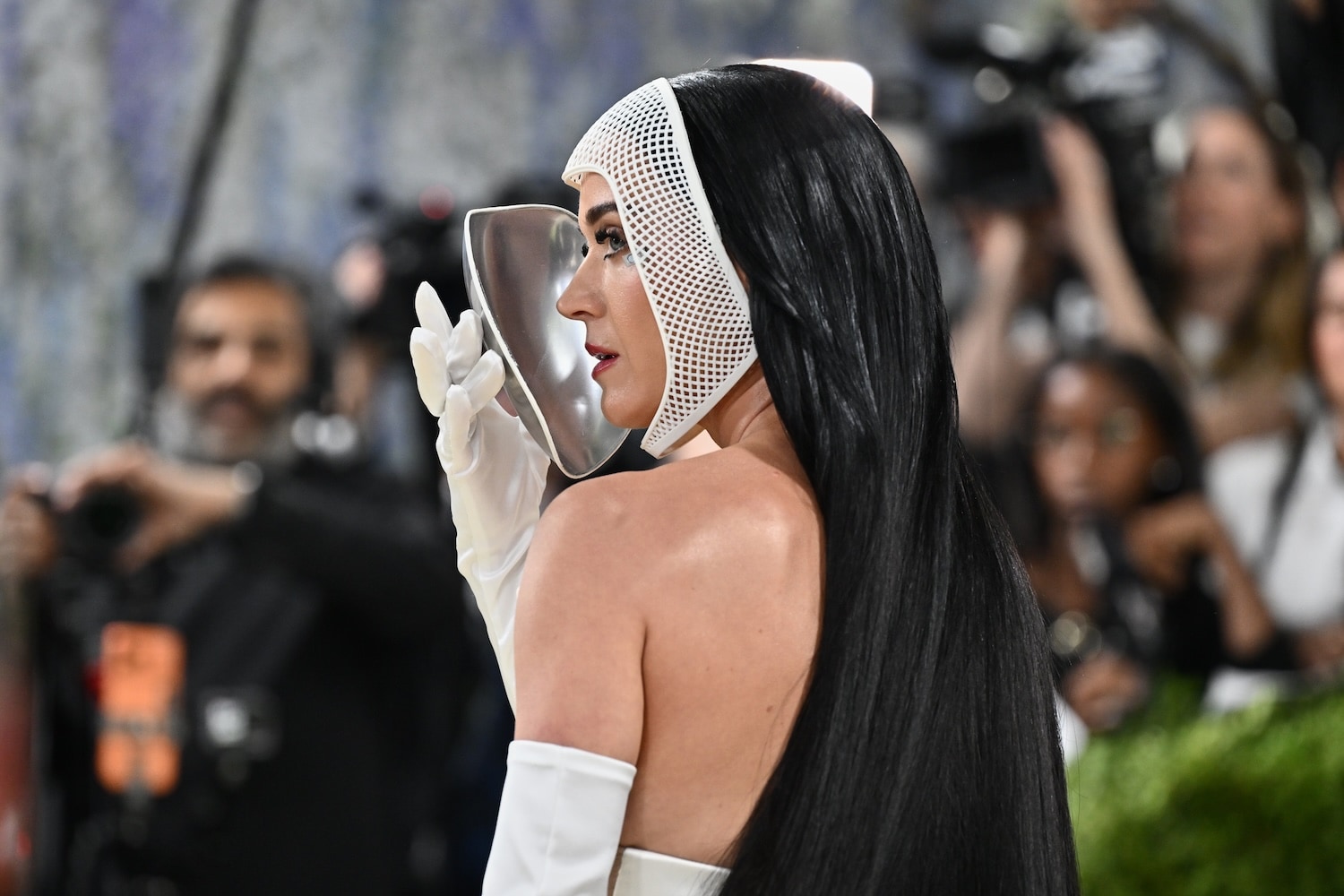
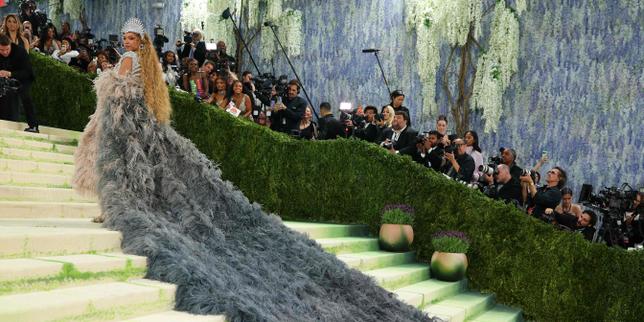
Beyoncé’s return to the Met Gala is not a mere attendance event; it is a calculated deployment of cultural capital designed to recalibrate her brand equity within the luxury fashion ecosystem. While tabloid coverage focuses on aesthetic "dazzle," a structural analysis reveals this move as a high-stakes play in the Attention Economy. The Met Gala serves as a global clearinghouse for prestige, where the return on investment (ROI) is measured in Earned Media Value (EMV), social sentiment shifts, and the fortification of "The Knowles Moat"—a strategic barrier to entry that separates legacy superstars from the fleeting visibility of digital-native influencers.
The Architecture of Visibility: Scarcity as Value Driver
The fundamental mechanism behind the impact of this "comeback" is the Principle of Scarcity. By abstaining from the Met Gala for multiple cycles, Beyoncé engineered a supply-side vacuum. When supply (public appearances) is artificially restricted, the value of the next data point (the 2026 appearance) increases exponentially. This creates a "Surprise and Delight" multiplier that standard annual attendees cannot achieve.
The value of this appearance can be broken down into three primary variables:
- Temporal Distance: The number of months since the last high-profile red carpet appearance. This distance acts as a tension spring; the longer the absence, the greater the kinetic energy released upon return.
- Contextual Alignment: The degree to which the chosen attire reflects the Met’s specific theme versus the artist’s current era (e.g., the Cowboy Carter aesthetic).
- Platform Dominance: The ability to hijack the global conversation across decentralized platforms (TikTok, X, Instagram) simultaneously without direct paid promotion.
The Economic Engine of the Met Gala Appearance
Every movement on the Met steps functions as a transaction. For a brand like Beyoncé’s, the goal is to maximize Brand Salience. This is achieved through a specific feedback loop: the garment creates the visual asset, the visual asset triggers algorithmic prioritization, and the algorithmic prioritization drives organic reach.
The Cost Function of High-Prestige Fashion
An appearance of this magnitude involves a complex cost-benefit matrix. The "cost" is not merely the price of the gown—which is often a subsidized collaboration—but the Opportunity Cost of brand association. If the look fails to resonate, it dilutes the artist’s reputation for "perfection." Conversely, a successful look generates a "Halo Effect" that benefits every subsidiary of the Parkwood Entertainment umbrella, from music streaming numbers to apparel sales.
Quantitative Metrics of Success
To move beyond vague adjectives like "stunning," analysts must track specific Key Performance Indicators (KPIs):
- Search Volume Index (SVI): The percentage increase in Google searches for "Beyoncé" within the 24-hour window surrounding the event.
- MIV (Media Impact Value): A proprietary metric used to calculate the monetary value of every post, interaction, and article mentioning the appearance.
- Share of Voice (SoV): Beyoncé’s percentage of total Met Gala-related social media mentions compared to other high-profile attendees like Zendaya or Rihanna.
Structural Integration: Theme vs. Persona
The conflict within a Met Gala appearance lies in the tension between the Metropolitan Museum of Art’s Curatorial Intent and the Artist’s Personal Brand Narrative.
A successful appearance resolves this tension through "Thematic Synthesis." If the theme is "The Garden of Time," and Beyoncé arrives in a garment that references both historical archives and her own "Renaissance" iconography, she achieves a higher level of semiotic density. This density rewards deep-dive analysis by fans and fashion critics alike, extending the "tail" of the event’s relevance.
The Bottleneck of Digital Saturation
The primary risk to this "comeback" strategy is the diminishing return of the red carpet format itself. We are currently observing Visual Inflation. As more creators use AI and high-end production to mimic "prestige" looks, the barrier to truly shocking an audience rises.
Beyoncé’s counter-strategy involves The Physicality of Presence. In an era of digital saturation, the high-definition, live-captured movement of a physical body in a physical space—the Met steps—becomes a premium product. This is the "Uncanny Valley" of celebrity: as influencers become more like bots, legacy stars must become more undeniably, tangibly human, yet elevated to the level of sculpture.
The Power Dynamics of Designer Partnerships
The selection of a designer for the Met Gala is a geopolitical move in the fashion world. It signals an alliance.
- The Heritage Play: Partnering with a legacy house (e.g., Chanel, Dior) to signal timelessness and institutional approval.
- The Disruptor Play: Partnering with an avant-garde or emerging designer to signal "relevance" and "edge."
- The Vertical Integration Play: Wearing a custom piece that utilizes her own brand’s design language, effectively cutting out the middleman and capturing 100% of the brand equity.
The choice dictates the narrative. A shift from her historical reliance on Riccardo Tisci or Peter Dundas toward a new, perhaps more experimental creative director, would indicate a strategic pivot in her visual identity, likely foreshadowing the aesthetic direction of her next musical project.
Information Asymmetry and the "Secret" Arrival
A critical component of the Beyoncé Met Gala playbook is the management of Information Asymmetry. By not confirming her attendance until the moment she exits the vehicle, she ensures that the media remains in a state of high-frequency speculation. This speculation acts as "Free Marketing."
The "Late Arrival" is a specific tactic within this framework. Arriving after the bulk of the "B-list" has cleared the carpet ensures that the cameras have no competing subjects. This creates a "Clean Feed" for broadcasters, guaranteeing that her image is the one that leads the 11:00 PM news cycles and the morning-after front pages. It is a exercise in Crowd Dynamics and Media Management.
The Mechanism of Cultural Longevity
Longevity in the entertainment industry is a function of Adaptation vs. Consistency. The Met Gala "comeback" allows Beyoncé to demonstrate her ability to adapt to the current fashion zeitgeist while maintaining the consistency of her "Queen" archetype.
This creates a "Structural Advantage":
- Cross-Generational Appeal: Older demographics recognize the prestige of the Met; younger demographics consume the memes and short-form video content generated by the appearance.
- Global Distribution: The Met Gala is one of the few fashion events with equal weight in New York, Paris, Shanghai, and Lagos, facilitating global brand expansion without a physical tour.
Logical Failures in Standard Reporting
Standard commentary often posits that Beyoncé "won" the Met Gala based on subjective beauty. This is a logical fallacy. "Winning" the Met Gala is actually a function of Asset Longevity. A look "wins" if it is still being used as a reference point in five years.
Therefore, the success of this comeback cannot be judged on the night of the event. It must be judged by its inclusion in future museum retrospectives and its influence on the subsequent two seasons of "Ready-to-Wear" collections. If fast-fashion retailers like Zara or Shein are producing "Beyoncé-inspired" silhouettes within three weeks, the appearance has successfully achieved Market Penetration.
Strategic Recommendation for the Knowles-Carter Estate
To maximize the terminal value of the 2026 Met Gala appearance, the following actions are necessary:
- Immediate Asset Tokenization: Release high-resolution, behind-the-scenes "Process Films" that detail the 500+ hours of labor involved in the garment. This justifies the "Luxury" positioning and provides content for platforms with longer dwell times (YouTube).
- Algorithm Feeding: Seed "leaked" details to key fashion archivists on social media 48 hours post-event to spark a "second wave" of conversation just as the initial hype begins to decay.
- Direct-to-Consumer Pivot: Link the aesthetic of the Met Gala appearance to a limited-edition physical product (e.g., a fragrance or a capsule accessory line) within 72 hours. This converts "Attention" directly into "Revenue," closing the loop between cultural influence and capital accumulation.
The objective is to move from "Being the News" to "Owning the Infrastructure of the News." This appearance is the pilot program for a new era of celebrity-driven conglomerate growth, where the red carpet is merely the top of the funnel.