Members of the Heiltsuk Nation have touched down in London to demand accountability for a disaster that occurred nearly a decade ago and thousands of miles away. They are seeking a meeting with the International Oil Pollution Compensation Funds (IOPC) to address the catastrophic failure of the 2016 Nathan E. Stewart spill. This journey is not a symbolic gesture. It is a calculated legal and diplomatic maneuver aimed at a global maritime insurance system that has effectively abandoned the Great Bear Rainforest.
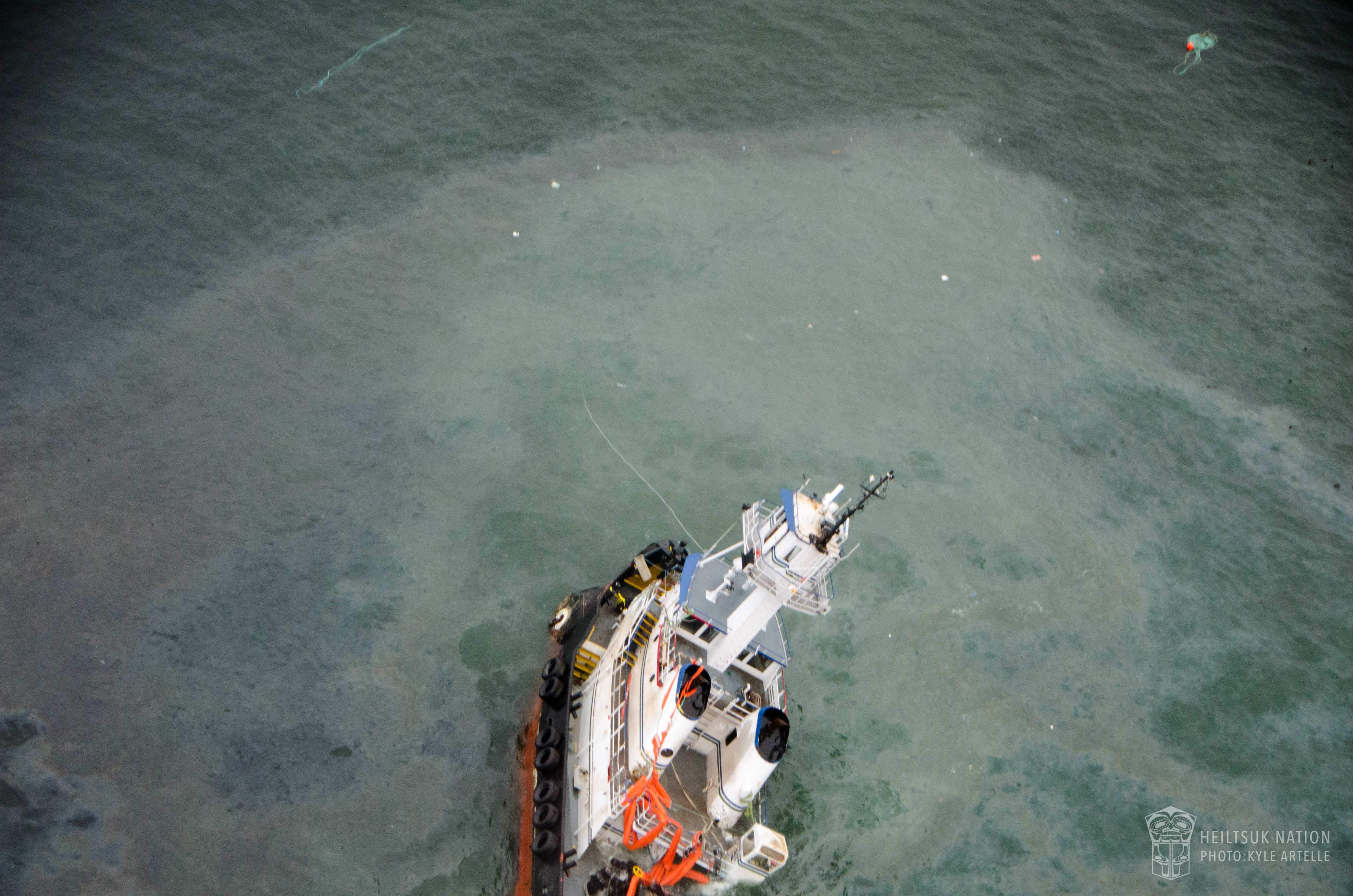
On October 13, 2016, a tugboat owned by the Texas-based Kirby Corporation ran aground on a reef at the mouth of Seaforth Channel. The vessel was pushing an empty petroleum barge, but its own tanks were heavy with propulsion fuel. Over 100,000 liters of diesel and lubricants poured into one of the most ecologically sensitive regions on the planet. For the Heiltsuk, this was an assault on their primary food source and their spiritual home. Nine years later, the cleanup is unfinished, the compensation is unpaid, and the legal loopholes remain wide open.
The Shell Game of Global Marine Insurance
The central conflict involves more than just a negligent tugboat captain. It exposes a flaw in how the world handles maritime disasters. Under the current framework, when a spill occurs, the ship owner’s liability is often capped. If the damages exceed that cap, international funds like the IOPC are supposed to bridge the gap.
In the case of the Nathan E. Stewart, the "gap" has become a chasm. The Heiltsuk Nation argues that the current system is designed to protect the shipping industry rather than the communities impacted by its failures. Kirby Corporation, a multi-billion dollar entity, has utilized every available legal shield to limit its financial exposure. This leaves the Heiltsuk fighting a multi-front war against a corporation in Texas and a fund in London that claims it doesn't owe them a cent because of technicalities regarding the type of oil spilled.
Diesel is "non-persistent" oil. This distinction is the industry’s favorite shield. Because diesel evaporates faster than heavy crude, the IOPC often refuses to cover the long-term economic and cultural damages it causes. But evaporation does not mean disappearance. The fuel submerged, mixed with sediment, and poisoned the clam beds that have sustained the Heiltsuk for millennia. To the fund, it’s a chemistry problem. To the Heiltsuk, it’s a hunger problem.
A Ghost Settlement in the Great Bear Rainforest
The immediate response to the 2016 spill was a masterclass in bureaucratic inefficiency. The Heiltsuk were the first on the scene, yet they were sidelined by government agencies that lacked local knowledge of the tides and geography. By the time the "professional" containment arrived, the diesel had already breached the clam beds of Gale Creek.
The environmental impact studies conducted by the industry and the Canadian government frequently clash with the lived reality of the community. While official reports might suggest the water "looks" clean, the Heiltsuk have documented a collapse in biodiversity that persists today. They have spent millions of their own dollars on independent science and legal fees just to stay in the fight.
This is the hidden cost of industrial accidents. The burden of proof is shifted onto the victim. The Heiltsuk must prove the oil caused the damage, while the corporation only has to prove they had a policy in place. It is an asymmetrical war of attrition. The strategy for the Kirby Corporation appears to be simple: wait them out. If you delay long enough, the public forgets, the news cycle moves on, and the legal costs become unsustainable for a small First Nation.
The London Escalation
The decision to fly to the U.K. is a recognition that the Canadian legal system has reached a stalemate. By taking the fight to the IOPC headquarters, the Heiltsuk are challenging the architects of the global compensation regime. They are pointing out that if the funds can ignore a disaster of this magnitude simply because the oil was "the wrong kind," then the entire system is a sham.
This trip is designed to shame the international community into action. The Heiltsuk are not just asking for a check. They are demanding a rewrite of the rules. They want a system where First Nations have a seat at the table during the initial spill response and where the "polluter pays" principle isn't diluted by maritime law technicalities.
The British public and international shipping regulators are now being forced to look at photos of blackened coastlines in a region they usually only see in luxury travel brochures. The contrast is jarring. The Great Bear Rainforest is marketed as a pristine wilderness, yet it is treated as a high-risk transit corridor with zero safety net for the people who actually live there.
Why the Courts are Failing Indigenous Sovereignty
Canada has spent years talking about reconciliation, but the Nathan E. Stewart case shows that talk is cheap when it hits the balance sheet of a major trade partner. The federal government’s inability to force Kirby Corporation into a fair settlement is a glaring indictment of its commitment to Indigenous rights.
The legal barriers are built on the 19th-century concept of "limitation of liability." This was originally designed to encourage maritime trade by ensuring a single shipwreck wouldn't bankrupt a shipping house. In 2026, applying this to a corporation with a $4 billion market cap is absurd. It is a relic of a colonial era used to facilitate modern extraction at the expense of local sovereignty.
The Heiltsuk are pushing for a "Home Rule" approach to marine safety. This would involve:
- Mandatory local pilots for all vessels transiting through sensitive First Nations waters.
- Indigenous-led rapid response teams funded by a levy on shipping companies.
- Pre-approval of compensation frameworks so that communities aren't stuck in court for a decade while their children go without traditional foods.
The Precedent on the Horizon
If the Heiltsuk succeed in London, they will set a precedent that terrifies the global shipping industry. It would mean that "non-persistent" spills are no longer a "get out of jail free" card. It would acknowledge that cultural loss and the destruction of traditional food systems have a quantifiable dollar value that must be paid.
The Kirby Corporation spill is not just a 2016 news item. It is a live infection. Every year that the clam beds remain closed is another year of lost knowledge transfer between elders and youth. You cannot compensate for a lost generation of cultural practice with a settlement that barely covers the legal fees.
The journey to the U.K. is the final act of a decade-long struggle. The Heiltsuk are standing in the heart of the old empire to tell the new corporate empires that the cost of doing business just went up. They are proving that while diesel might evaporate, the resolve of a people defending their home does not.
The shipping industry is watching. The Canadian government is waiting. But for the Heiltsuk, the time for waiting ended when the first drop of oil hit the reef. They are now the ones setting the terms of the engagement.