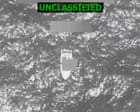
The U.S. military’s recent strike against a vessel in the Eastern Pacific, resulting in four fatalities, signals a shift from passive surveillance to active kinetic disruption in international waters. This engagement is not an isolated incident of maritime policing but a data point in a broader strategy of maritime denial. To understand the implications of this strike, one must look past the immediate casualty count and analyze the operational constraints, the legal framework of "vessel without nationality" status, and the logistical friction created by high-speed interdiction in the transit zones of the deep ocean.
The efficacy of these strikes depends on a three-phase operational cycle: detection, classification, and neutralisation. When the U.S. military or Coast Guard assets identify a low-profile vessel (LPV) or a "go-fast" boat, they are engaging with a specific cost-asymmetric threat. These vessels are designed to be disposable, often worth less than the munitions used to track them, yet the cargo they carry—typically high-value illicit narcotics or precursors—represents a significant node in a global supply chain.
The Legal and Kinetic Framework of High-Seas Interdiction
The authority to execute a strike in international waters rests on the concept of jurisdictional vacuum. Under the 1982 United Nations Convention on the Law of the Sea (UNCLOS) and the Maritime Drug Law Enforcement Act (MDLEA), vessels that do not fly a flag or claim a nationality are subject to the jurisdiction of any nation. This "stateless" designation removes the diplomatic friction usually associated with sovereign boardings.
- Right of Visit: Initial contact is established to determine the vessel's nationality.
- Failure to Heave To: When a vessel ignores orders to stop, it transitions from a civilian entity to a non-compliant target.
- Use of Force Continuum: The transition from verbal warnings to disabling fire (targeting engines) and, ultimately, to kinetic strikes (targeting the hull or personnel) is governed by Rules of Engagement (ROE) that prioritize the safety of the boarding party over the survival of the target vessel.
The recent use of lethal force suggests a specific threat profile was met—likely a perceived immediate threat to the intercepting aircraft or vessel, or a high-speed maneuver that rendered non-lethal disabling fire impossible. In the open ocean, the physics of a high-speed chase create a stability bottleneck. A vessel moving at 40+ knots over swells is an unstable platform for precision marksmen, often forcing the use of larger-caliber, platform-mounted weapons systems that carry a higher probability of collateral lethality.
The Cost Function of Maritime Smuggling
The Eastern Pacific is a vast, low-density environment where the U.S. military operates with limited assets. To maximize the ROI of a deployment, the military utilizes a "network-of-networks" approach. This involves integrating P-8 Poseidon maritime patrol aircraft, MQ-9 Reaper drones, and satellite SIGINT (signals intelligence) to vector surface assets toward a target.
The economic logic of the smugglers is rooted in attrition-based logistics. They anticipate a certain percentage of losses. However, kinetic strikes change the variable from "loss of product" to "loss of human capital and specialized hardware." While the boats are cheap, the crews capable of navigating 1,500 miles of open ocean are a finite resource.
- Fixed Costs: Hull construction, engine procurement (often multiple 300hp outboards).
- Variable Costs: Fuel, crew wages, bribe overhead.
- Risk Premium: The likelihood of interdiction, now exacerbated by the willingness of U.S. forces to use lethal kinetic measures.
As interdiction becomes more frequent and more lethal, the smugglers are forced to innovate, moving from "go-fast" boats to semi-submersibles. These vessels are harder to detect visually or via radar but are significantly more expensive and prone to mechanical failure. The military’s decision to engage kinetically is a deliberate attempt to push the smugglers toward more complex, expensive, and fragile transport methods.
Logistical Friction and the Surveillance Gap
The Eastern Pacific transit zone covers roughly 7 million square miles. The primary challenge is not the strike itself, but the persistent surveillance required to find a 40-foot needle in a blue haystack.
The military utilizes a strategy of Targeting and Cueing. Sensors on high-altitude long-endurance (HALE) drones identify anomalies in sea-surface temperature or radar cross-sections. These "blips" are then cued to lower-altitude assets for visual identification. The recent strike indicates that the identification phase was completed rapidly, likely due to the vessel’s lack of AIS (Automatic Identification System) transmission and its high-speed vector toward known smuggling corridors.
The "Four Deaths" reported are a consequence of the Terminal Phase of Interdiction. When a vessel refuses to stop, the military must decide whether to allow it to reach a sovereign coastline—where legal complexities multiply—or to end the pursuit in deep water. The deep water option is preferred because it prevents the cargo from reaching land, where it can be dispersed. However, the physical reality of stopping a high-speed boat in a heavy sea state often results in the destruction of the vessel.
Strategic Implications of Persistent Lethal Force
The increase in lethal outcomes in the Eastern Pacific suggests a hardening of the "Forward Operating" stance. The U.S. is signaling that the maritime commons are not a permissive environment for non-state actors. This has several second-order effects:
- Intelligence Degradation: When a vessel is destroyed and the crew killed, the opportunity for tactical intelligence (interrogation, cell phone forensics, GPS log extraction) is lost.
- Deterrence Calculus: The military is betting that the fear of a kinetic strike will outweigh the financial incentives of the voyage. Historically, this has mixed results; as long as the price of the commodity remains high, the risk will be filled by new entrants.
- Shift to Micro-Loads: Smugglers may shift from large-capacity LPVs to a higher volume of smaller, decentralized vessels to overwhelm the military's "sensor-to-shooter" capacity.
The bottleneck for the U.S. military is not lethality—it is capacity. There are rarely enough ships to cover the entire transit zone. Each strike is a demonstration of capability meant to project an illusion of total coverage. The use of "boat strikes" rather than traditional board-and-search operations also reflects a desire to minimize risk to U.S. personnel. Boarding a non-compliant vessel in the open ocean is one of the most dangerous maneuvers in maritime law enforcement; a kinetic strike from a distance eliminates that risk entirely.
Forecasting the Maritime Conflict Surface
The evolution of Eastern Pacific interdiction will likely move toward autonomous neutralization. We are seeing the precursor to a theater where unmanned surface vessels (USVs) and loitering munitions perform the role currently held by manned cutters and helicopters.
The strategic play for the military is to maintain the asymmetry of visibility. As long as the U.S. holds the high ground of satellite and aerial surveillance, it can choose when and where to apply force. The smugglers' only counter is "darkening"—reducing their electronic and physical signature through better hull design and emission control.
This is a technological arms race played out in a vacuum of international law. The strike that killed four people is a message to the cartels: the cost of doing business has moved from financial loss to total loss of life and asset. To maintain this pressure, the U.S. must increase its deployment of long-range, unmanned surveillance to close the gaps where smugglers currently find refuge.
The next phase of this conflict will likely involve the deployment of "sub-surface interdiction" technologies, targeting the propulsion of semi-submersibles without destroying the entire craft, thereby preserving the possibility of forensic recovery while maintaining the lethal deterrent. The current reliance on high-impact strikes remains a blunt instrument in a theater that is increasingly demanding precision and persistence over raw power._